Étiquette : soma
-
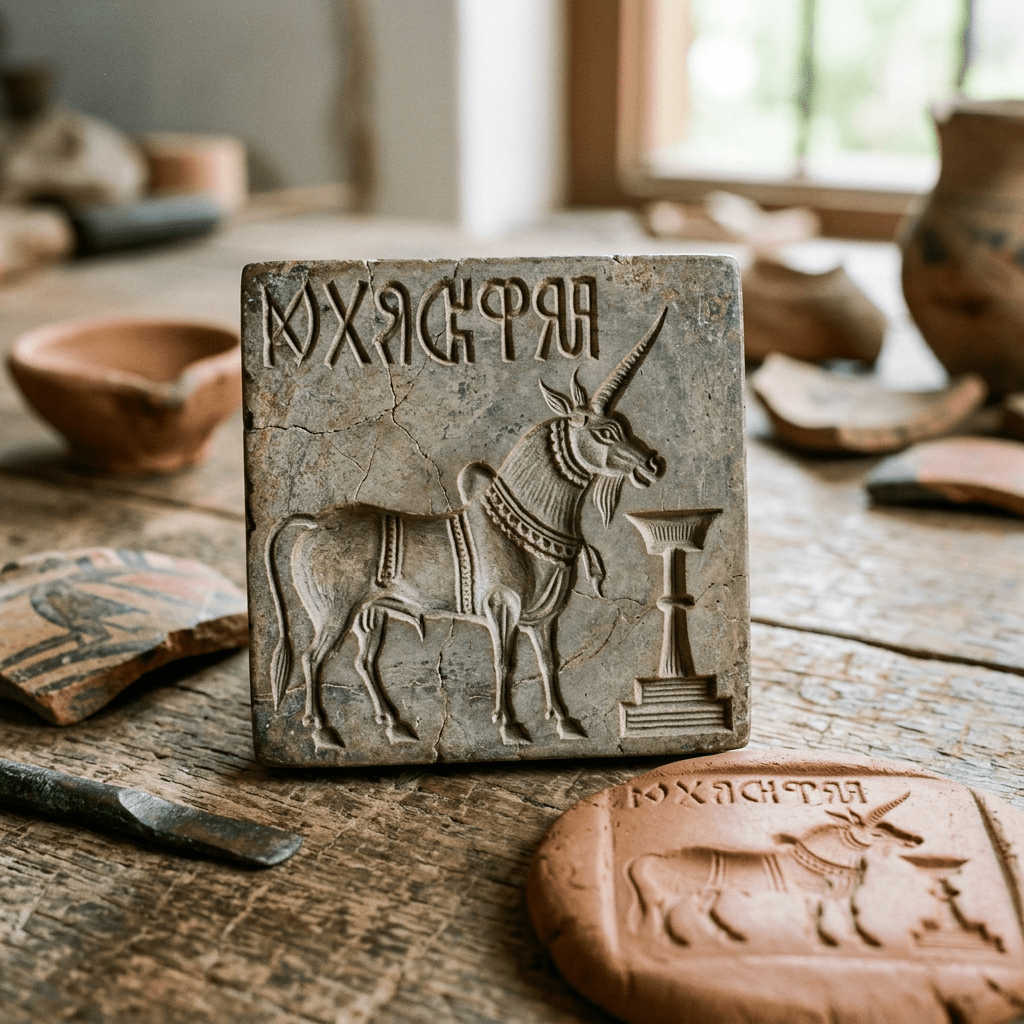
The Unicorn of the Indus — The Composite Animal as Cosmological Symbol
There is in the iconography of the Indus civilization an image that recurs with remarkable insistence. It is found engraved on hundreds of seals — those small steatite objects that bear inscriptions in the still undeciphered writing of the civilization. It is an animal that resembles a bull, but with a single horn projecting forward…
-
LA LICORNE DE L’INDUS — L’ANIMAL COMPOSITE COMME SYMBOLE COSMOLOGIQUE
Il y a dans l’iconographie de la civilisation de l’Indus une image qui revient avec une insistance remarquable. On la trouve gravée sur des centaines de sceaux — ces petits objets de stéatite qui portent des inscriptions dans l’écriture encore non déchiffrée de la civilisation. C’est un animal qui ressemble à un taureau, mais avec…
-
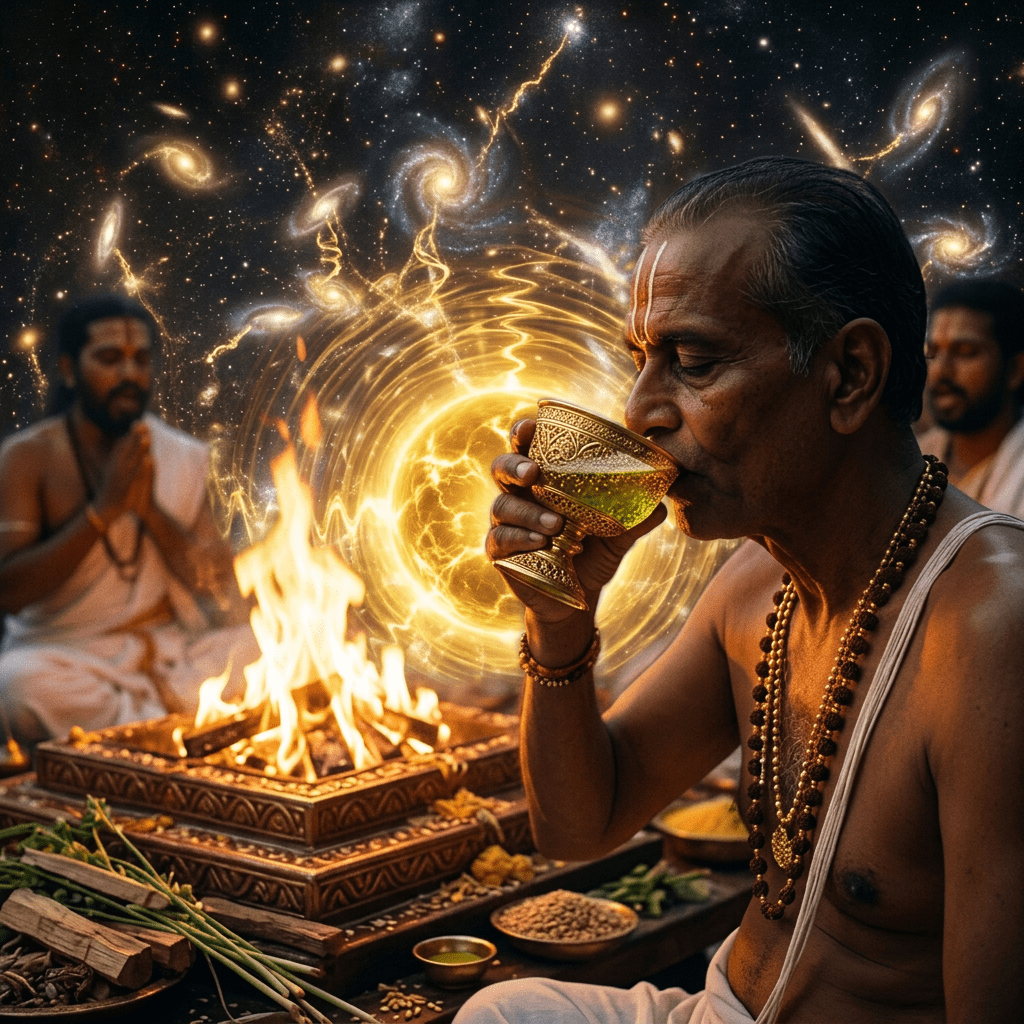
The Vedic Brahman — Ultimate Reality
There is in the Vedic tradition a concept that resists all definition — not because it is obscure or esoteric, but because its very nature renders every definition insufficient. This concept is Brahman. And understanding why it resists definition is already beginning to understand it.
-
LE BRAHMAN VÉDIQUE — LA RÉALITÉ ULTIME
Il y a dans la tradition védique un concept qui résiste à toute définition — non pas parce qu’il est obscur ou ésotérique, mais parce que sa nature même rend toute définition insuffisante. Ce concept, c’est le Brahman. Et comprendre pourquoi il résiste à la définition, c’est déjà commencer à le comprendre.
-

Light and Darkness in Vedic Cosmology
There is in the Rig Veda a tension that runs through all the hymns — visible in every invocation to the dawn, in every celebration of the sacred fire, in every request made to the gods to push back the obscure forces. The tension between light and darkness. Between what illuminates and what conceals. Between…
-
LA LUMIÈRE ET LES TÉNÈBRES DANS LA COSMOLOGIE VÉDIQUE
Il y a dans le Rig Veda une tension qui traverse tous les hymnes — visible dans chaque invocation à l’aurore, dans chaque célébration du feu sacré, dans chaque demande faite aux dieux de repousser les forces obscures. La tension entre la lumière et les ténèbres. Entre ce qui illumine et ce qui cache. Entre…
-

The Women Rishis — Ghoṣā, Lopāmudrā, Apālā
There is in the Rig Veda something that often surprises those who venture into it for the first time — and which says something essential about the civilization that produced it. Among the hundreds of rishis whose hymns constitute this fundamental text, some are women. Women who composed hymns. Women whose speech was judged sacred…
-
LES FEMMES RISHIS — GHOṢĀ, LOPĀMUDRĀ, APĀLĀ….
Il y a dans le Rig Veda quelque chose qui surprend souvent ceux qui s’y aventurent pour la première fois — et qui dit quelque chose d’essentiel sur la civilisation qui l’a produit. Parmi les centaines de rishis dont les hymnes constituent ce texte fondamental, certains sont des femmes. Des femmes qui ont composé des…
-

Aditi — The Goddess of the Infinite
There is in the Rig Veda a divine figure that resists all definitions — that escapes every attempt to grasp it, to circumscribe it, to reduce it to a function or a story. This figure is Aditi. And perhaps it is precisely because she is the infinite itself that any definition betrays her.
-
ADITI — LA DÉESSE DE L’INFINI
Il y a dans le Rig Veda une figure divine qui résiste à toutes les définitions — qui échappe à toute tentative de la saisir, de la circonscrire, de la réduire à une fonction ou à une histoire. Cette figure, c’est Aditi. Et peut-être est-ce précisément parce qu’elle est l’infini lui-même que toute définition la…

