Étiquette : Vedic Spirituality
-

UṢAS — THE DAWN AND DAILY RENEWAL
Uṣas is the most celebrated Vedic goddess — the dawn that awakens all living beings and illuminates consciousness. A close reading of hymns 1.92, 1.113 and 7.75-80.
-

RUDRA — THE FORCE THAT DESTROYS TO HEAL
Rudra is the terrifying healer of the Rig Veda — formidable archer and physician of a thousand remedies. A close reading of hymns 1.114, 2.33 and 7.46.
-

THE MARUTS AND CLIMATE DISRUPTION
The Maruts — deified winds and storms — describe with striking precision what climate disruption is doing to our world. A Vedic decipherment
-

RECITATION AND COLLECTIVE MEMORY IN THE RIG VEDA
The Rig Veda was transmitted orally for 4,000 years without a single book. A close reading of Vedic memorisation techniques and collective recitation
-
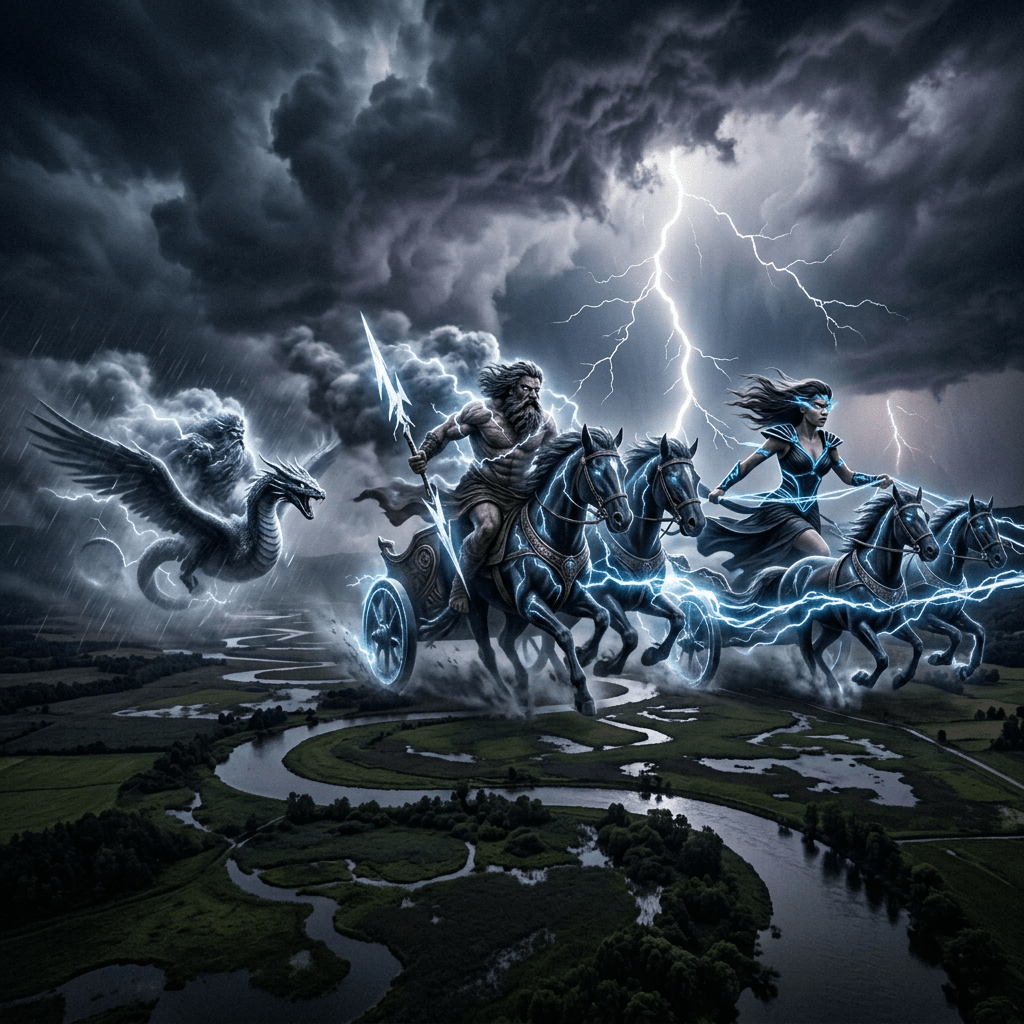
THE MARUTS — WIND ENERGY DEIFIED
In the Vedic pantheon, the Maruts occupy a singular place. They are not a single god but a troop — a band of fierce, roaring, impetuous young gods who travel together on their blazing chariots and shake the world in their wake. Their name itself says it: « those who cause death » — the winds. But…
-

VĀC: THE WORD AS CREATIVE FORCE
In the Rig Veda, the Word pre-exists the gods and sustains them. A close reading of hymn 10.125 and the four levels of speech, in Hervé Le Bévillon’s translation
-

MANTRAS: WHY THE SONIC FORM IS SACRED
A Vedic mantra is not a prayer — it is a technique with three dimensions: text, sound, rhythm. A close reading from Hervé Le Bévillon’s translation.
-

THE WOMEN RISHIS: GHOṢĀ, LOPĀMUDRĀ, APĀLĀ….
Thirteen women composed hymns in the Rig Veda. A close reading of three of them — Lopāmudrā, Apālā, Ghoṣā — in Hervé Le Bévillon’s translation
-
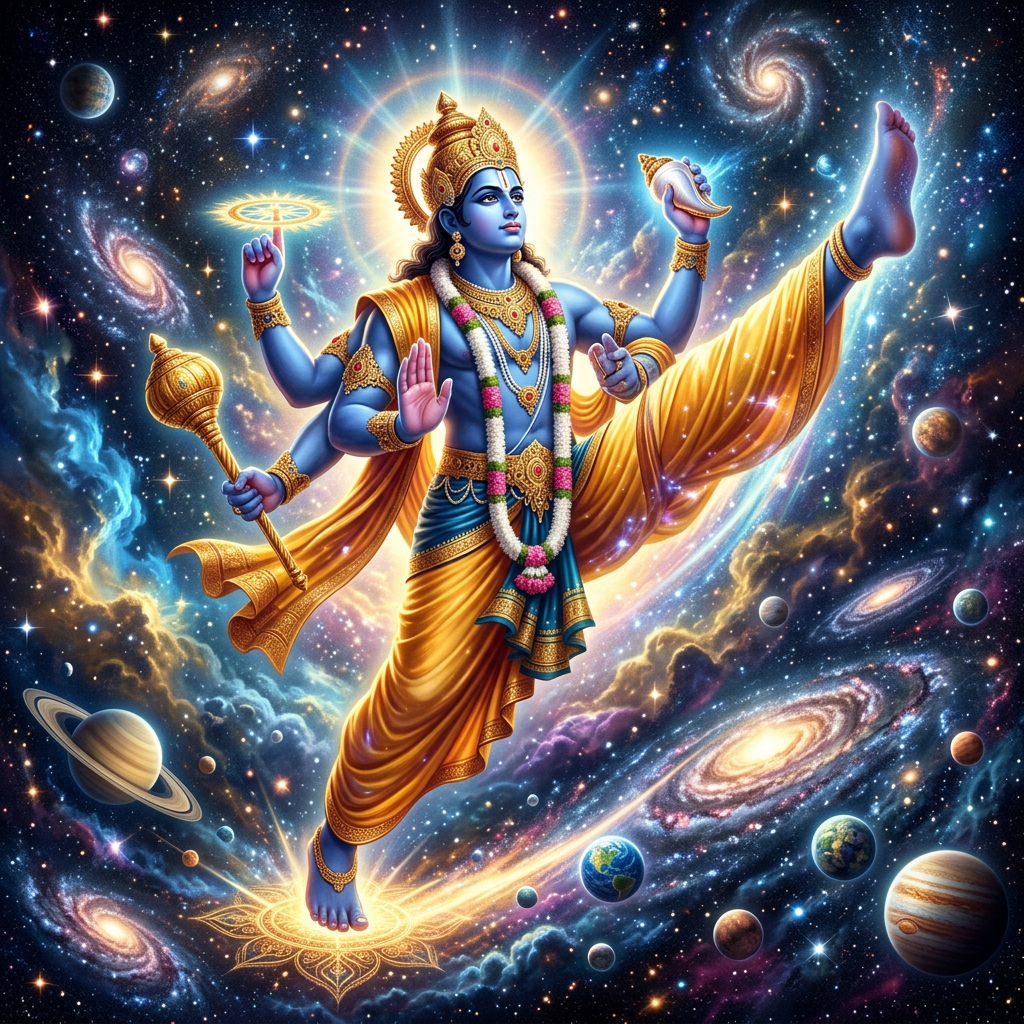
Vishnu and the Three Levels of Consciousness
Vishnu’s three strides in the Rig Veda are not a cosmic myth: they map the three states of human consciousness, from the ordinary to fusion with the universe.
-

Varuna
In the oldest texts of India, such as the Rig Veda, we find a god named Varuna . He is often misunderstood, as many 19th-century authors wanted to compare him to the Greek or Roman gods. They sometimes presented him as the « king of the gods, » or as a kind of god of the sky…

