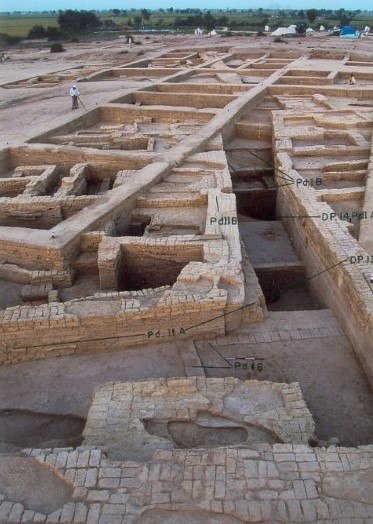
Bhirrana, one of the oldest sites of the Indus Civilization, located on the Ghaggar (ancient Sarasvati) River, has revealed evidence of continuous occupation dating back to around 7500 BCE . This site offers valuable insight into the agricultural practices and grain storage techniques of this advanced civilization.
Well-organized agriculture
Archaeological excavations have revealed that the people of Bhirrana cultivated several cereals, including wheat, barley and millet , attesting to a diversified agriculture. The discovery of carbonized grains confirms the importance of these crops in their diet and economy.
Storage granaries and silos
As in other cities of the Seven Rivers Civilization, Bhirrana had elaborate storage structures to preserve grains for long periods. These systems included:
- Underground silos , dug into the ground and covered with clay to protect the grain from moisture and pests.
- brick platforms to store supplies and prevent flooding during the monsoon season.
- Earthenware jars , used to store small quantities of grain in homes.
These techniques demonstrate controlled management of food resources and advanced economic planning , essential to support a growing population.
Logistics designed for the long term
The storage systems discovered at Bhirrana suggest that the city practiced a form of collective and family storage . The existence of large silos indicates possible community control of resources, where surpluses were preserved to cope with difficult periods, such as droughts or poor harvests.
A tradition that has endured
The methods of grain preservation observed at Bhirrana resemble those used later at other Indus civilization sites, such as Rakhigarhi and Harappa. They demonstrate a technological continuity that continued for several millennia.
In conclusion, Bhirrana stands out not only as one of the earliest known agricultural settlements, but also as a centre where grain storage techniques were already well developed, laying the foundations for a prosperous and organised society.
 Le Rig Veda
Laisser un commentaire