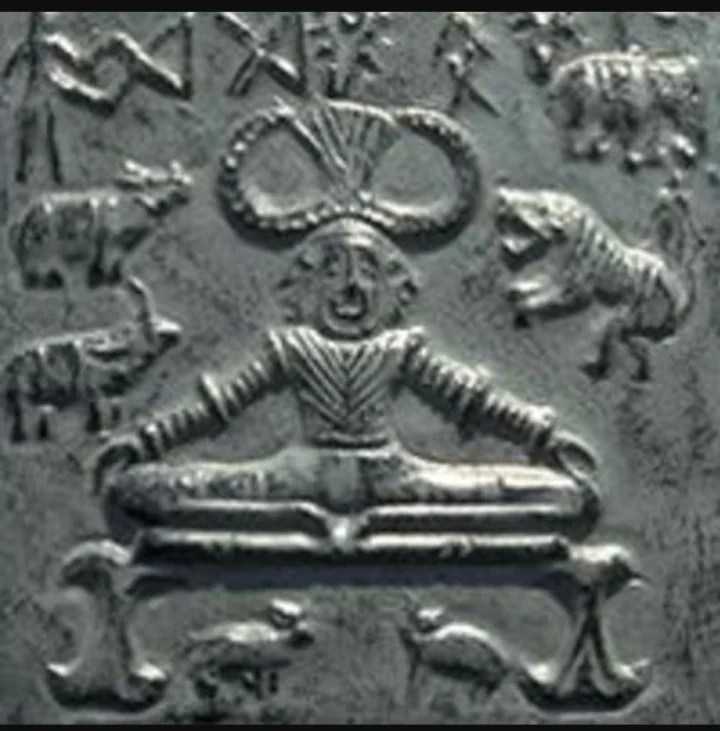
The Vedic texts, written by the civilization of the 7 rivers, give an essential place to medicinal and sacred plants. These hymns, mainly from the Atharva-Veda and the Rig-Veda, show that the ancients used plants not only to heal, but also to reach high states of consciousness.
Plants in Vedic Hymns
The Vedas describe plants as living beings with invisible powers and forces. They are often called oshadhi , a term that refers to both their physical appearance and their life force. There are hymns and invocations intended to activate their healing and spiritual power.
Some texts address plants directly, as if they were benevolent deities. They are implored to cure illnesses, purify the soul and protect men from negative influences. This approach shows a vision of the world where nature and humans are deeply linked.
Medicinal plants in the Atharva-Veda
The Atharva Veda contains numerous references to plants used to treat diseases. Some of them are mentioned for their effects on fever, injuries, infections and mental disorders.
Among these plants, we find:
- Soma : Considered a sacred plant, it was used in rituals to raise consciousness. Its true nature remains uncertain, but it could be an entheogenic mushroom like Psilocybe cubensis .
- Ashvagandha : Known for strengthening the body and mind, it was used against fatigue and stress.
- Haritaki : Valued for its purifying properties, it was considered a universal remedy.
- Kusha : An herb used for its purifying properties in sacred rituals and energy healing.
- Ganja (Cannabis) : Mentioned in the Atharva Veda as one of the five sacred plants, ganja is described as a « source of happiness » and a « liberator ». It was used to relieve anxiety and in spiritual rituals to elevate consciousness.
The link between plants and spirituality
In the Seven Rivers civilization, plants were not only used to heal the body, they were also used for meditation and spiritual practices. Vedic sages and priests used them to open consciousness, purify the soul and strengthen the connection with the divine.
Rituals often involved chanting and singing hymns to the plants before they were used. This deep respect is a testament to the central place they occupied in Vedic culture.
Current Legal Status of Cannabis in India
Historically, cannabis has held an important place in Indian culture and spirituality. However, in 1985, India enacted the Narcotic Drugs and Psychotropic Substances (NDPS) Act, banning the production and sale of certain parts of the cannabis plant, including the resin (charas) and flowers (ganja).
However, some traditional preparations such as bhang , made from cannabis leaves and flowers, remain legal in several Indian states and are consumed during religious and cultural festivals.
A tradition still alive
Even today, Ayurveda, which has its roots in the Vedas, continues to use these plants to heal and maintain balance between body and mind. Many of the remedies mentioned in the ancient texts are still used in traditional Indian medicine.
The legacy of Vedic hymns dedicated to plants remains very much alive. It reminds us that nature offers precious resources for healing and spiritual elevation, as the ancients of the civilization of the 7 rivers already knew.
 Le Rig Veda
Laisser un commentaire