Étiquette : Oxus
-
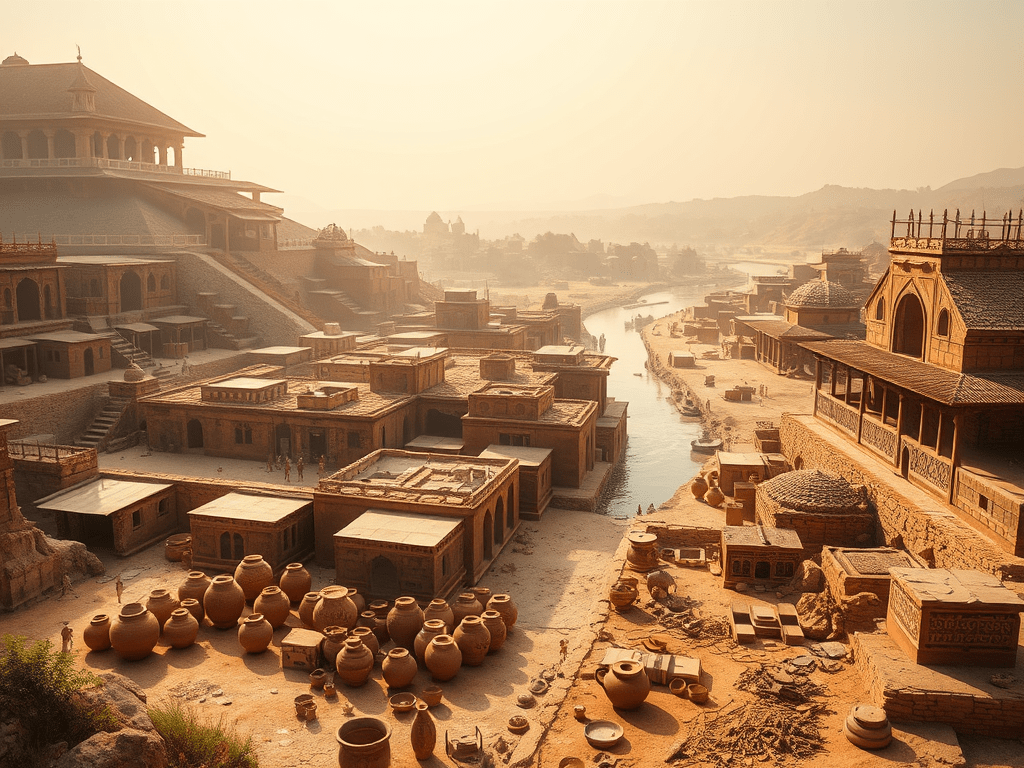
Rakhigarhi: Urban or rural center? Analysis of its social organization
Rakhigarhi, located in the present-day state of Haryana in India, is one of the largest archaeological sites of the Seven Rivers Civilization. This impressive site, which dates back nearly 5,000 years, raises many questions about its role: was it an advanced urban city or a thriving rural center? Analysis of its social organization reveals fascinating…
-

Les Hymnes Védiques comme Reflets d’une Société Pré-urbaine
Les hymnes du Rig Veda, considérés comme le plus ancien corpus littéraire de l’humanité, offrent une fenêtre unique sur une époque bien antérieure à l’émergence des grandes cités de la civilisation des 7 Rivières, connue sous le nom de civilisation de l’Indus-Sarasvatî. En particulier, les mandalas 2, 3, 4, 5, 6 et 7 sont souvent…
-
Vedic Hymns as Reflections of a Pre-Urban Society
The hymns of the Rig Veda, considered the oldest body of literature known to mankind, offer a unique window into a time long before the emergence of the great cities of the Seven Rivers civilization, known as the Indus-Sarasvati civilization. In particular, mandalas 2, 3, 4, 5, 6, and 7 are often considered the oldest…
-

Les influences afghanes dans l’artisanat de Ganweriwala
Ganweriwala, une des grandes villes de la civilisation des 7 rivières, est située dans l’actuel désert du Cholistan, au Pakistan. Bien que cette cité soit moins connue que Mohenjo-Daro ou Harappa, elle offre des indices fascinants sur les échanges culturels et commerciaux de cette civilisation. Parmi ces influences, les traces afghanes dans l’artisanat de Ganweriwala…
-

The Impact of Natural Phenomena on Vedic Spirituality
In the Seven Rivers civilization, natural forces played a central role in spirituality and ritual practices. Vedic texts, particularly the Rig Veda , reveal a deep connection between natural elements and the spiritual quest of this civilization. These forces were often seen as divine manifestations, embodying both cosmic and human principles.
-

Archaeological excavations in Banawali: an underground treasure
Banawali, an ancient city of the Seven Rivers Civilization, is located in the present-day state of Haryana, India. This archaeological site, discovered in the 1970s, has revealed fascinating remains that offer us a unique insight into the daily life, crafts and social organization of this ancient civilization.
-
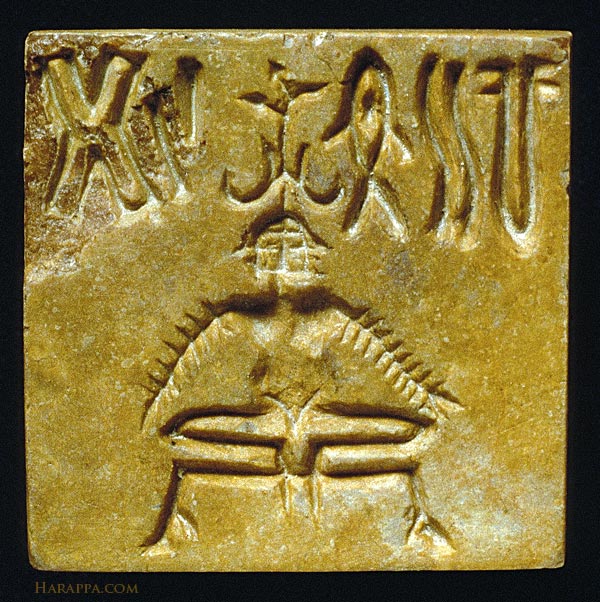
The evolution of spirituality in the Rig Veda with the disappearance of Soma
The Rig Veda, the oldest text of humanity, reflects the spiritual and cultural wealth of the civilization of the 7 rivers. However, a major turning point appears in the tenth mandala, where the chants and rituals show a transformation of spirituality. This evolution is closely linked to the progressive scarcity of Soma, a sacred plant…
-
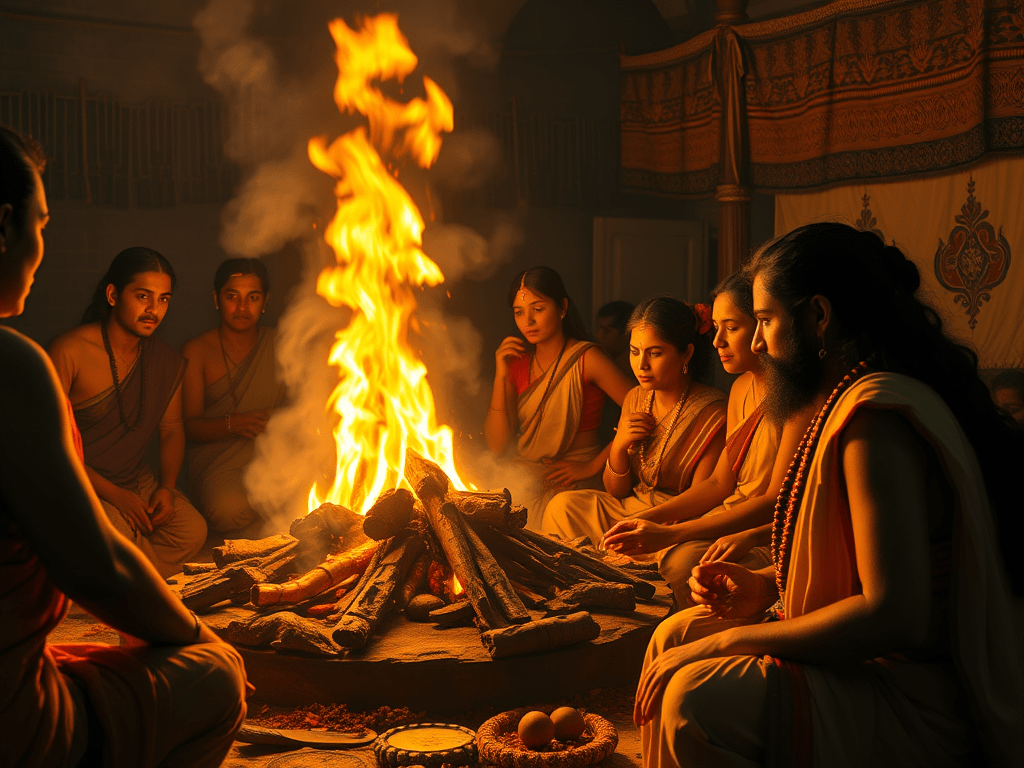
Les cérémonies funéraires et les hymnes sur la mort dans le Rig Veda
Les cérémonies funéraires et les hymnes sur la mort dans le Rig Veda sont des aspects essentiels pour comprendre les croyances et les pratiques de la civilisation des 7 rivières. Ces traditions, qui remontent à plus de 5 500 ans, révèlent une approche spirituelle et philosophique face à la mort et à l’après-vie. Les sites…
-

Ganweriwala: A Religious Centre on the Sarasvati
Ganweriwala, located on the banks of ancient Sarasvati, is one of the major cities of the Seven Rivers Civilization. Although it has not yet been fully excavated, the remains discovered so far suggest that this city may have had a central religious role.
-

La Compilation Finale du Rig Veda : Un Corpus Sacré de la Fin de la Civilisation
Le Rig Veda, considéré comme le plus ancien texte sacré de l’humanité, est une collection de 1 028 hymnes répartis en dix mandalas (chapitres). Ce corpus fascinant reflète les croyances, pratiques et visions du monde de la civilisation de l’Indus-Sarasvatî, que l’on surnomme parfois la « civilisation des sept rivières ». Cependant, l’histoire de sa compilation révèle…
 Le Rig Veda