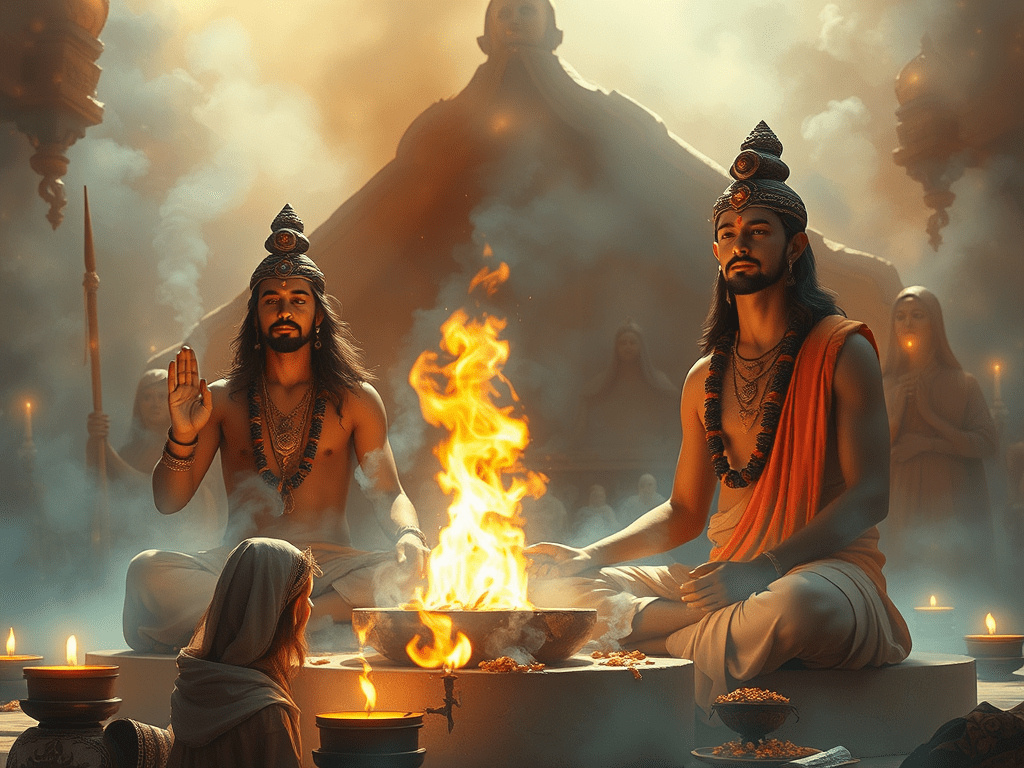
In the 7 Rivers civilization, rituals of passage played an essential role in the spiritual evolution of individuals. One of the most important sacrifices was the Agnistoma, a sacrificial ritual that lasted several days and allowed one to reach a state of deep awakening.
Yajna: a ritual in several stages
The yajña, which Westerners called sacrifice, was a long and structured ceremony. The first few days were devoted to the purification of the body and mind. Those who participated followed strict rules, including periods of fasting and meditation practices. The goal was to prepare mentally and physically for the culmination of the ritual.
Soma consumption: a moment of enlightenment
On the last day, participants consumed three times soma, an entheogenic plant now identified as Psilocybe cubensis. This consumption was central to the ritual, as it allowed for an intense mystical experience.
The effects of soma caused an expanded perception of reality. Participants felt a deep union between their individual soul (atman) and the universal soul (brahman). The ego dissolved, giving way to a feeling of absolute peace and understanding.
A ritual to transcend ordinary existence
The yajña was not just a ceremony, but a true spiritual journey. Those who experienced it emerged transformed, having access to a reality larger than that of everyday life.
In the Seven Rivers civilization, these rites were essential to guide individuals toward a deeper understanding of the universe and their place in it. Even today, the teachings of the Rig Veda inspire those who seek to explore the nature of consciousness and the union between the human and the divine.
 Le Rig Veda
Laisser un commentaire