The Rig Veda, the oldest text of humanity, reflects the spiritual and cultural wealth of the civilization of the 7 rivers. However, a major turning point appears in the tenth mandala, where the chants and rituals show a transformation of spirituality. This evolution is closely linked to the progressive scarcity of Soma, a sacred plant that played a central role in spiritual practices.
Soma, divine and sacred essence
Soma was a ritual drink prepared from a revered plant (psilocybe cubensis), described in early hymns as a source of energy, enlightenment, and connection with the divine. Considered an intermediary between men and gods, it was pressed and filtered to extract a brownish beverage, consumed during grandiose rituals.
Soma also symbolized and enabled transcendence and elevation of the spirit, helping the wise to go beyond human limitations to access profound spiritual truths.
A progressive shortage
The tenth mandala of the Rig Veda, compiled well after the early sections, reflects a time when Soma was beginning to become scarce. The reasons for this shortage remain hypothetical, but evidence suggests that the original plant was becoming increasingly difficult to find in the region of the Seven Rivers Civilization following the great drought of 2200 BCE.
Initially, stocks of dried Soma allowed traditional rituals to continue. But over time, priests had to find alternatives or modify practices to compensate for its absence.
A spirituality in transformation
With the disappearance of Soma, Vedic spirituality adapted. The texts of the tenth mandala show an increased importance of prayers, chants and meditations as means of accessing the divine.
Rituals evolved to place greater emphasis on inner qualities such as devotion, discipline, and contemplation. The idea of connecting to universal forces through the mind rather than through external substances became a new spiritual pillar.
For example, hymns addressed to deities such as Agni (the sacred fire) and Varuna (the guardian of the cosmic order) place greater emphasis on the ethical and moral relationship between men and the gods. This reflects a more introspective approach, where mental and spiritual practices gradually replace rituals based on material substances.
Legacy and resilience
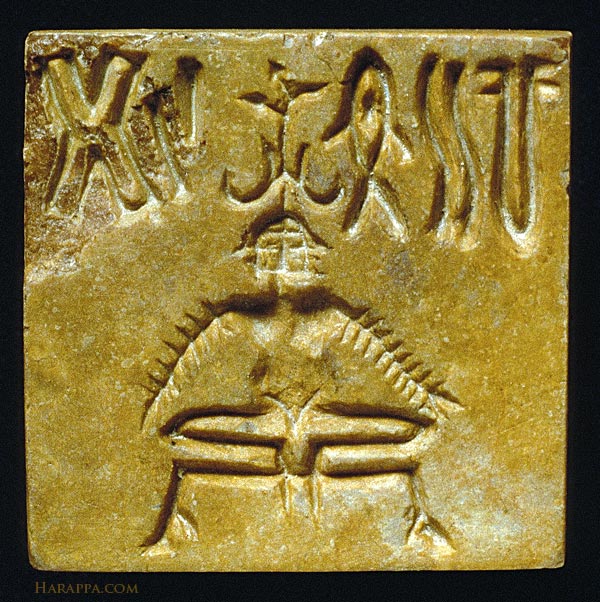
The disappearance of Soma was a turning point, but it did not weaken the spirituality of the civilization of the 7 rivers. On the contrary, this challenge stimulated a deeper reflection on the means of accessing wisdom and harmony with the universe. The Brahmins developed yoga, meditation and pranayama, which must have already existed as can be seen on the seals found there. They then developed the Upanishads.
This transformation shows the ability of a culture to adapt to change, while retaining the essence of its spiritual values. Today, the Rig Veda remains a timeless testimony to the human quest for enlightenment, beyond the limits of time and material resources.
Conclusion
The evolution of spirituality in the Rig Veda, with the gradual disappearance of Soma, illustrates the resilience and creativity of the civilization of the 7 rivers. By adapting to challenges, it has been able to preserve a profound spiritual quest that still inspires modern generations.
 Le Rig Veda
Laisser un commentaire