Étiquette : Indra
-
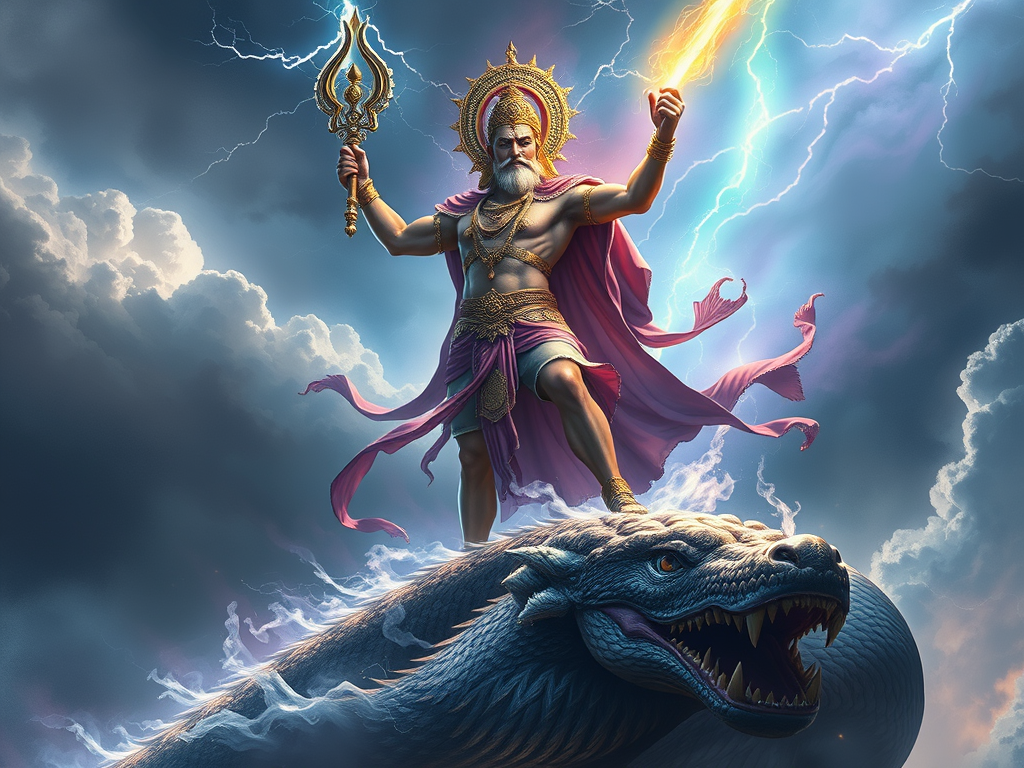
Indra: the inner force that breaks down the walls of the mind
In the Rig Veda, Indra is deified strength, storm, and victorious will. He is not only a god of war or the elements. For those seeking self-knowledge, he is also an inner power capable of breaking down the barriers that imprison consciousness.
-

Maruts (Rudras): storm-gods, turbulent companions of Indra
The Maruts, also called Rudras, are powerful and noisy storm gods of the Rig Veda. They often appear in groups, riding chariots drawn by swift horses, surrounded by wind, thunder, and lightning. They are a young, impetuous, noisy, and feared warrior troop, often described as bright, golden, and radiant. Their energy is raw, wild, and…
-
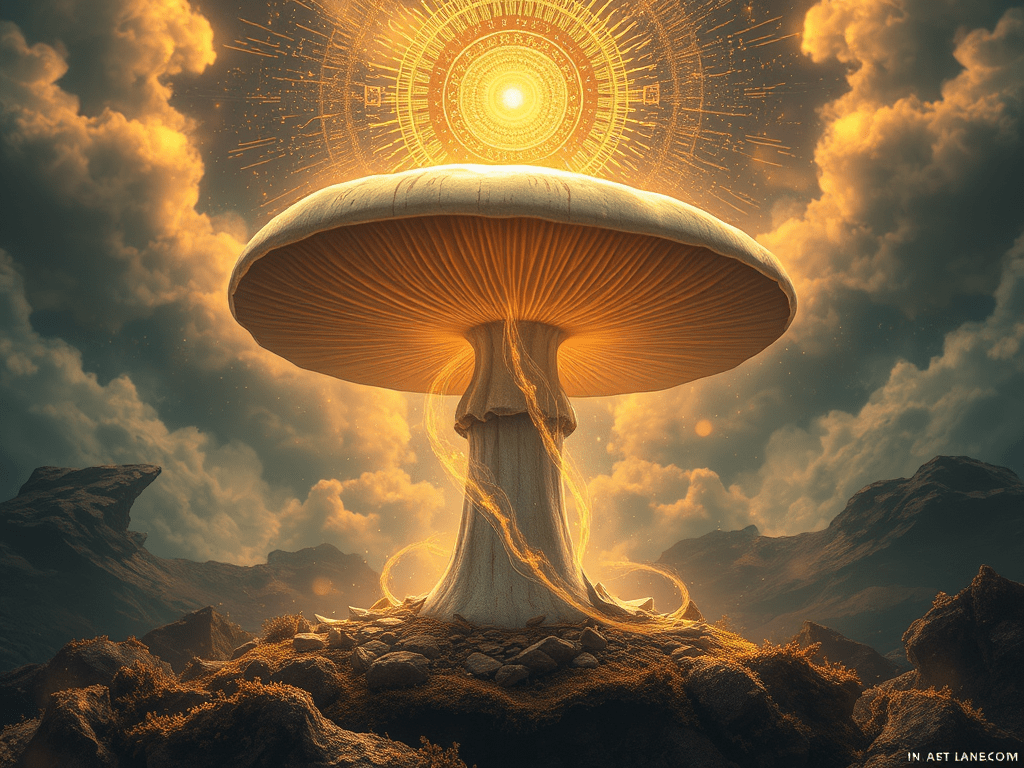
Le rôle du Soma dans l’union entre l’individu et le divin
Dans les textes védiques, le Soma occupe une place centrale. Il est à la fois une plante, un breuvage, un dieu, et une porte vers une autre réalité. Il n’est pas qu’un élément rituel : il est le lien vivant entre l’humain et le divin. Grâce à lui, les sages accédaient à une forme d’illumination…
-
The role of Soma in the union between the individual and the divine
In Vedic texts, Soma occupies a central place. It is at once a plant, a beverage, a god, and a gateway to another reality. It is not merely a ritual element: it is the living link between the human and the divine. Through it, sages accessed a form of inner illumination, transcending the ego, the…
-
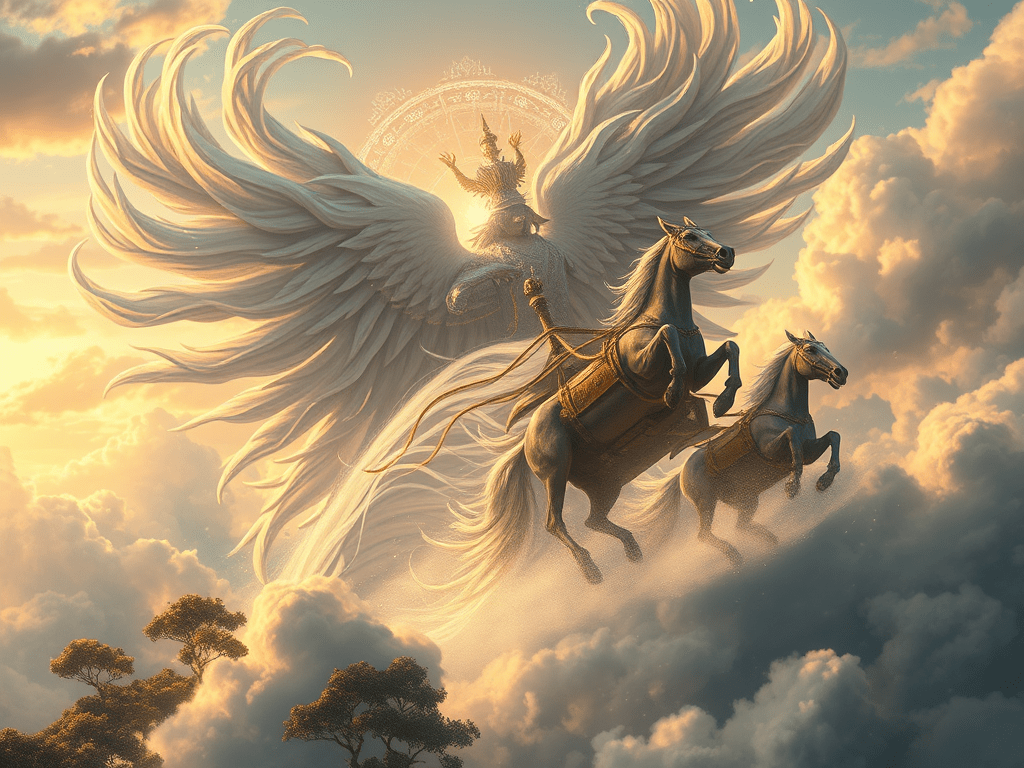
Vāyu : dieu du vent, lien entre ciel et hommes
Dans les textes védiques, Vāyu est le dieu du vent. Invisible mais omniprésent, il traverse les mondes, relie les espaces et anime tous les êtres vivants. Il est l’un des plus anciens dieux mentionnés dans le Rig Veda, et son rôle est central dans la cosmologie spirituelle de cette époque.
-
Vāyu: god of the wind, link between heaven and men
In the Vedic texts, Vāyu is the god of the wind. Invisible but ever-present, he traverses the worlds, connects spaces, and animates all living things. He is one of the oldest gods mentioned in the Rig Veda , and his role is central to the spiritual cosmology of that era.
-

Aditi : Mère des dieux, vierge primordiale et image de l’Infini
Dans les textes védiques les plus anciens, Aditi est présentée comme la mère des Adityas, ces dieux lumineux associés à l’ordre cosmique (ṛta), à la vérité, à la lumière et à la justice. Le nom Aditi signifie littéralement non-liée, libre de toute contrainte. Cela montre qu’elle ne connaît ni limite, ni attachement, ni division. Elle…
-
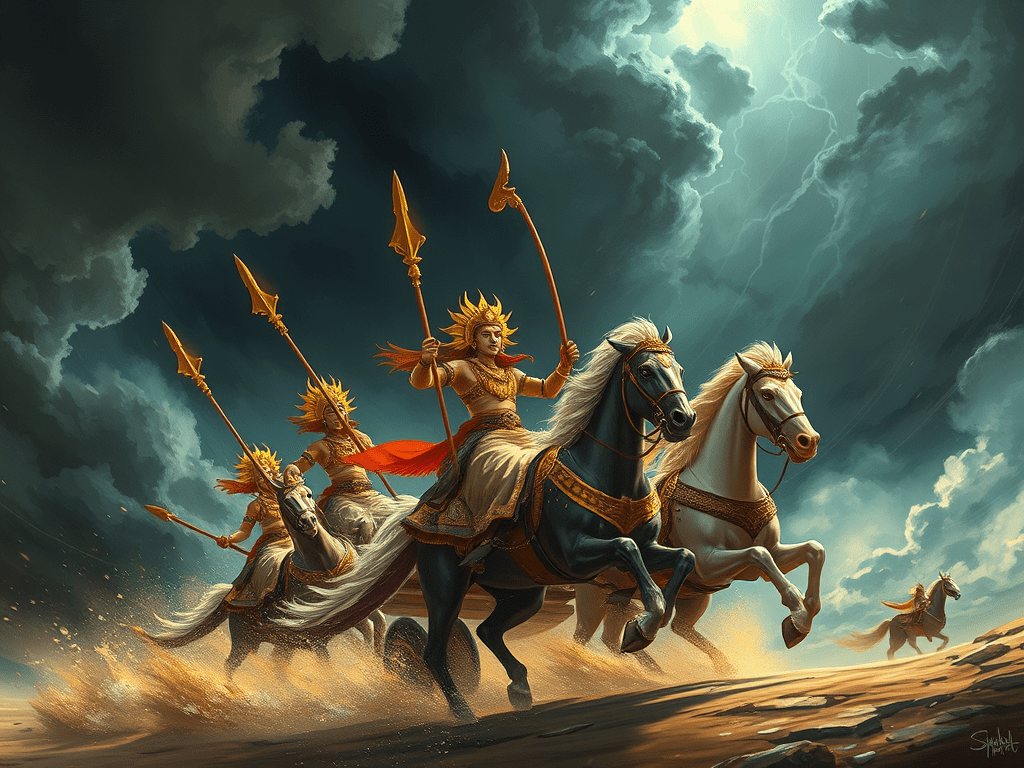
Les Maruts :
Les Maruts sont des dieux qui figurent en bonne place dans le Rig Veda, le plus ancien texte sacré de l’Inde. Dans la civilisation des Sept Fleuves, ils sont connus comme les jeunes guerriers du ciel, toujours en mouvement, agités comme les vents qu’ils incarnent. Le mot Marut vient d’une racine sanskrite signifiant « causer…
-
The Maruts:
The Maruts are gods who feature prominently in the Rig Veda , India’s oldest sacred text. In the civilization of the 7 rivers, they are known as the young warriors of the sky, always on the move, agitated like the winds they embody. The word Marut comes from a Sanskrit root meaning « to cause death. »…
-
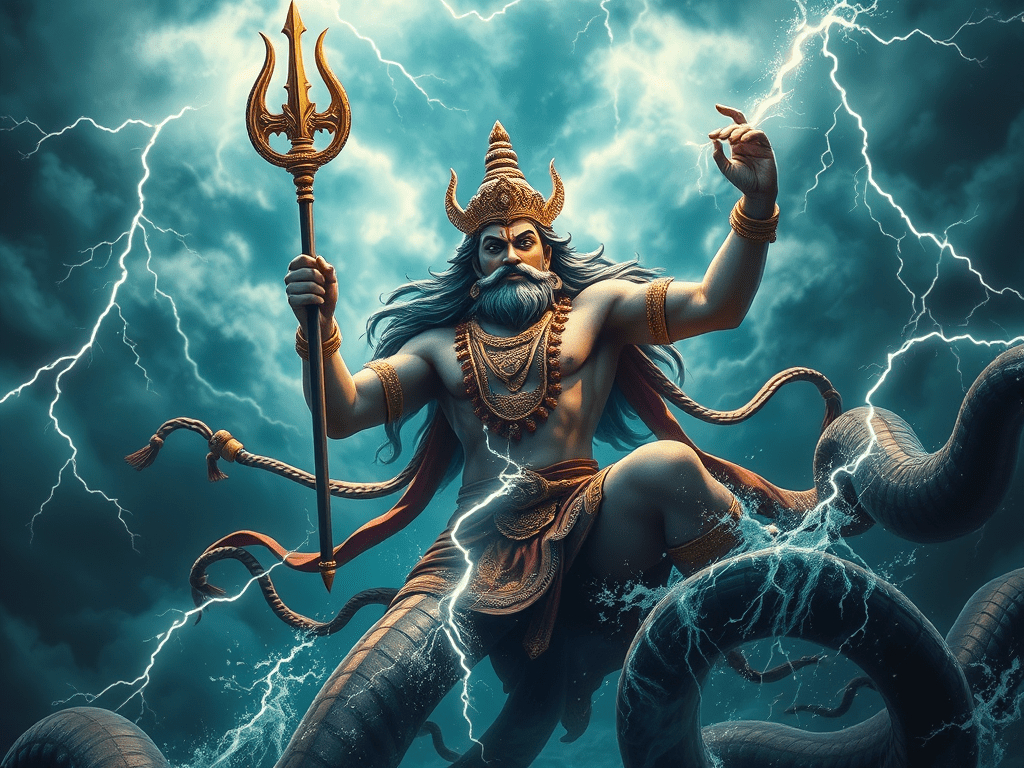
Les mythes de l’orage et de la foudre dans les traditions védiques
Dans la civilisation des 7 rivières, les orages et la foudre n’étaient pas de simples phénomènes naturels. Ils étaient porteurs de sens profond. Ils faisaient partie d’un monde sacré où chaque force de la nature jouait un rôle dans le chemin vers l’illumination. Le maître de l’orage et de la foudre, c’est Indra.

