Water and Life: Purification Rituals in Vedic Hymns
Water has always been central to spirituality in the Seven Rivers civilization. Vedic hymns reveal numerous rituals in which water plays an essential role in purifying the body, mind, and even the soul. This importance is also reflected in the archaeological remains of this civilization, particularly at Mohenjo-Daro, where the Great Bath remains one of the most powerful symbols of the relationship between water and sacred life.
Water in the hymns of the Rig Veda
In the Rig Veda , the oldest known text to humanity, water is often called Apah in Sanskrit. It is praised for its cleansing, healing, and regenerative powers. A famous hymn says,
« May the waters protect us, may they erase our sins, may they wash away our sufferings. »
This shows how water was not only a natural element, but also a direct link to the divine.
Vedic sages used water to purify their hands, foreheads, and hearts before offerings and prayers. These simple gestures were part of a daily ritual, often performed on the banks of a river, especially the Sarasvati, a sacred river and the lifeblood of the Seven Rivers civilization.
Water Purification: A Path to Inner Clarity
In this culture, water was not only used to wash the body. It also helped free one from bad thoughts. Purification was therefore also internal. Before reciting mantras or performing fire ceremonies (yajna), priests would rinse their hands and mouth. This prepared the mind to enter a calmer, clearer state.
It was also believed that water carried away negative energies. This deep connection with rivers created a culture where nature and spirituality were seamlessly intertwined.
The Great Bath of Mohenjo-Daro: a sacred place
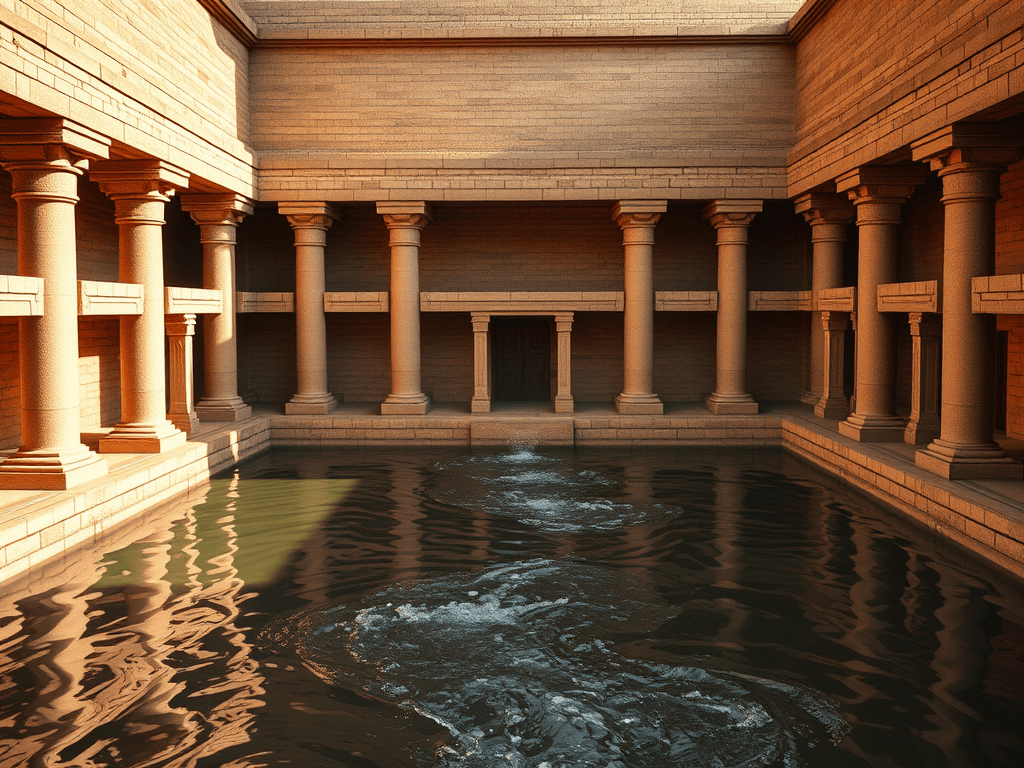
In the heart of Mohenjo-Daro, a major city of the Seven Rivers Civilization, archaeologists discovered a vast pool made of baked bricks, surrounded by galleries. Today, it is called the Great Bath . It measures approximately 12 meters by 7 meters, and it was perfectly waterproof thanks to a layer of bitumen.
This pool was not just a simple swimming pool. It was likely used for purification rituals. Its importance and central location in the city indicate that it held spiritual significance. People may have entered it for ritual baths, during festivals or special times of the year. The water was brought in through wells and drained away through a well-designed drainage system.
This Great Bath is one of the oldest testimonies of a public place dedicated to ritual purification by water. It shows that long before written texts, this practice was already alive.
A link between water, purity and light
In Vedic thought, purifying oneself with water meant drawing closer to the inner light. Sacred fire (Agni), dawn (Ushas), thunder (Indra)—everything was connected. The elements worked together. Water opened the way to a clearer, more peaceful consciousness. This connection between water, purity, and inner elevation is found in all Indian traditions.
Conclusion
In the Seven Rivers civilization, water wasn’t just used for drinking or farming. It was a sacred tool for purification, refocusing, and opening oneself to something greater. The Vedic hymns and the Great Bath of Mohenjo-Daro remind us of this ancient wisdom: water is the source of life, clarity, and inner peace.
 Le Rig Veda
Laisser un commentaire