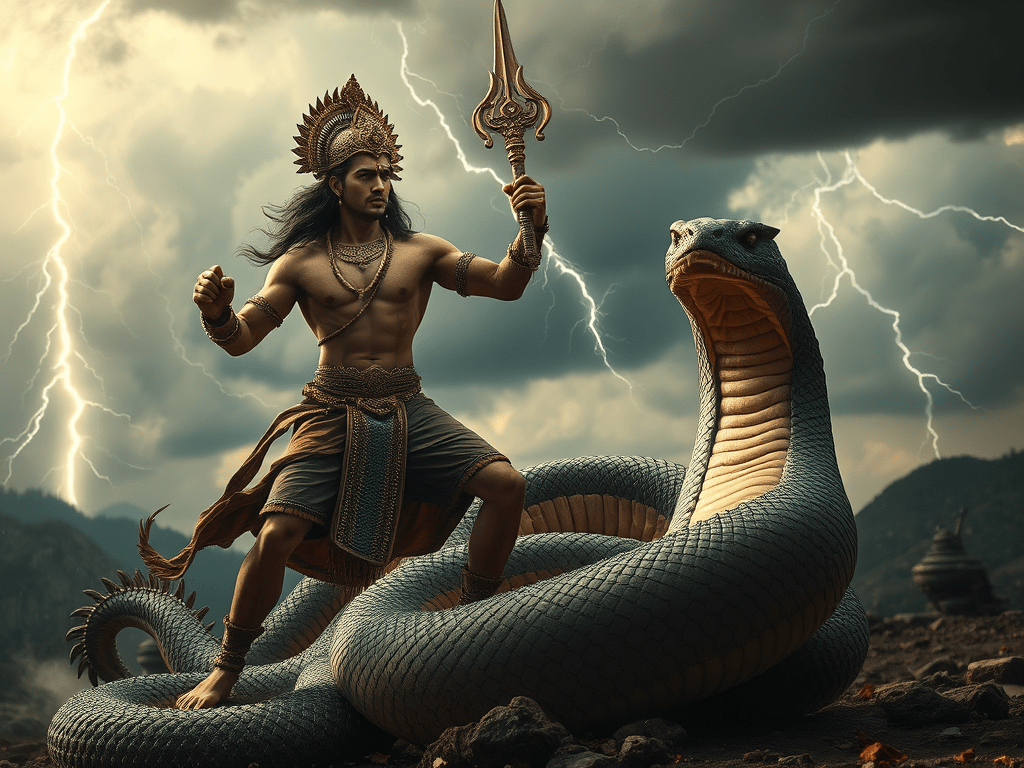
The myth of Indra and Vritra is one of the most powerful stories in the Rig Veda, India’s oldest sacred text. In this story, the god Indra is seen battling Vritra, a gigantic serpent or demon, to free the waters and bring rain back to the earth. This myth represents much more than a simple struggle between two figures; it symbolizes the victory of abundance and fertility over drought and sterility. In the civilization of the seven rivers, this theme must have resonated deeply with the people, for whom the cycles of nature were essential.
Main Characters: Indra and Vritra
Indra is the deified lightning, thunder and storms in Vedic mythology. He is often depicted as a strong and courageous warrior, who protects humans and other gods from forces that threaten the harmony of the world. For the inhabitants of the civilization of the 7 rivers, Indra represented the force that allowed them to overcome periods of drought, a major challenge in this region crossed by rivers but subject to the whims of the seasons.
Vritra, on the other hand, is often depicted as a giant serpent or demon. His name means « the one who covers, » as Vritra blocks the waters and prevents rain from falling, causing drought. In myth, he traps the waters in caves or holds them in clouds that he holds captive, depriving the earth of the water it needs to survive.
The Fight Between Indra and Vritra
In the myth, Indra decides to confront Vritra to free the waters. He uses a powerful lightning bolt, often called the vajra, a weapon made to break obstacles. After an intense struggle, Indra succeeds in defeating Vritra, breaking the barriers and releasing the impounded waters.
This moment in the myth marks the end of the drought and the return of fertility. Rain falls again, the rivers fill, and the land becomes fertile. In the civilization of the 7 rivers, where survival depended on water for agriculture, Indra’s success symbolized the triumph of life over the forces of destruction.
Powerful Symbolism: Water, Fertility and Renewal
The myth of Indra and Vritra is more than a tale of battle. It is a reminder of the cycles of nature, where drought is followed by the return of rain and the rebirth of the earth. Indra’s release of the waters represents renewal, a promise that even after difficult times, life can always return.
In the culture of the Seven Rivers Civilization, where agriculture played a central role, this myth reflects the importance of nature and its cycles for human survival. The inhabitants understood that water, although sometimes blocked by periods of drought, would return thanks to divine help. This connection between water and fertility continues to be a universal symbol of life and continuity.
The Myth Today
The myth of Indra and Vritra continues to resonate today as a metaphor for overcoming challenges. It reminds us that even in the face of difficult situations, there is a force that can break through barriers to restore balance and allow life to flourish again.
In a world where water and climate issues are increasingly pressing, this story, thousands of years old, remains relevant, reminding us of the importance of preserving resources to ensure the continuity of life.
 Le Rig Veda
Laisser un commentaire