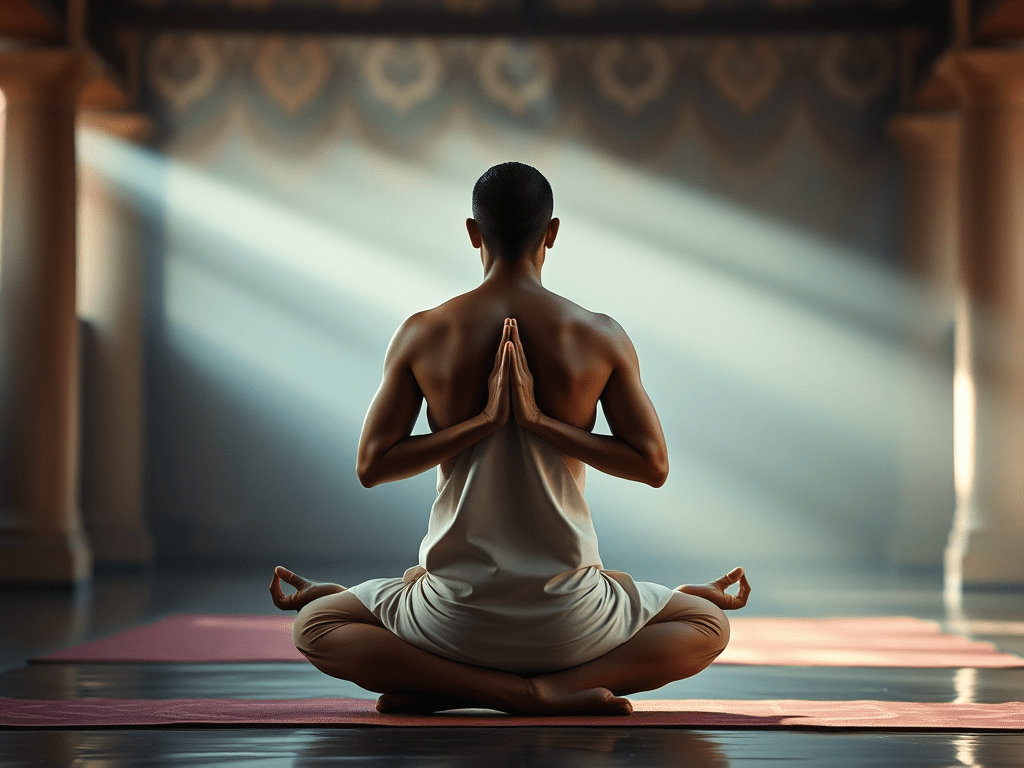
Yoga in India is an ancient practice that goes far beyond the physical postures (asanas) often seen in modern yoga classes. In India, yoga is a complete system that aims at expanding consciousness, that is, spiritual awakening and connecting with oneself and the universe. There are several paths of yoga, each offering a different path to this goal.
1. Jnana Yoga (Yoga of Knowledge)
Jnana Yoga is the path of knowledge and wisdom. It involves the study of sacred texts, reflection and meditation. Those who follow this path seek to understand the nature of reality and oneself through contemplation and discrimination between the real and the unreal. This path is often considered the most direct, but also the most difficult, as it requires great mental discipline.
2. Bhakti Yoga (Yoga of Devotion)
Bhakti Yoga is the path of devotion and unconditional love towards a deity or the divine in general. The practice involves chanting, praying and focusing on love and devotion as a means to achieve oneness with the divine. It is a path accessible to all, as it is based on the heart rather than the intellect.
3. Karma Yoga (Yoga of Action)
Karma Yoga is the path of selfless action. It involves doing one’s duty or serving others without expecting reward. This path teaches that every action should be an offering, done with humility and without attachment to results. Karma Yoga purifies the heart and mind, allowing one to free oneself from the chains of karma (past actions).
4. Raja Yoga (Royal Yoga or Yoga of Meditation)
Raja Yoga, often called the « royal yoga », is the path of meditation. It is based on Patanjali’s eight stages, which include moral discipline, postures, breath control, withdrawal of the senses, concentration, meditation and attainment of the state of samadhi (union with the divine). This path is structured and progressive, ideal for those seeking to master their mind.
5. Hatha Yoga (Yoga of Strength)
Hatha Yoga is the path of the body and mind through physical postures (asanas) and breath control (pranayama). Although often considered a mere physical practice, Hatha Yoga actually prepares the body and mind for meditation and spiritual awakening. It is a foundation for other forms of yoga and helps develop concentration and inner balance.
6. Kundalini Yoga (Energy Yoga)
Kundalini Yoga aims to awaken the dormant energy (kundalini) at the base of the spine. This energy is then directed through the chakras (energy centers) to reach a state of higher consciousness. This practice combines postures, breathing, chanting and meditation to stimulate and balance this powerful energy.
Conclusion
Each path of yoga offers a unique path to the expansion of consciousness. Whether through knowledge, devotion, selfless action, meditation, physical discipline or the awakening of inner energy, yoga in India offers varied methods to achieve spiritual awakening. The choice of path depends on each person’s nature and personal inclinations, but all lead to the same goal: self-realization and oneness with the universe.
 Le Rig Veda
Laisser un commentaire