Introduction
The 7 Rivers Civilization, also known as the Indus Civilization, is one of the oldest and most mysterious civilizations of the ancient world. Flourishing approximately between 3500 and 1900 BCE, this civilization extended along the valleys of the Indus and Sarasvati rivers, in the regions that constitute today Pakistan and northwest India. Remarkably advanced for its time, the 7 Rivers Civilization is best known for its impressive achievements in urban planning and architecture.
Urban planning
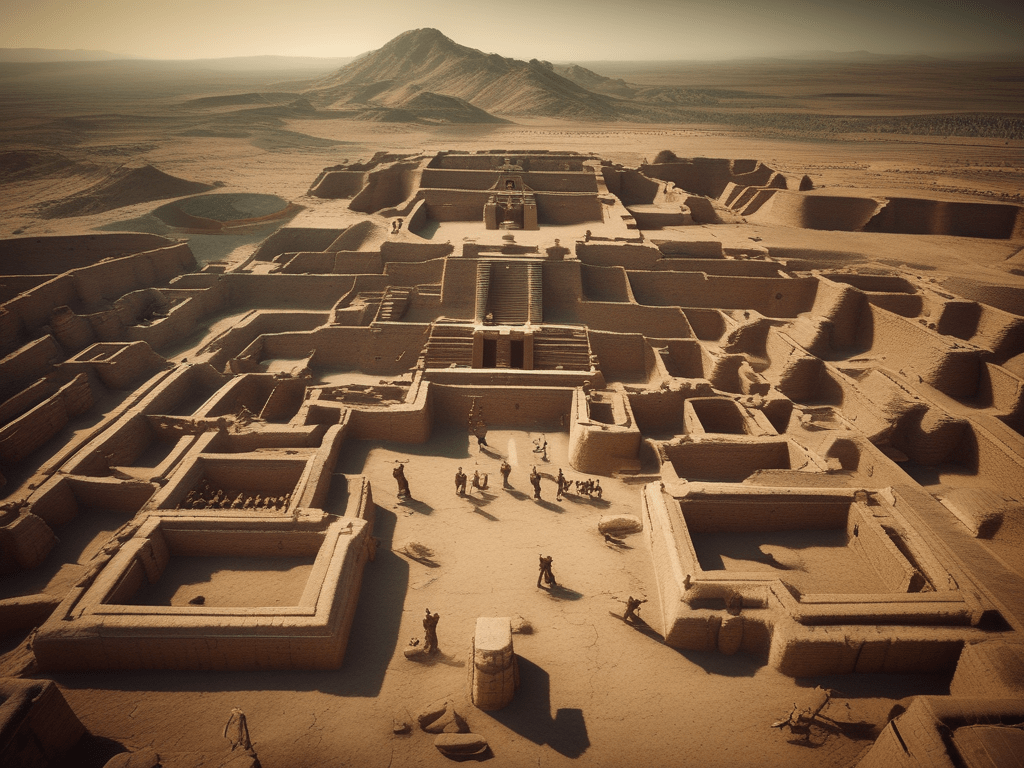
The urban planning of the 7 Rivers Civilization is distinguished by sophisticated urban planning, unique for a Bronze Age society. Major cities, such as Mohenjo-Daro, Harappa, and Dholavira, reveal evidence of meticulous organization and non-centralized administration.
City Planning
1. Grid Layout: Cities were planned in a grid pattern, with streets intersecting at right angles. This not only facilitated traffic but also demonstrated anticipation of the future needs of the growing urban population.
2. Urban Zoning: Most cities were divided into residential, administrative and commercial zones. The residential areas had houses lined up along the streets, while the public buildings formed a sort of citadel.
3. Public Infrastructure: Cities were equipped with sophisticated drainage and sewage disposal systems, demonstrating an advanced understanding of hygiene and public health. Wells and water tanks were also common, ensuring a supply of drinking water.
Architecture
The architecture of the 7 Rivers Civilization is also remarkable, both for its functionality and its aesthetics.
Residential Buildings
1. Brick Houses: Houses were generally built from baked bricks in a standardized shape. This ensured not only durability but also homogeneity in construction techniques.
2. Interior Design: Typical houses featured a central courtyard, surrounded by rooms of varying sizes, serving as bedrooms, kitchens and storage spaces. Many houses also had private bathrooms and latrines connected to the city’s drainage system.
Public buildings
1. The Great Bath of Mohenjo-Daro: One of the most impressive examples is the Great Bath, a huge rectangular brick structure with steps leading to a central swimming pool. Probably used for ritual or religious purposes, it is a testament to the sophistication of hydraulic engineering and architecture of the time.
2. Large Halls and Warehouses: Larger structures, like the great warehouses of Harappa, were used to store grains and other provisions. These buildings show an ability to organize and manage resources on a large scale.
3. Wall and Citadel: Some towns, like Dholavira, were fortified by massive walls and had citadels, raised structures that probably served as administrative and religious centers.
Conclusion
The Civilization of the 7 Rivers, through its achievements in town planning and architecture, has left an impressive legacy which testifies to its technological advance and its social organization. The remains of this ancient civilization provide valuable insight into the sophisticated urban life and methodical architectural thinking of the time. Their ability to plan and build functional and aesthetic cities continues to inspire and fascinate modern archaeologists and historians.
 Le Rig Veda
Laisser un commentaire