Étiquette : Veda
-
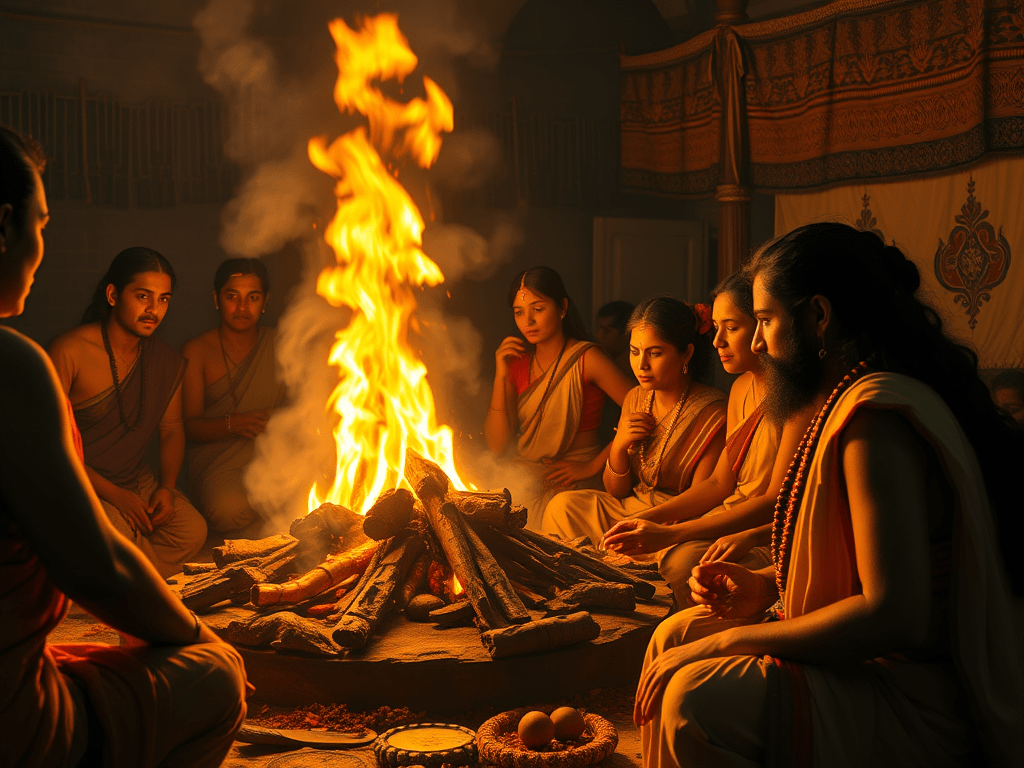
Les cérémonies funéraires et les hymnes sur la mort dans le Rig Veda
Les cérémonies funéraires et les hymnes sur la mort dans le Rig Veda sont des aspects essentiels pour comprendre les croyances et les pratiques de la civilisation des 7 rivières. Ces traditions, qui remontent à plus de 5 500 ans, révèlent une approche spirituelle et philosophique face à la mort et à l’après-vie. Les sites…
-

Les Découvertes de Bijoux et Objets de Luxe à Kalibangan
Kalibangan, située dans l’actuel Rajasthan en Inde, est l’un des sites archéologiques majeurs de la civilisation de l’Indus, également appelée la civilisation des 7 rivières. Ce site, datant de 2500 à 1900 av. J.-C., est reconnu pour son urbanisme avancé et ses systèmes hydrauliques. Cependant, les découvertes de bijoux et objets de luxe à Kalibangan…
-
Jewelry and Luxury Items Discoveries in Kalibangan
Kalibangan, located in present-day Rajasthan in India, is one of the major archaeological sites of the Indus Civilization, also known as the Civilization of the Seven Rivers. This site, dating from 2500 to 1900 BC, is known for its advanced urban planning and hydraulic systems. However, the discoveries of jewelry and luxury objects at Kalibangan…
-

Le rôle du prêtre dans les rituels védiques : transmission orale et préservation des savoirs
Dans les textes védiques de l’Inde ancienne, les prêtres jouent un rôle central dans les rituels et la préservation de la tradition. Leur importance repose sur deux missions principales : la conduite des rituels et la transmission fidèle des savoirs sacrés.
-
The role of the priest in Vedic rituals: oral transmission and preservation of knowledge
In the Vedic texts of ancient India, priests play a central role in rituals and the preservation of tradition. Their importance lies in two main missions: the conduct of rituals and the faithful transmission of sacred knowledge.
-

La Compilation Finale du Rig Veda : Un Corpus Sacré de la Fin de la Civilisation
Le Rig Veda, considéré comme le plus ancien texte sacré de l’humanité, est une collection de 1 028 hymnes répartis en dix mandalas (chapitres). Ce corpus fascinant reflète les croyances, pratiques et visions du monde de la civilisation de l’Indus-Sarasvatî, que l’on surnomme parfois la « civilisation des sept rivières ». Cependant, l’histoire de sa compilation révèle…
-

Ushas, the Deified Dawn: Symbolism of Spiritual Light
In Vedic mythology, Ushas is the incarnation of the dawn, a female figure who rises each morning to open the veil of darkness, announcing the coming of light. A symbol of renewal and purity, she is one of the most poetic deities of the Rig Veda, where she is described with features that are both…
-

The End of Soma Abundance and the Drought of 2200 BCE: A Societal Transformation
Vedic texts, notably the Rig Veda, speak of the ritual use of a sacred drink, Soma, widely linked to spiritual enlightenment and social harmony in the civilization of the 7 rivers, or Indus civilization. This substance, most likely based on psilocybin, was renowned for its transcendent and unifying effects, facilitating the dissolution of the ego…
-

Le Dixième Mandala : Reflet d’une Société en Transformation Spirituelle et Matérielle
Le dixième Mandala du Rig Veda est un recueil fascinant d’hymnes, nous montrant une société complexe, en pleine évolution spirituelle et matérielle, vers 2200 avant notre ère. À cette époque, la civilisation des 7 rivières (civilisation de l’Indus) subit de nombreux changements, notamment une pénurie de soma, cette plante sacrée qui jouait un rôle central…
-
The Tenth Mandala: Reflection of a Society in Spiritual and Material Transformation
The Tenth Mandala of the Rig Veda is a fascinating collection of hymns, showing us a complex society in full spiritual and material evolution, around 2200 BCE. At this time, the civilization of the 7 rivers (Indus civilization) underwent many changes, including a shortage of soma, this sacred plant which played a central role in…
 Le Rig Veda