Étiquette : Veda
-

Divine Energies in the Rig Veda: Indra, Agni and Soma
The Rig Veda describes a universe where the fundamental forces of nature are not simply observed, but experienced as active powers, conscious energies that interact with man. Among them, Indra, Agni and Soma occupy a central place. These three powers are not gods in the anthropomorphic sense, but primordial forces, deified by their impact on…
-

Les pratiques de purification de l’eau dans la vallée de la Sarasvatî
La civilisation des 7 rivières, qui s’épanouissait le long de la Sarasvatî et de ses affluents, accordait une grande importance à l’eau. Cette ressource précieuse était non seulement vitale pour l’agriculture et la vie quotidienne, mais aussi associée à des rituels et des pratiques de purification. Les habitants avaient développé des méthodes avancées pour filtrer,…
-

Water Purification Practices in the Sarasvati Valley
The Seven Rivers Civilization, which flourished along the Sarasvati and its tributaries, placed great importance on water. This precious resource was not only vital for agriculture and daily life, but also associated with rituals and purification practices. The inhabitants had developed advanced methods to filter, store and purify water, thus ensuring healthy and sustainable consumption.
-
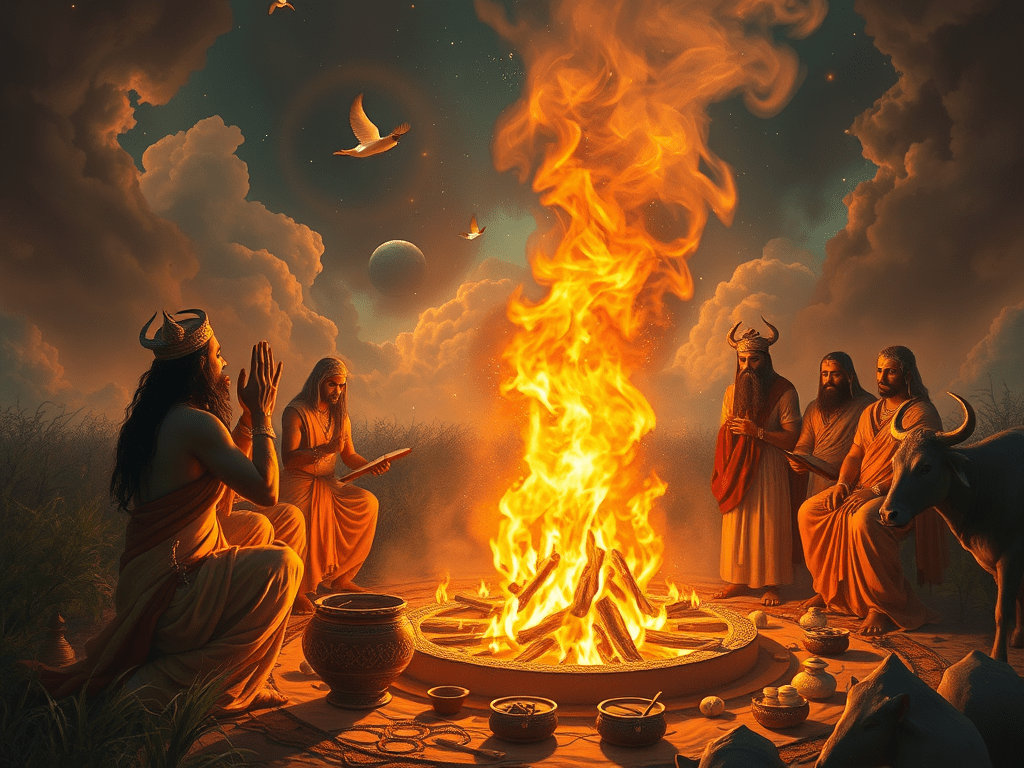
Les hymnes pour la prospérité et l’abondance dans le Rig Veda
Le Rig Veda, l’un des textes les plus anciens de l’humanité, contient de nombreux hymnes dédiés à la prospérité et à l’abondance. Toutefois, la notion de prospérité dans ces récits védiques ne doit pas être comprise uniquement sous un angle matériel. Ces hymnes, destinés à être chantés ou déclamés lors des rituels védiques, étaient accompagnés…
-

Le Rig Veda et les récits védiques pré-urbains : des récits liés à des événements climatiques et astronomiques
Le Rig Veda, texte sacré de la civilisation des 7 rivières, regorge de mythes qui, en plus de leur portée spirituelle, pourraient refléter des événements naturels marquants. Ces récits, parfois énigmatiques, offrent un aperçu unique sur la manière dont les anciens interprétaient leur monde. Voici une exploration des principaux mythes védiques et des événements auxquels…
-
The Rig Veda and pre-urban Vedic narratives: stories related to climatic and astronomical events
The Rig Veda, the sacred text of the Seven Rivers civilization, is full of myths that, in addition to their spiritual significance, may reflect significant natural events. These sometimes enigmatic tales offer unique insight into how the ancients interpreted their world. Here is an exploration of the major Vedic myths and the events to which…
-
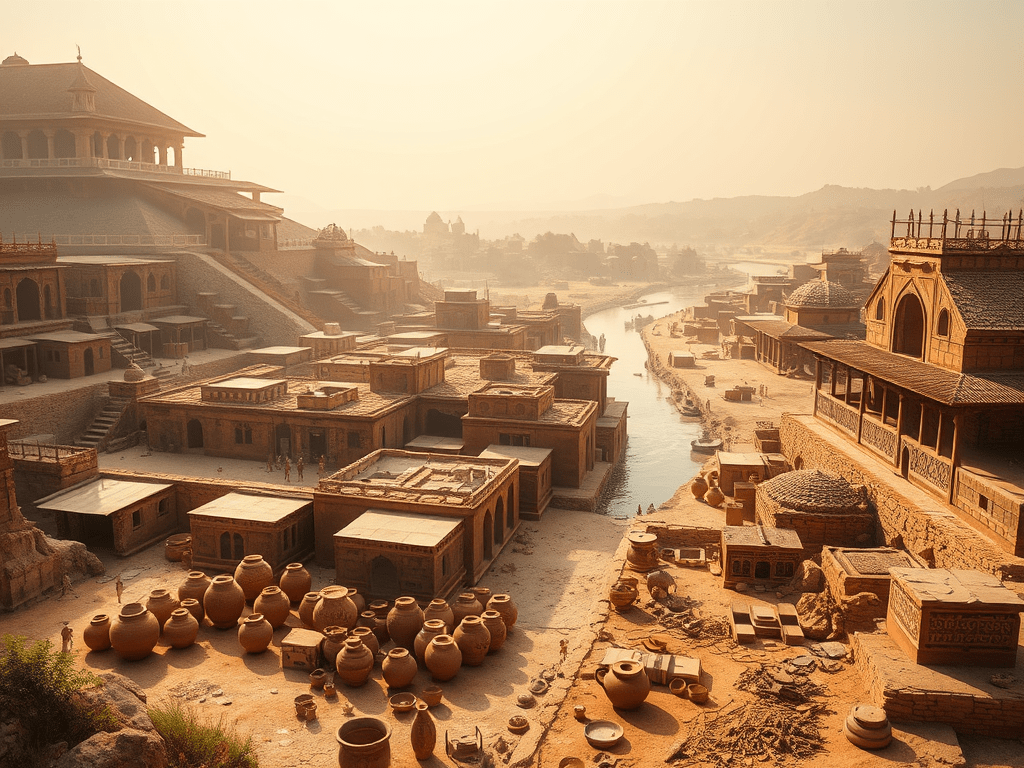
Rakhigarhi : Centre urbain ou rural ? Analyse de son organisation sociale
Rakhigarhi s’étend sur plus de 300 hectares, ce qui en fait l’un des sites les plus vastes de cette civilisation. Les fouilles ont révélé des rues bien tracées, des habitations organisées et des systèmes de drainage sophistiqués. Ce type de planification est souvent associé à des centres urbains, indiquant que Rakhigarhi jouait un rôle clé…
-
Rakhigarhi: Urban or rural center? Analysis of its social organization
Rakhigarhi, located in the present-day state of Haryana in India, is one of the largest archaeological sites of the Seven Rivers Civilization. This impressive site, which dates back nearly 5,000 years, raises many questions about its role: was it an advanced urban city or a thriving rural center? Analysis of its social organization reveals fascinating…
-

Le Rig Veda et la notion de cycle cosmique : naissance et dissolution de l’univers
Le Rig Veda, le plus ancien texte sacré de l’humanité, offre une vision fascinante des cycles cosmiques qui gouvernent l’univers. Dans la tradition de la civilisation des 7 rivières, le cosmos n’est pas vu comme une création figée, mais comme un processus perpétuel de naissance, de croissance, de déclin et de dissolution, avant une nouvelle…
-
The Rig Veda and the notion of cosmic cycle: birth and dissolution of the universe
The Rig Veda, humanity’s oldest sacred text, offers a fascinating vision of the cosmic cycles that govern the universe. In the tradition of the Seven Rivers civilization, the cosmos is not seen as a fixed creation, but as a perpetual process of birth, growth, decline and dissolution, before being reborn. This idea of a cosmic…
 Le Rig Veda