Étiquette : rig veda
-
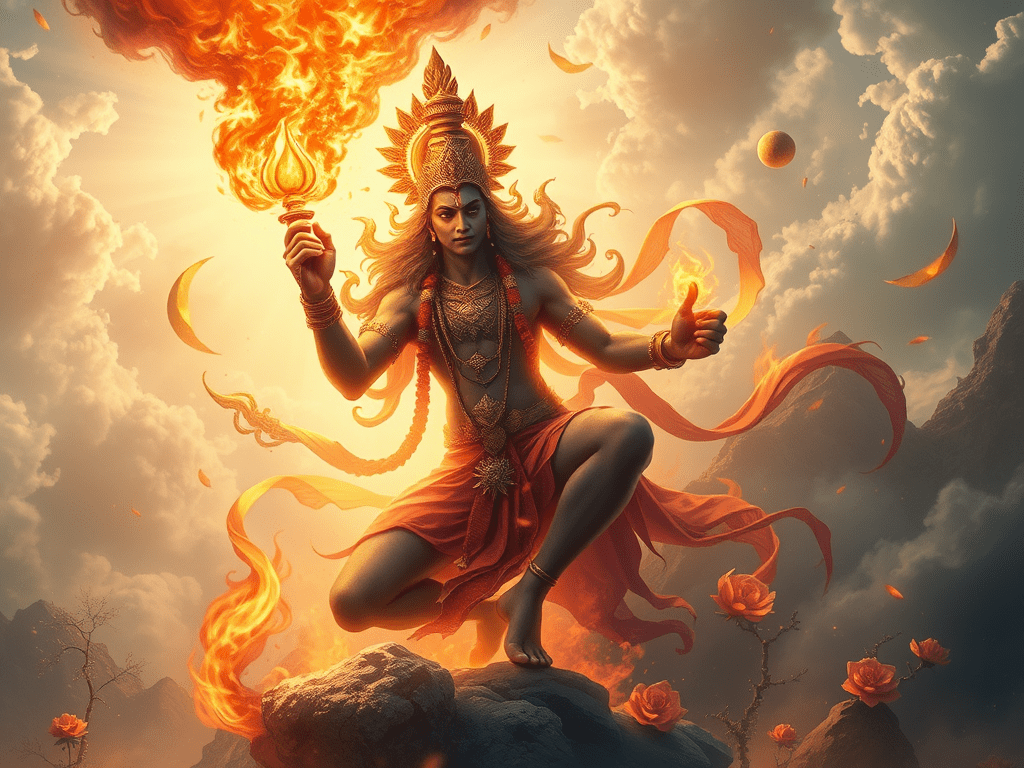
Mandala 1; Hymn 141
1 – So, in truth, this splendor of the superb form of the god has been established: he was born of Force. Even when it deviates, the hymns achieve their objectives: they have brought the floods of Light of Truth. 2 – Wonderful, rich in Force, he lives permanently in the juice of soma, in…
-

L’évolution des techniques agricoles dans la vallée de la Sarasvatî
La civilisation des Sept Fleuves, également connue sous le nom de civilisation Indus-Sarasvati, s’est développée il y a plus de 4 000 ans dans une vaste région s’étendant du Pakistan actuel au nord-ouest de l’Inde. Un fleuve important, le Sarasvati, traversait cette région. Bien qu’il n’existe plus aujourd’hui, ce fleuve a joué un rôle essentiel dans…
-
The evolution of agricultural techniques in the Sarasvati Valley
The Seven Rivers Civilization, also known as the Indus-Sarasvati Civilization, developed over 4,000 years ago in a vast region stretching from present-day Pakistan to northwest India. A major river, the Sarasvati, flowed through this region. Although it no longer exists, this river played a vital role in the agricultural development of this civilization.
-

Mandala 10 ; Hymne 75
Voici un hymne très connu appelé Nadi Shukta. Je vais faire une vidéo en début d’après-midi pour en reparler. Il nous apprend beaucoup de choses.
-
Mandala 10; Hymn 75
Here is a very well-known hymn called Nadi Shukta. I’m going to make a video in the early afternoon to talk about it again. It teaches us a lot of things.
-

Mandala 6 ; Hymne 63
Hymne aux Ashvins. Les Ashvins sont des jumeaux dont le nom vient d’Ashva, qui signifie « cheval ». Ils sont invoqués pour guérir les malades, et les astronomes disent qu’ils représentent deux étoiles jumelles, « Castor et Pollux », observées à l’est avant l’aube.
-
Mandala 6; Hymn 63
Hymn to the Ashvins, The Ashvins are twins whose name comes from Ashva, meaning « horse. » They are invoked to heal the sick, and astronomers say they represent two twin stars, « Castor and Pollux, » seen in the East before dawn.
-

First Hymn of the Rig Veda
The first hymn of the Rig Veda to Agni, who symbolizes Light, both external and internal. If it is the first, it is not by chance.
-

Le Rig Veda et les hymnes de louange au vent et à l’air
Le Rig Veda, le plus ancien texte sacré de l’Inde, accorde une grande importance aux forces de la nature. Parmi elles, le vent tient une place particulière. Il est personnifié sous le nom de Vâyu, une divinité du souffle, du mouvement, de la liberté, mais aussi de l’énergie vitale qui circule en nous.
-
The Rig Veda and the hymns of praise to the wind and air
The Rig Veda, India’s oldest sacred text, places great importance on the forces of nature. Among them, the wind holds a special place. It is personified under the name of Vâyu , a deity of breath, movement, freedom, but also of the vital energy that circulates within us.
 Le Rig Veda