Étiquette : Indra
-
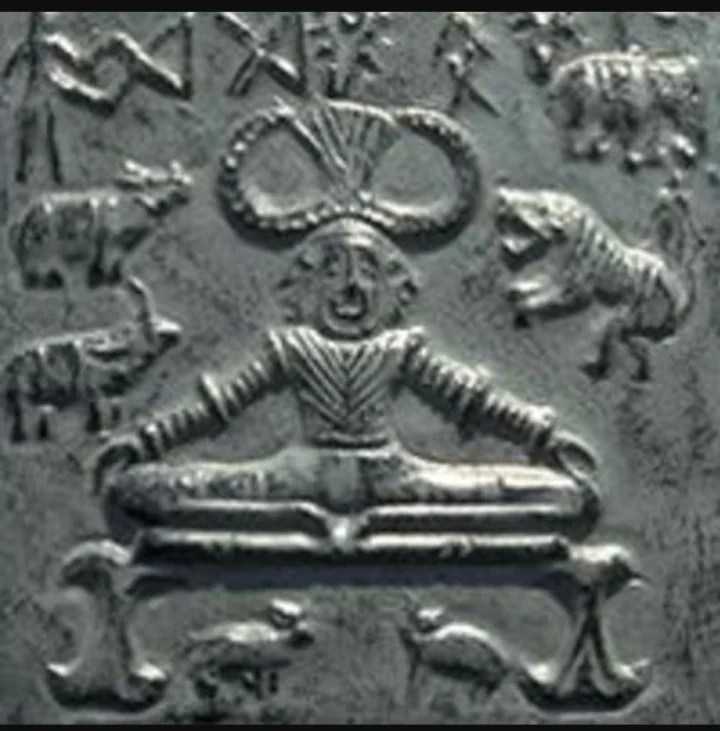
Les hymnes védiques dédiés aux plantes médicinales et sacrées
Les textes védiques, rédigés par la civilisation des 7 rivières, accordent une place essentielle aux plantes médicinales et sacrées. Ces hymnes, principalement issus de l’Atharva-Véda et du Rig-Véda, montrent que les anciens utilisaient les végétaux non seulement pour soigner, mais aussi pour atteindre des états de conscience élevés.
-
Vedic hymns dedicated to medicinal and sacred plants
The Vedic texts, written by the civilization of the 7 rivers, give an essential place to medicinal and sacred plants. These hymns, mainly from the Atharva-Veda and the Rig-Veda, show that the ancients used plants not only to heal, but also to reach high states of consciousness.
-
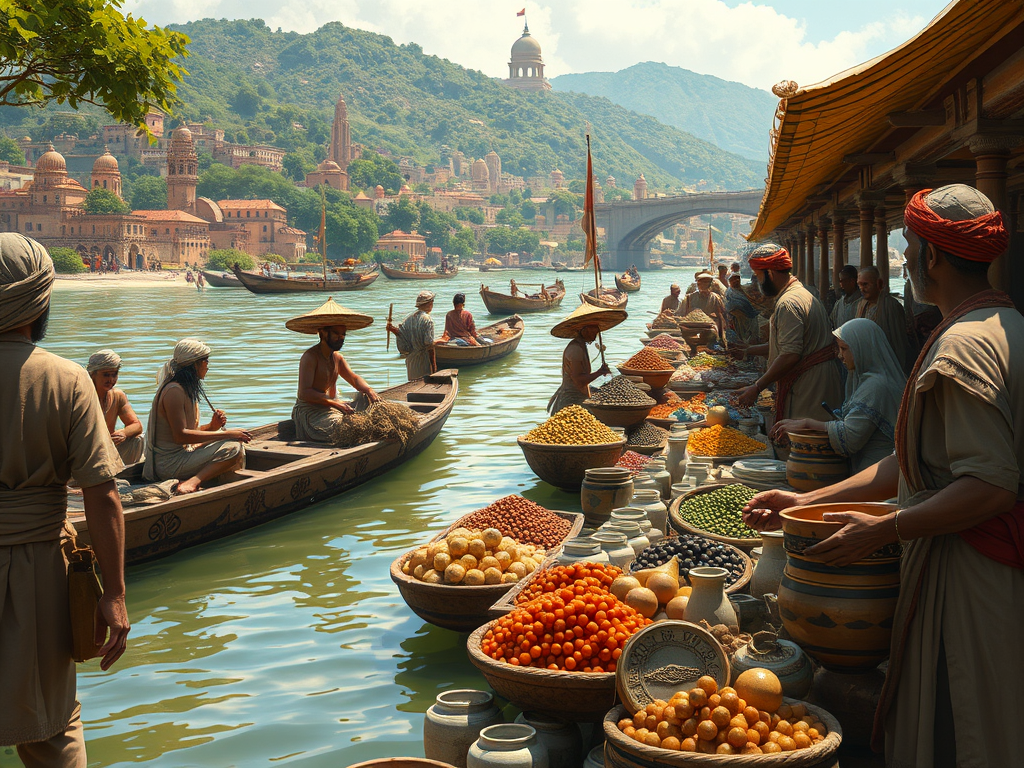
Economic relations between the cities of Sarasvati and the Persian Gulf
The Seven Rivers Civilization, which developed in the Indus Valley and along the Sarasvati, maintained trade links with many regions, including the Persian Gulf. These exchanges allowed the circulation of raw materials, crafts and know-how between these two areas, promoting their prosperity.
-
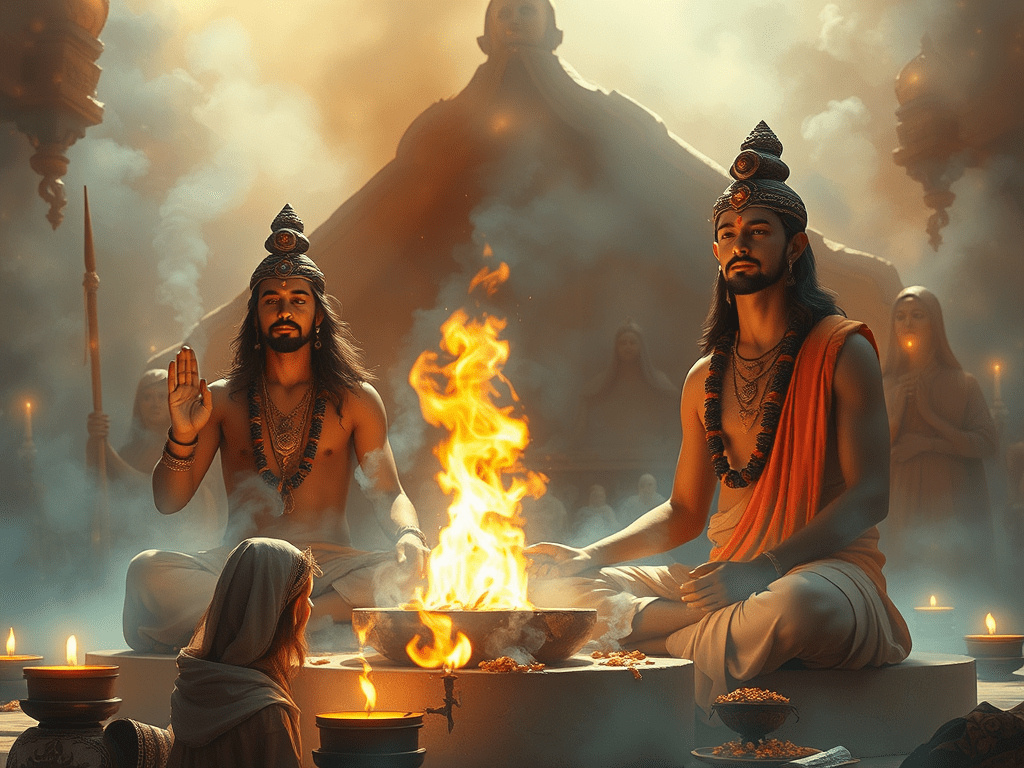
Les cérémonies de passage et de transformation spirituelle dans le Rig Veda
Dans la civilisation des 7 rivières, les rituels de passage jouaient un rôle essentiel dans l’évolution spirituelle des individus. L’un des sacrifices les plus importants était l’Agnistoma, un rituel sacrificiel qui durait plusieurs jours et permettait d’atteindre un état d’éveil profond.
-

L’Hymne aux Rivières (Nadi Shukta) dans le Rig Veda : un indice important pour dater la fin du Rig Veda et de la civilisation des 7 Rivières.
L’hymne 10.75 du Rig Veda, appelé Nadi Shukta, est un hymne adressé aux rivières. Il mentionne plusieurs cours d’eau importants de la région, dont l’Indus et la Sarasvatî. Toutefois, un détail essentiel ressort de cet hymne : il s’adresse principalement à la rivière Sindhu.
-
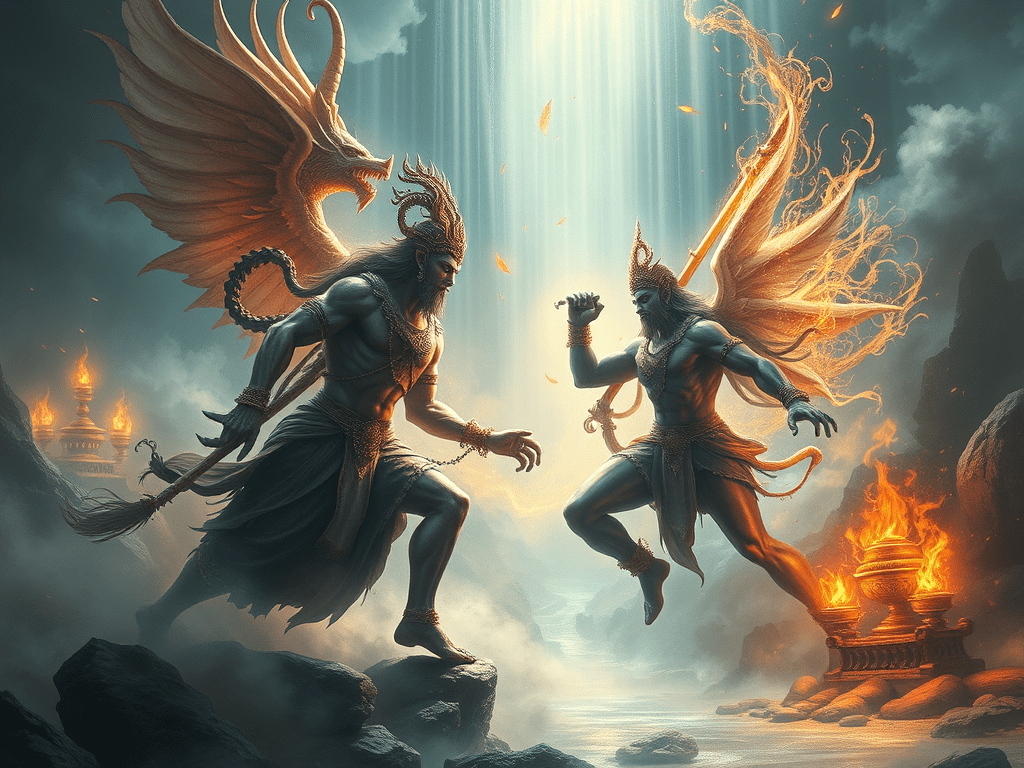
La guerre cosmique entre les dieux et les démons dans les mythes védiques
Dans les textes védiques, une lutte éternelle oppose les dieux (Deva) et les démons (Asura, et autres démons). Ce conflit, souvent décrit comme une guerre cosmique, se déroule dans un cadre où les rituels et les sacrifices jouent un rôle central. Mais derrière ces batailles spectaculaires, il faut voir des métaphores symboliques liées à des…
-
The cosmic war between gods and demons in Vedic myths
In the Vedic texts, an eternal struggle opposes the gods (Deva) and the demons (Asura, and other demons). This conflict, often described as a cosmic war, takes place in a setting where rituals and sacrifices play a central role. But behind these spectacular battles, we must see symbolic metaphors linked to spiritual experiences and significant…
-

The Songs of Creation in the Rig Veda: Vedic Vision of the Cosmos
The Rig Veda, the oldest sacred text in India, contains only one hymn devoted to the creation of the world: the Nasadiya Sukta (Rig Veda 10.129). Unlike creation stories in other traditions, this hymn does not give a clear answer about the origin of the cosmos. It asks questions and leaves room for doubt.
-

Divine Energies in the Rig Veda: Indra, Agni and Soma
The Rig Veda describes a universe where the fundamental forces of nature are not simply observed, but experienced as active powers, conscious energies that interact with man. Among them, Indra, Agni and Soma occupy a central place. These three powers are not gods in the anthropomorphic sense, but primordial forces, deified by their impact on…
-

Les pratiques de purification de l’eau dans la vallée de la Sarasvatî
La civilisation des 7 rivières, qui s’épanouissait le long de la Sarasvatî et de ses affluents, accordait une grande importance à l’eau. Cette ressource précieuse était non seulement vitale pour l’agriculture et la vie quotidienne, mais aussi associée à des rituels et des pratiques de purification. Les habitants avaient développé des méthodes avancées pour filtrer,…

