Étiquette : Indra
-
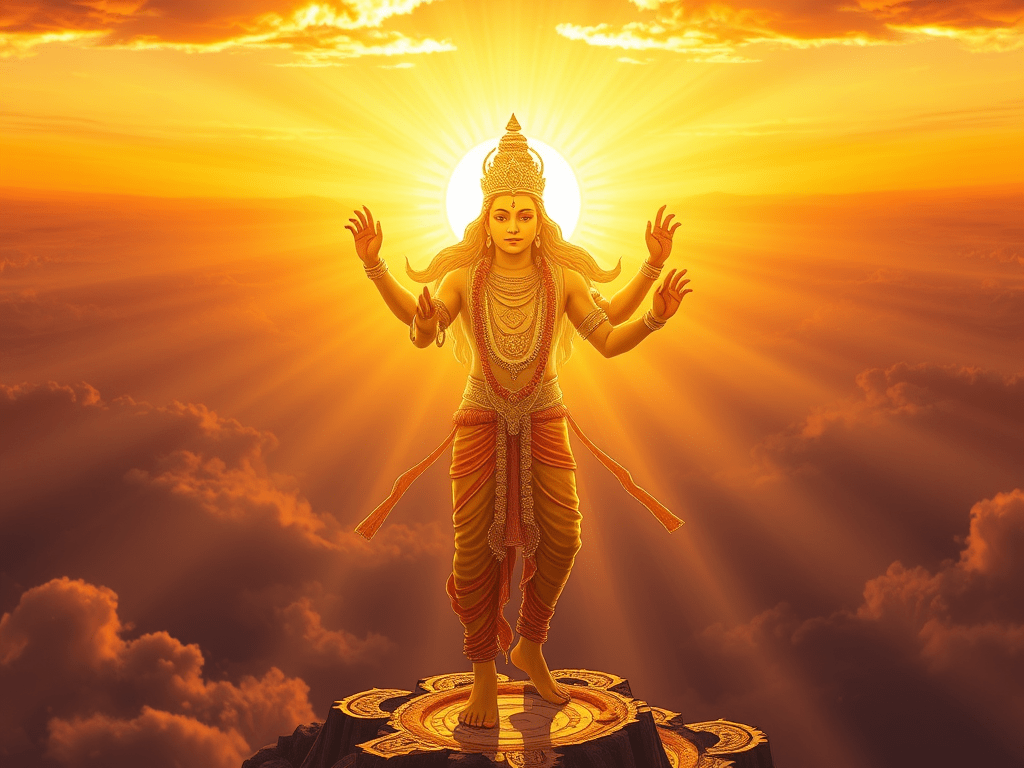
Vivasvān: a brilliant representation of the sun, one of the Adityas
Vivasvān is an important figure in Vedic texts. He represents the sun, not just as a star, but as a luminous, living, and radiant presence. His name comes from the Sanskrit root vi-vas , which means “to shine,” “to diffuse light.”
-

Savitri/Sāvitrī : le soleil inspirateur et son fameux mantra
Dans les hymnes du Rig Veda, Savitri (ou Sāvitr̥) est une forme particulière du Soleil, non pas visible dans le ciel, mais ressenti comme une force intérieure. Il ne s’agit pas seulement d’un astre physique, mais d’une puissance vivante, éveillante, qui insuffle énergie, clarté, et mouvement dans tout l’univers.
-
Savitri/Sāvitrī: the inspiring sun and its famous mantra
In the hymns of the Rig Veda , Savitr (or Sāvitr̥i) is a particular form of the Sun, not visible in the sky, but felt as an inner force. It is not just a physical star, but a living, awakening power, which breathes energy, clarity, and movement into the entire universe.
-
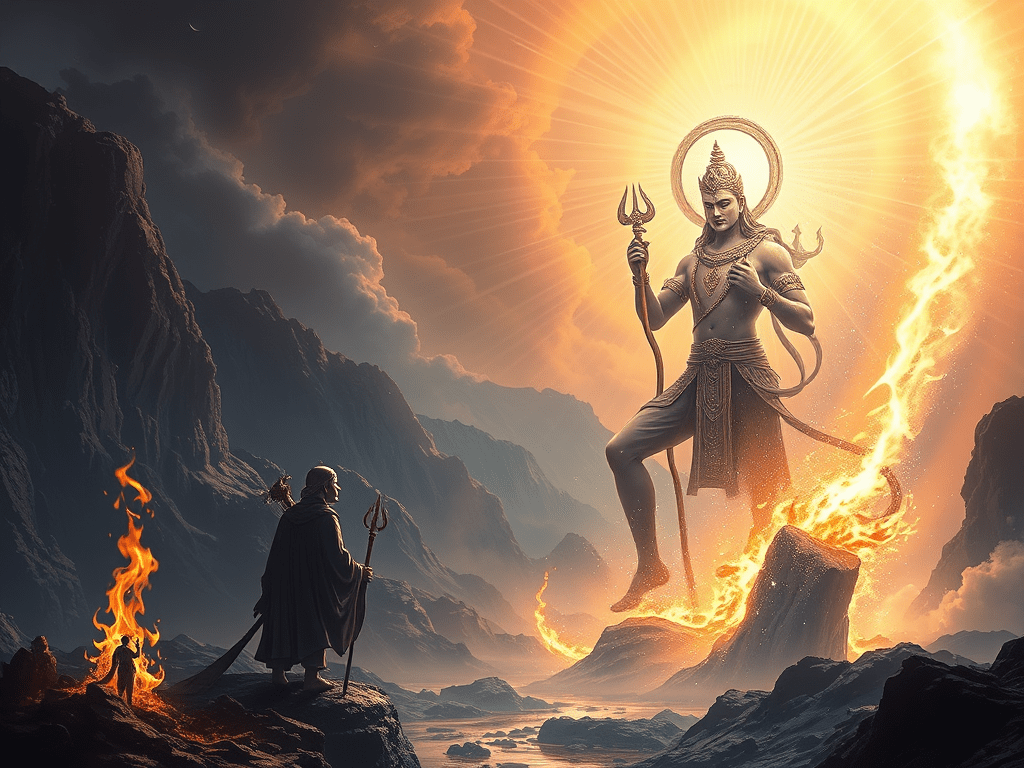
La lumière dans le Rig Veda : une expérience intérieure avant tout
Dans le Rig Veda, la lumière ne se limite pas à un phénomène physique. Elle est surtout un symbole intérieur, une réalité vivante que les sages cherchent à éveiller en eux-mêmes. Ce n’est pas la lumière du soleil qui éclaire simplement le monde extérieur, mais celle qui éclaire la conscience, chasse l’obscurité du mental et…
-
Light in the Rig Veda: an inner experience above all
In the Rig Veda , light is not limited to a physical phenomenon. It is above all an inner symbol, a living reality that the wise seek to awaken within themselves. It is not the light of the sun that simply illuminates the external world, but that which illuminates consciousness, drives away the darkness of…
-
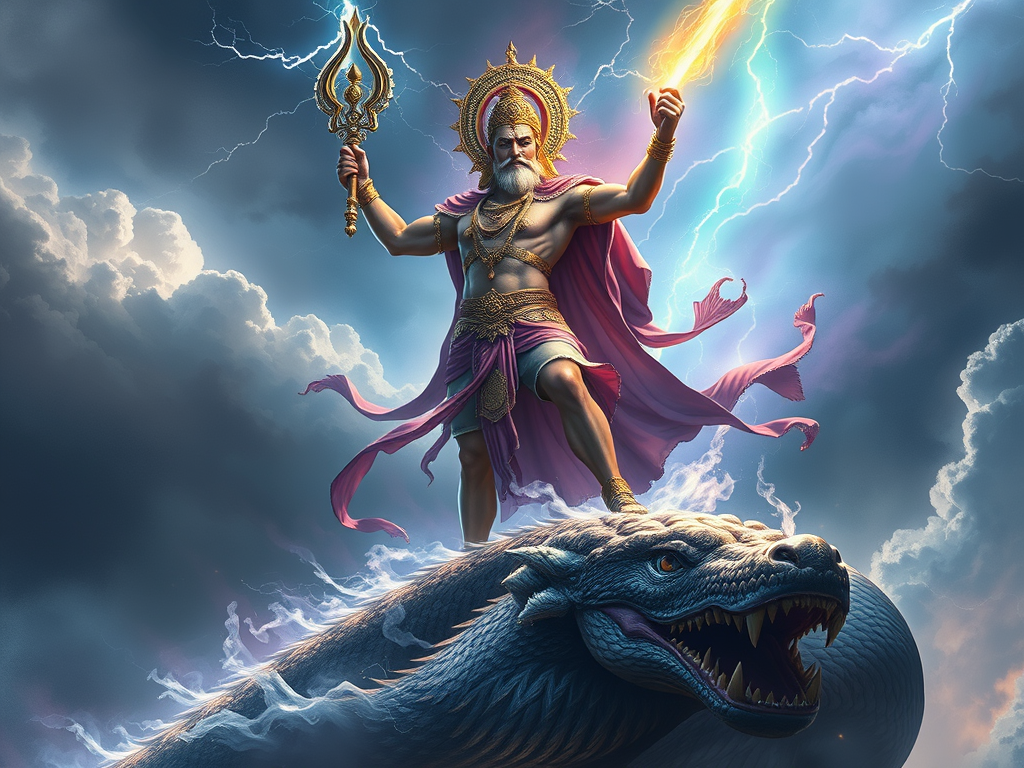
Indra : la force intérieure qui abat les murs du mental
Dans le Rig Veda, Indra est la divinisation de la force, de la tempête et de la volonté victorieuse. Il n’est pas seulement le dieu de la guerre ou des éléments. Pour ceux qui recherchent la connaissance de soi, il est aussi une puissance intérieure capable de briser les barrières qui emprisonnent la conscience.
-
Indra: the inner force that breaks down the walls of the mind
In the Rig Veda, Indra is deified strength, storm, and victorious will. He is not only a god of war or the elements. For those seeking self-knowledge, he is also an inner power capable of breaking down the barriers that imprison consciousness.
-

Maruts (Rudras): storm-gods, turbulent companions of Indra
The Maruts, also called Rudras, are powerful and noisy storm gods of the Rig Veda. They often appear in groups, riding chariots drawn by swift horses, surrounded by wind, thunder, and lightning. They are a young, impetuous, noisy, and feared warrior troop, often described as bright, golden, and radiant. Their energy is raw, wild, and…
-

Le rôle du Soma dans l’union entre l’individu et le divin
Dans les textes védiques, le Soma occupe une place centrale. Il est à la fois une plante, un breuvage, un dieu, et une porte vers une autre réalité. Il n’est pas qu’un élément rituel : il est le lien vivant entre l’humain et le divin. Grâce à lui, les sages accédaient à une forme d’illumination…
-
The role of Soma in the union between the individual and the divine
In Vedic texts, Soma occupies a central place. It is at once a plant, a beverage, a god, and a gateway to another reality. It is not merely a ritual element: it is the living link between the human and the divine. Through it, sages accessed a form of inner illumination, transcending the ego, the…
 Le Rig Veda