Étiquette : harappa
-

Discovery of zoomorphic sculptures in the cities of Sarasvati
Archaeological excavations conducted at the sites of the Seven Rivers Civilization, located along the ancient Sarasvati River, have revealed numerous sculptures depicting animals. These discoveries provide insight into the art and beliefs of this civilization, which flourished over 4,500 years ago.
-

Les Hymnes Védiques aux Arbres et aux Plantes Sacrées
Les textes védiques, composés par la civilisation des 7 rivières, accordent une grande place aux arbres et aux plantes. Ces êtres vivants ne sont pas seulement des sources de remèdes ou de nourriture, mais aussi des entités spirituelles honorées dans des hymnes sacrés. Parmi eux, certaines plantes sont particulièrement associées à des rites et des…
-
Vedic Hymns to Sacred Trees and Plants
The Vedic texts, composed by the Seven Rivers civilization, give great importance to trees and plants. These living beings are not only sources of medicine or food, but also spiritual entities honored in sacred hymns. Among them, certain plants are particularly associated with rites and mystical experiences.
-

The Rig Veda as a reflection of a society in harmony with its environment
The Rig Veda is a valuable source for understanding the civilization of the seven rivers. Through its hymns, it describes a world where man lived in close relationship with nature. Far from being a simple collection of religious chants, it recounts ancient events in the form of metaphors and sheds light on a time when…
-
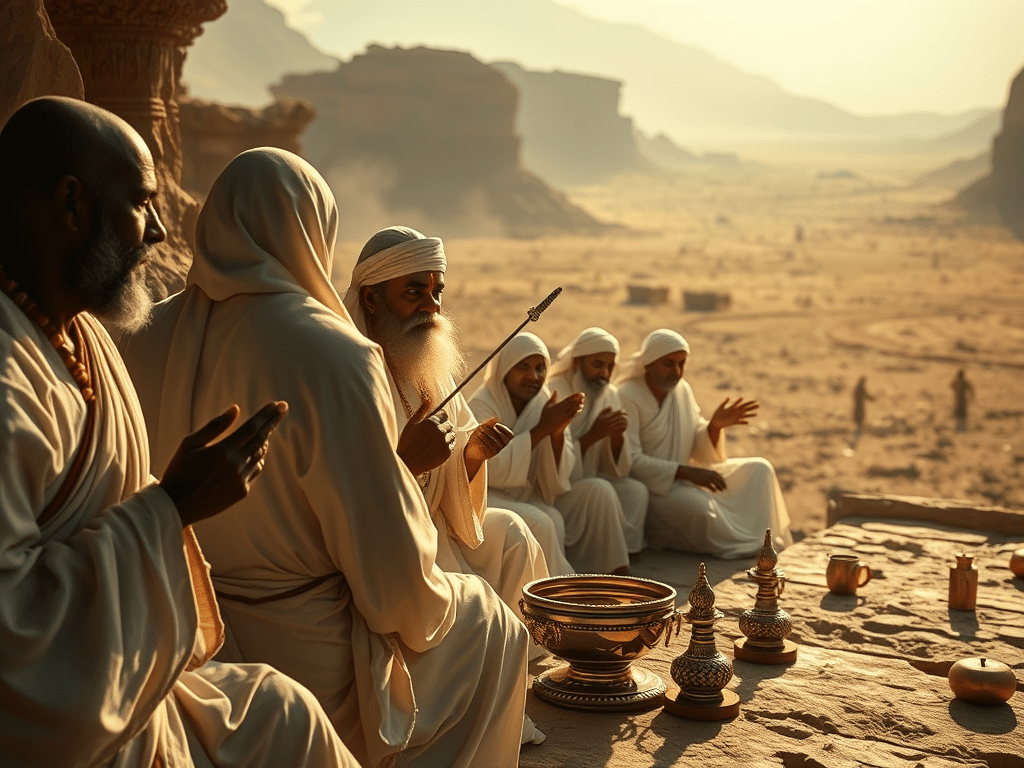
La fin du soma et le début des inégalités dans la civilisation des 7 rivières
La civilisation des 7 rivières, qui s’étendait le long de la Sarasvatî et de l’Indus, était une société prospère et équilibrée. Pendant longtemps, elle a été marquée par une forte cohésion et une absence d’inégalités marquées. Cependant, un événement climatique majeur a bouleversé cet équilibre : une grande sécheresse survenue vers 2200 avant notre ère.
-
The end of soma and the beginning of inequality in the civilization of the 7 rivers
The civilization of the 7 rivers, which extended along the Sarasvati and the Indus, was a prosperous and balanced society. For a long time, it was marked by strong cohesion and an absence of marked inequalities. However, a major climatic event upset this balance: a great drought that occurred around 2200 BCE.
-

Le Sacrifice Védique comme Rituel Cosmique : Connexion avec l’Univers
Le sacrifice védique était au cœur de la spiritualité de la civilisation des 7 rivières. Il ne s’agissait pas d’une simple offrande, mais d’un rituel qui cherchait à aligner l’humain avec l’ordre cosmique. Le but était d’entrer en communion avec les forces de l’univers, en particulier grâce au Soma, une plante enthéogène permettant une expansion…
-
Vedic Sacrifice as a Cosmic Ritual: Connection with the Universe
Vedic sacrifice was at the heart of the spirituality of the Seven Rivers civilization. It was not a simple offering, but a ritual that sought to align humans with the cosmic order. The goal was to enter into communion with the forces of the universe, in particular through Soma, an entheogenic plant that allows an…
-

Le rôle de la Sarasvatî dans la spiritualité de la civilisation des 7 Rivières
La Sarasvatî occupe une place centrale dans la spiritualité de la civilisation de l’Indus, témoignant de son importance tant sur le plan religieux que culturel. Mentionnée dans le Rig Veda, elle est la seule rivière personnifiée comme une déesse et joue un rôle majeur dans les hymnes védiques. Son association avec la connaissance, la pureté…
-
The role of Sarasvati in the spirituality of the 7 rivers civilization
The Sarasvati occupies a central place in the spirituality of the Indus Civilization, testifying to its importance both religiously and culturally. Mentioned in the Rig Veda , it is the only river personified as a goddess and plays a major role in the Vedic hymns. Its association with knowledge, purity and prosperity reflects its importance…
 Le Rig Veda