Étiquette : agni
-
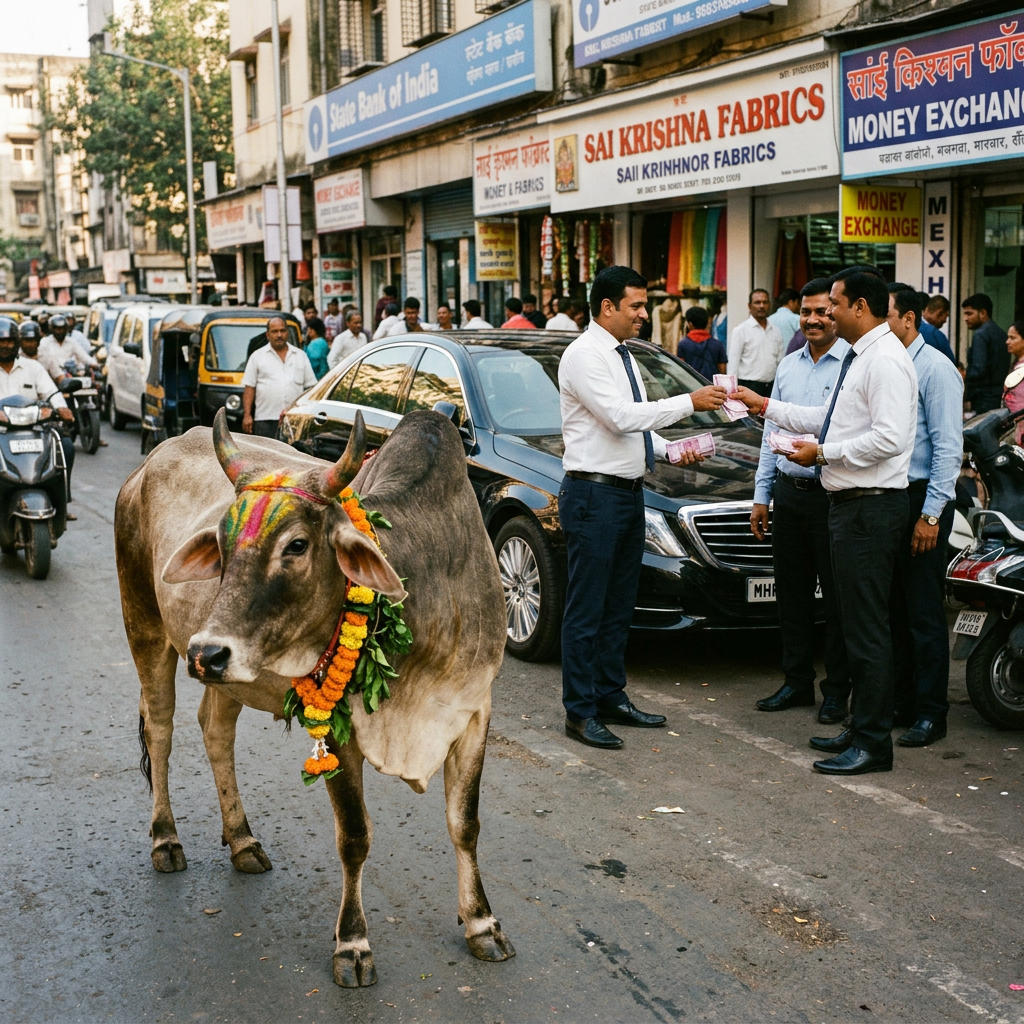
La Vache Sacrée et la Viande Cultivée en Laboratoire
Il y a quelques années, les premières nouvelles de la viande cultivée en laboratoire ont provoqué des réactions qui allaient de l’enthousiasme technologique à la répulsion viscérale, en passant par la perplexité philosophique. On prenait des cellules souches musculaires d’une vache, on les faisait proliférer dans un bioréacteur, et on obtenait de la viande sans…
-
L’Illumination à Travers le Soma
Il y a dans le Rig Veda un hymne qui dit en trois lignes ce que des millénaires de philosophie spirituelle ont tenté de dire en des milliers de pages : « Nous avons bu le soma. Nous sommes devenus immortels. Nous sommes entrés dans la Lumière, nous y avons trouvé les dieux. » Ces…
-
Enlightenment Through Soma
There is in the Rig Veda a hymn that says in three lines what millennia of spiritual philosophy have attempted to say in thousands of pages: « We have drunk soma. We have become immortal. We have entered the Light, we have found the gods there. » These words, taken from the eighth mandala, hymn 48, verse…
-
The Yajña and the Ecological Transition
There is an apparent paradox in invoking the Vedic sacrifice to think about the ecological transition. The yajña, with its lit fires, its offerings poured into the flames, its animals sacrificed in certain contexts, seems at first glance to belong to a world so distant from our own that the comparison might seem forced. But…
-
Le Yajña et la Transition Écologique
Il y a un paradoxe apparent dans le fait de convoquer le sacrifice védique pour penser la transition écologique. Le yajña, avec ses feux allumés, ses offrandes versées dans les flammes, ses animaux sacrifiés dans certains contextes, semble à première vue appartenir à un monde si éloigné du nôtre que le rapprochement pourrait sembler forcé.…
-
Mitra, Dieu de l’Amitié : les Réseaux Sociaux contre le Lien Réel
Il y a dans le panthéon védique un dieu dont le nom est peut-être le plus universel de tous, le plus immédiatement compréhensible à une oreille moderne, le plus directement lié à une expérience que tout être humain connaît et dont tout être humain a besoin : Mitra. Son nom signifie ami, et il est…
-
Mitra, God of Friendship: Social Networks versus the Real Bond
There is in the Vedic pantheon a god whose name is perhaps the most universal of all, the most immediately comprehensible to a modern ear, the most directly linked to an experience that every human being knows and every human being needs: Mitra. His name means friend, and it is the same root as the…
-
The Sacred Fire and the Energy Crisis
There is something vertiginous in realising that the first word of the Rig Veda, Agni, is also the name of the force that structures the deepest crisis of our era. Agnim île purohitam: I invoke Agni, the priest placed in front. This first word, spoken by thousands of mouths for six thousand years at sunrise,…
-
Le Feu Sacré et la Crise Énergétique
Il y a quelque chose de vertigineux à constater que le premier mot du Rig Veda, Agni, est aussi le nom de la force qui structure la crise la plus profonde de notre époque. Agnim île purohitam : j’invoque Agni, le prêtre placé devant. Ce premier mot, prononcé par des milliers de bouches depuis six…
-
Recitation as an Act of Memory: When Societies Lose their Long Memory
There is a practice that has almost entirely disappeared from our modern lives, and whose disappearance is so gradual and so thoroughly integrated into what we call progress that we no longer even notice it: recitation. Not recitation in the scholastic sense of the word, that chore imposed on children before modern pedagogies decided it…

