Auteur : Hervé Le Bevillon
-
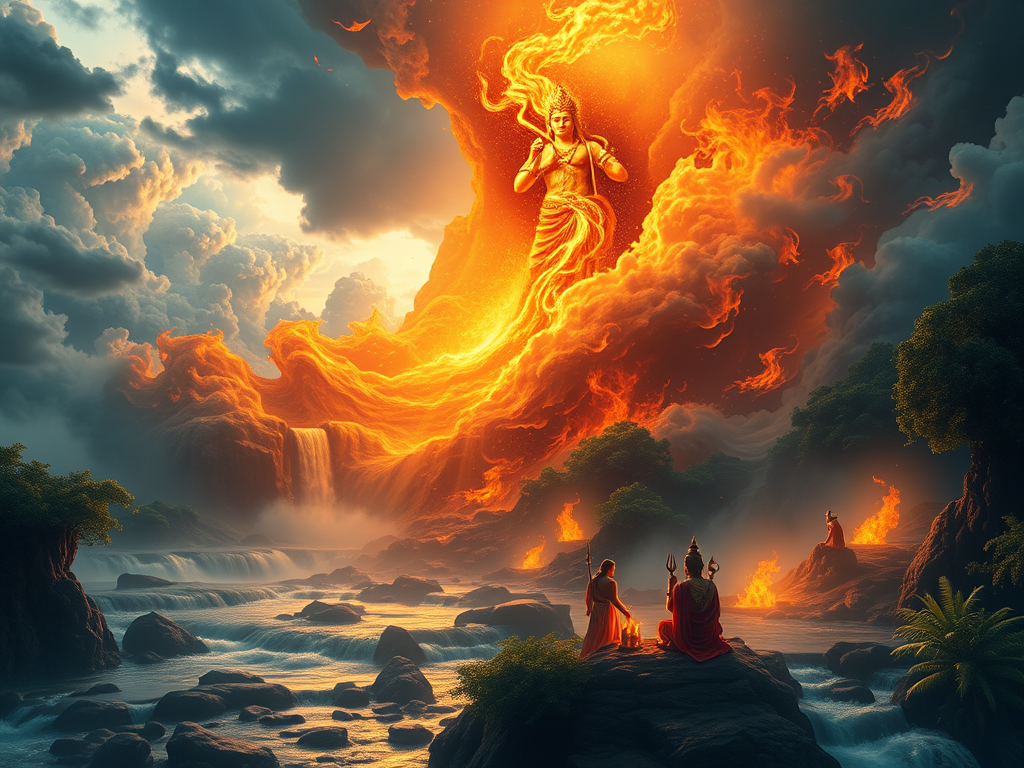
Understanding the Life Force in Vedic Hymns
The Vedic hymns, composed over 4,000 years ago, are among the oldest texts of humanity. These sacred poems, transmitted orally from generation to generation, are at the heart of the civilization of the 7 rivers. They celebrate nature, life and the energy that animates the universe. One of the central themes of these hymns is…
-

Les Hymnes Védiques sur l’Union du Ciel et de la Terre
Dans les textes védiques, l’union entre le Ciel et la Terre est une image puissante qui revient souvent. Ces deux entités, appelées Dyaus (le Ciel) et Prithivi (la Terre), sont décrites comme des parents divins, unis pour maintenir l’ordre cosmique et nourrir toute forme de vie. Au-delà de leur rôle cosmologique, cette union symbolise un…
-
The Vedic Hymns on the Union of Heaven and Earth
In the Vedic texts, the union between Heaven and Earth is a powerful and recurring image. These two entities, called Dyaus (Heaven) and Prithivi (Earth), are described as divine parents, united to maintain cosmic order and nourish all life. Beyond their cosmological role, this union symbolizes a profound inner journey: Earth represents our ordinary consciousness,…
-
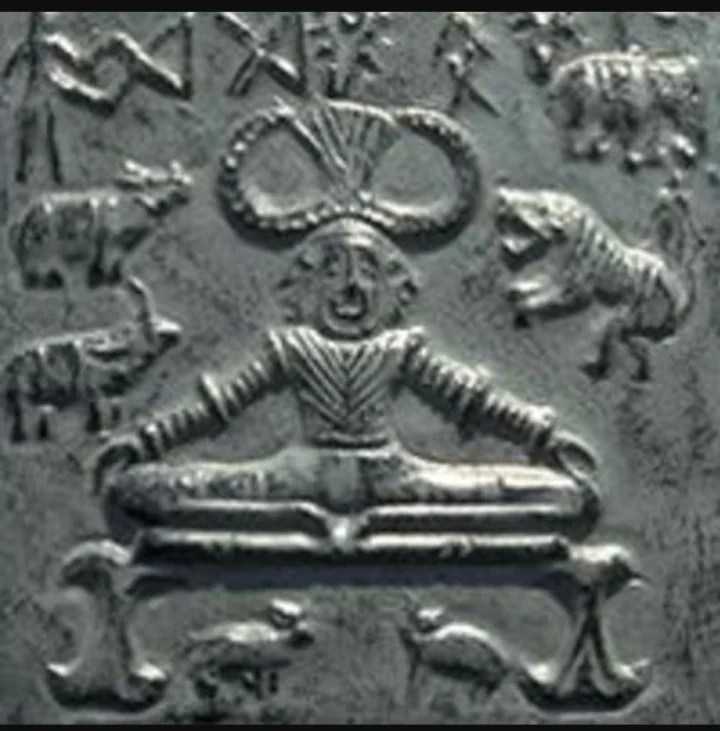
The art of sculpture in the cities of Sarasvati
The civilization of the 7 rivers, known for its advanced urban planning and technical prowess, also left remarkable traces in the artistic field, especially sculpture. The cities located along the Sarasvati, this sacred river which has now disappeared, were full of creations in terracotta, stone and metal. These works reveal not only exceptional craftsmanship, but…
-
L’art de la sculpture dans les villes de la Sarasvatî
La civilisation des 7 rivières, connue pour son urbanisme avancé et ses prouesses techniques, a également laissé des traces remarquables dans le domaine artistique, notamment la sculpture. Les villes situées le long de la Sarasvatî, ce fleuve sacré aujourd’hui disparu, regorgeaient de créations en terre cuite, en pierre et en métal. Ces œuvres révèlent non…
-
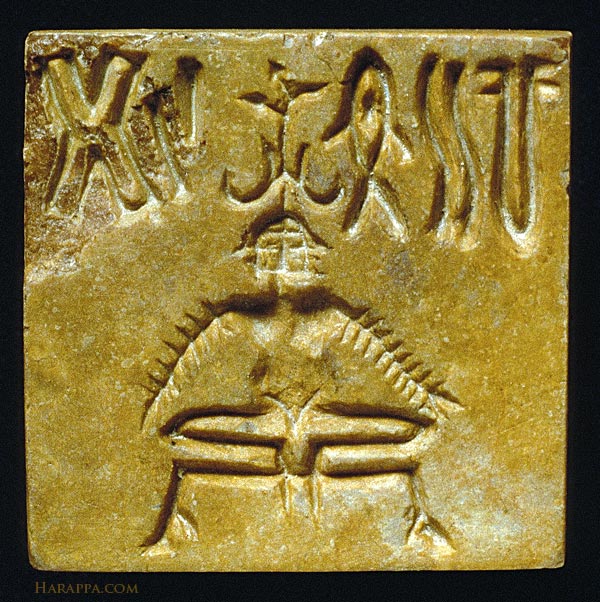
L’évolution de la spiritualité dans le Rig Veda avec la disparition du Soma
Le Rig Veda, le texte le plus ancien de l’humanité, reflète la richesse spirituelle et culturelle de la civilisation des 7 rivières. Cependant, un tournant majeur apparaît dans le dixième mandala, où les chants et rituels montrent une transformation de la spiritualité. Cette évolution est étroitement liée à la pénurie progressive du Soma, une plante…
-
The evolution of spirituality in the Rig Veda with the disappearance of Soma
The Rig Veda, the oldest text of humanity, reflects the spiritual and cultural wealth of the civilization of the 7 rivers. However, a major turning point appears in the tenth mandala, where the chants and rituals show a transformation of spirituality. This evolution is closely linked to the progressive scarcity of Soma, a sacred plant…
-
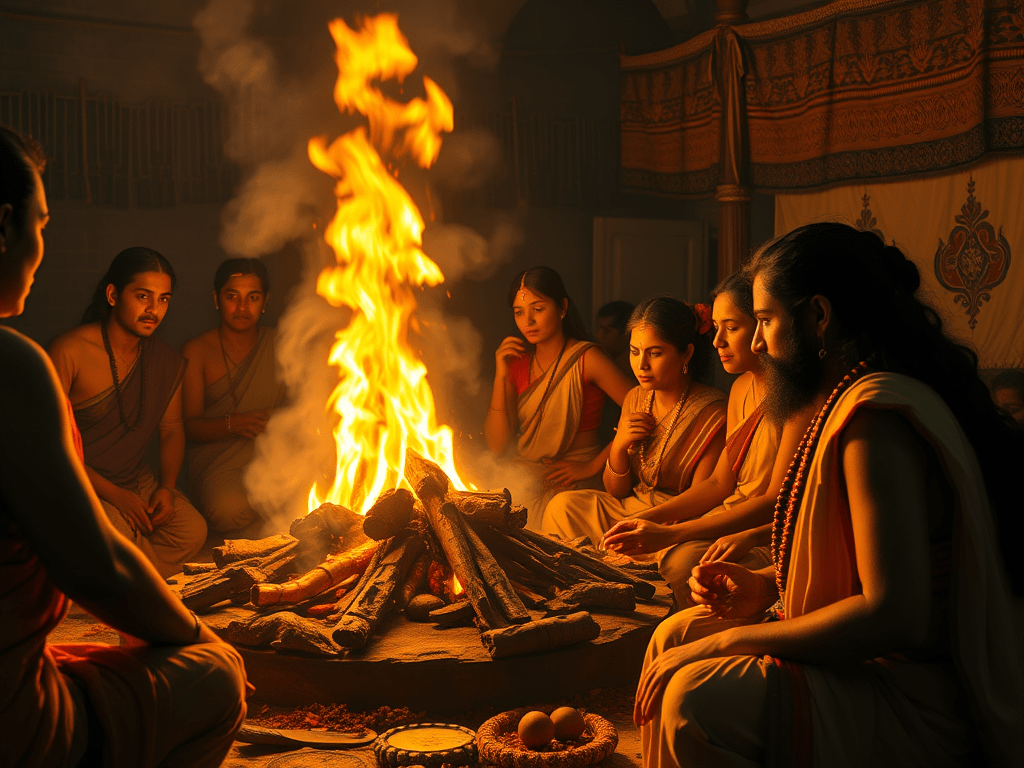
Les cérémonies funéraires et les hymnes sur la mort dans le Rig Veda
Les cérémonies funéraires et les hymnes sur la mort dans le Rig Veda sont des aspects essentiels pour comprendre les croyances et les pratiques de la civilisation des 7 rivières. Ces traditions, qui remontent à plus de 5 500 ans, révèlent une approche spirituelle et philosophique face à la mort et à l’après-vie. Les sites…
-
Funeral ceremonies and hymns on death in the Rig Veda
Funeral ceremonies and hymns on death in the Rig Veda are essential aspects of understanding the beliefs and practices of the Seven Rivers Civilization. These traditions, which date back over 5,500 years, reveal a spiritual and philosophical approach to death and the afterlife. Archaeological sites such as the cemeteries of Harappa and Rakhigarhi provide tangible…
-

Les récits cosmogoniques du Rig Veda : la création du monde
La civilisation des 7 rivières, associée au Rig Veda, a laissé des textes anciens fascinants qui décrivent leur vision de l’origine du monde. Ces récits cosmogoniques, bien que poétiques et symboliques, révèlent une réflexion profonde sur la création et le fonctionnement de l’univers.
 Le Rig Veda