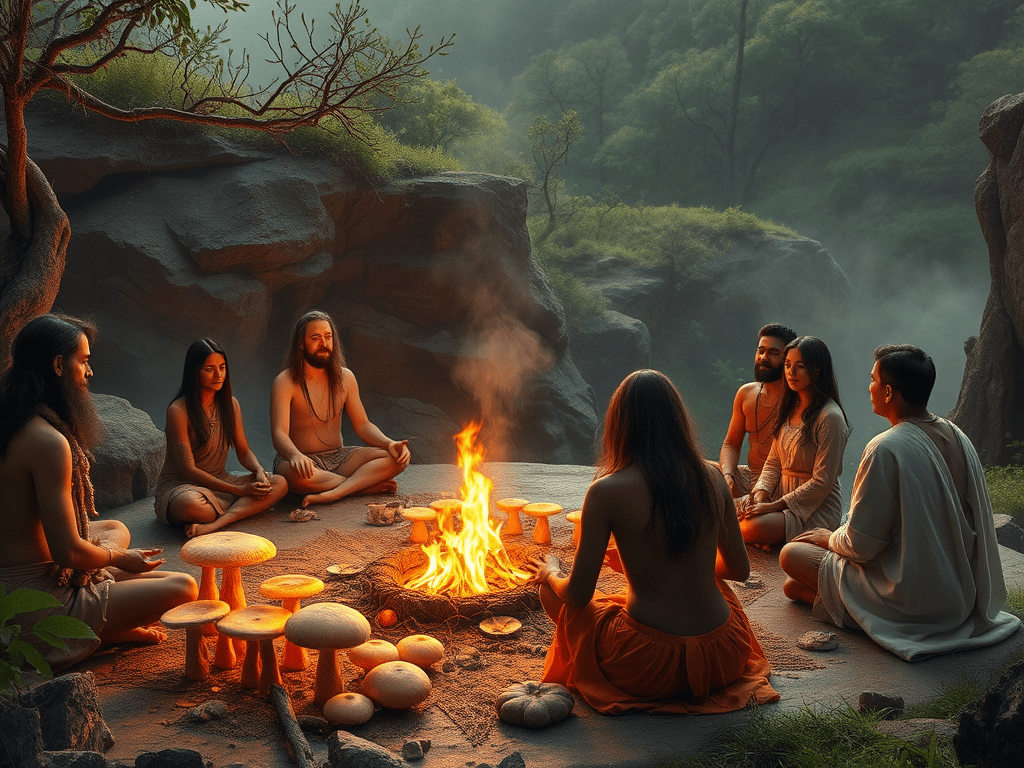
Vedic hymns are among the oldest texts in the world. In the Seven Rivers civilization, they were transmitted orally from generation to generation with remarkable precision. To prevent any alteration of the text, sophisticated memorization techniques were developed. Here are the main methods used.
1. Loop Repetition (Japa)
The simplest method was to repeat a verse over and over until they knew it perfectly. Students recited each hymn aloud several times, under the supervision of their teacher. This technique gradually fixed the sounds and rhythm in their memory.
2. Recitation in Various Forms (Patha)
To avoid mistakes and ensure that each syllable was memorized in the correct order, texts were recited in a variety of ways. Some of the most commonly used techniques include:
- Samhitā-pāṭha : continuous recitation of the text, without pause.
- Pada-pāṭha : word-by-word breakdown, allowing you to clearly understand the structure of the verse.
- Krama-pāṭha : repetition of two consecutive words in a chain (example: AB, BC, CD, etc.).
- Jatā-pāṭha and Ghana-pāṭha : braided and interlaced recitation, where words were repeated in complex sequences to fix the exact order of the text.
These methods created auditory and mental cues, making any changes or omissions immediately detectable.
3. The Use of Rhythm and Melody
Vedic hymns were chanted with precise intonations called svaras . Rhythm and melody played a vital role in memorization, as the brain retains information better when associated with a musical structure.
4. Group Learning
Students often recited the hymns in groups, which facilitated memorization through the practice effect. Group recitation strengthened memory and allowed for immediate correction of mistakes.
5. Visualization and Mental Association
Some teachings used mental images and associations to memorize hymns. For example, a verse might be linked to a symbolic image or story to aid its retention.
6. Discipline and Daily Practice
In the Seven Rivers civilization, the transmission of hymns was a rigorous discipline. Students underwent daily training from a young age, reciting the texts at dawn and dusk to strengthen their memory.
A Transmission Without Writing
These techniques allowed the Vedic hymns to be preserved intact for millennia, long before the advent of writing. Thanks to this extremely precise oral tradition, these ancient texts have come down to us almost unchanged.
 Le Rig Veda
Laisser un commentaire