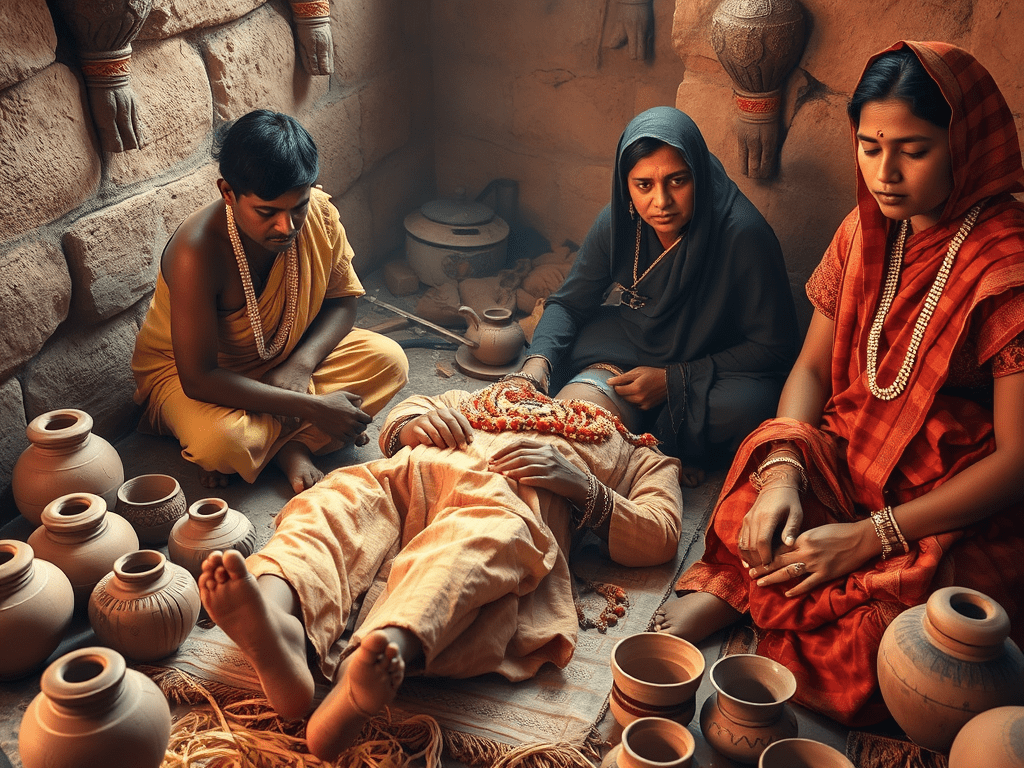
The Seven Rivers Civilization, which flourished in the Sarasvati Valley, is known for its unique cultural and social practices. Among these practices, funeral rituals occupy an important place.
This article explores the different ways in which the people of Rakhigarhi approached death and associated rituals.
1. The View of Death For the people of the Seven Rivers Civilization, death was not simply an end. It was a passage to another world. The people believed in the continuity of life after death, which influenced the way they treated the deceased.
2. Funeral rituals In Rakhigarhi, funeral rituals included several stages:
– Preparation of the body: Families took care of the body of the deceased. They washed it and dressed it with special clothes.
– Ceremonies: Prayers and songs were often recited to honor the deceased. These moments were important to the family and the community.
– Burial or cremation: According to beliefs, some people were buried, while others were cremated. This choice depended on the traditions of the family.
3. Funerary objects The people of Rakhigarhi often placed objects in the graves or near the cremation grounds. These objects were offerings to help the deceased in the afterlife. One could find pottery, jewelry, and sometimes even tools.
4. The memory of ancestors The memory of ancestors was essential in this culture. Families kept the memory of their deceased alive through stories and rituals. This strengthened family ties and the continuity of traditions.
Conclusion Funeral practices in Rakhigarhi show a respectful and thoughtful approach to death. In the civilization of the 7 rivers, death was a momentous event, celebrated with dignity and love. By understanding these traditions, we can better appreciate the cultural richness of this ancient civilization.
 Le Rig Veda
Laisser un commentaire