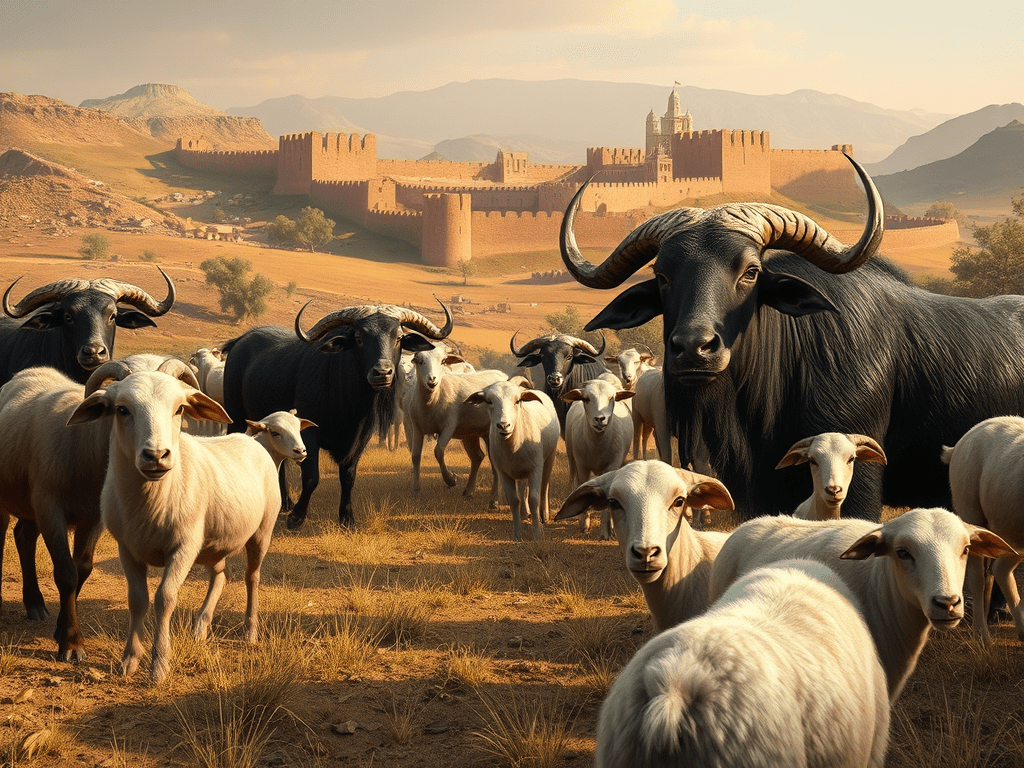
The Seven Rivers Civilization , also known as the Indus-Sarasvati Civilization, flourished between 2600 and 1900 BCE. Known for its urban planning, metallurgy, and agricultural practices, this peaceful society also placed great importance on animals, both domesticated and wild.
1. Animal species present
Thanks to archaeological excavations, we know that this civilization was home to a great diversity of animals. Seals and pottery reveal representations of animals such as:
- Cattle : Zebu (Bos indicus) and oxen played a central role in agriculture. They were used to pull plows and carts.
- Buffaloes : Particularly adapted to humid areas, they helped in the cultivation of rice and other cereals.
- Goats and sheep : Providing milk, meat and wool, these animals were essential to the domestic economy.
- Elephants : Depicted on seals, they could have had symbolic or utilitarian importance.
- Dogs : Probably used to guard homes and herds.
- Camels and donkeys : Perhaps used for transport in the arid areas near Sarasvati.
Other animals such as rhinoceroses, tigers and crocodiles, although wild, also appear in the art of this civilization. This shows a respect for the surrounding wildlife.
2. Domestication and its role
The domestication of animals in this civilization served several purposes:
- Agriculture : Cattle were essential for plowing the fields.
- Transportation : Pack animals, such as donkeys, facilitated trade between cities.
- Food : Goats, sheep and buffalo provided vital resources such as milk and meat.
- Rituals and culture : Certain animals, such as bulls, had a sacred dimension, as evidenced by the numerous symbolic representations on seals.
3. Harmonious cohabitation
One of the fascinating aspects of this civilization is the absence of traces of violence in the excavated sites. This also includes the relationship with animals. The seals often show animals in natural poses, which could indicate a careful observation of their behavior.
Moreover, the diversity of species represented on the artifacts suggests a relationship of interdependence between humans and wildlife, beyond purely utilitarian exploitation.
4. Legacy and influence
The domestication practices of the Seven Rivers Civilization influenced the cultures that followed it. The zebu, for example, remains an important symbol in India today.
Archaeological discoveries at sites such as Harappa, Mohenjo-daro or Kalibangan continue to reveal the ingenuity of this society in using animals for the sustainable development of their civilization.
Conclusion
Animal species and their domestication in the 7 Rivers civilization reflect a society in harmony with its environment. Whether in agriculture, transportation or cultural practices, animals were indispensable partners in daily life. This respectful cohabitation still inspires reflections today on the relationship between humanity and nature.
(To learn more about the 7 Rivers Civilization, explore the many fascinating remains of this unique culture.)
 Le Rig Veda
Laisser un commentaire