In the civilization of the 7 rivers, trade was essential for the development and prosperity of the cities located along the Sarasvati, but also for relations with more distant regions, like present-day Afghanistan. These trade routes made it possible to connect distant cities and circulate goods, ideas and knowledge, thus strengthening the links between these different cultures.
Trade routes
The cities of Sarasvati, like Rakhigarhi and Kalibangan, were organized urban centers, which, thanks to trade routes, could exchange valuable goods with distant regions. These routes passed through strategic points, crossing mountains and deserts to reach the cities of Afghanistan, like Shortugai, a major site in this region.
These routes allowed the transit of many products: natural resources such as lapis lazuli, extracted from the mines of Afghanistan and highly prized in the manufacture of jewelry, and other precious stones, as well as agricultural products and textiles. This trade not only supported the local economy, but also contributed to the diffusion of craft practices and cultural ideas.
The products traded
The goods traded varied according to local needs and specialties. On the Sarasvati side, there were products likeceramics, copper, and other metals that testify to the technological advancement of the civilization of the seven rivers. The artisans of the Sarasvati cities also excelled in the manufacture of beads and engraved seals, which could be used to identify owners or merchants.
In return, the cities of Sarasvati received rare raw materials from Afghanistan, such as lapis lazuli, turquoise, and other semi-precious stones. These materials were then incorporated into handicrafts, creating highly valuable products that circulated throughout the region.
Caravans and means of transport
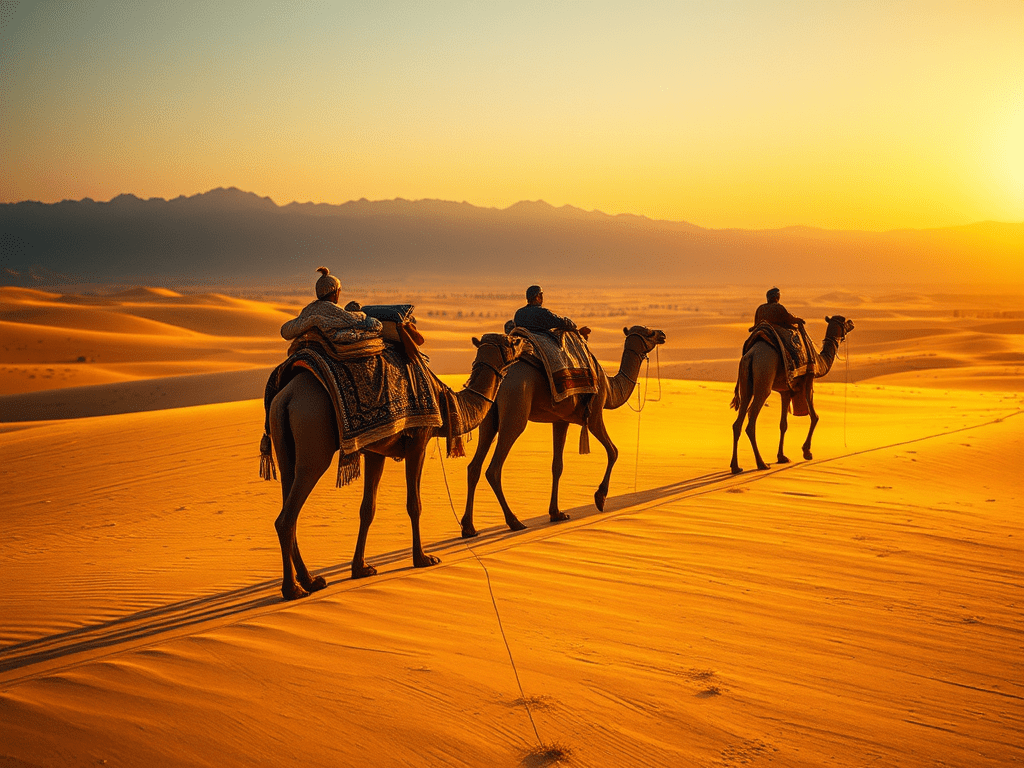
To travel long distances between Sarasvati and Afghanistan, merchants had to travel along difficult and well-organized roads, traveled by caravans. Camels and other pack animals were probably used to transport goods over these sometimes arid paths. Caravans not only transported goods; they also allowed cultures, ideas, and knowledge to travel from one region to another.
Through these trade networks, the cities of Sarasvati and Afghanistan maintained close relations, influencing the daily life, crafts and even cultural practices of the civilization of the 7 rivers.
The importance of trade routes in the 7 rivers civilization
Trade routes were a key factor in the development of the Seven Rivers Civilization, fostering economic and cultural dynamism between regions. They allowed distant cities to stay connected and share resources, craft techniques, and ideas. These exchanges also reinforced the stability of this civilization, which, by maintaining peaceful and prosperous relations with its neighbors, was able to focus on its own development and cultural enrichment.
Thus, the trade routes between the cities of Sarasvati and Afghanistan illustrate the essential role of exchange in the expansion and solidity of the civilization of the 7 rivers. These commercial exchanges forged a society open to the world, valuing the sharing of resources and knowledge for the prosperity of all.
 Le Rig Veda
Laisser un commentaire