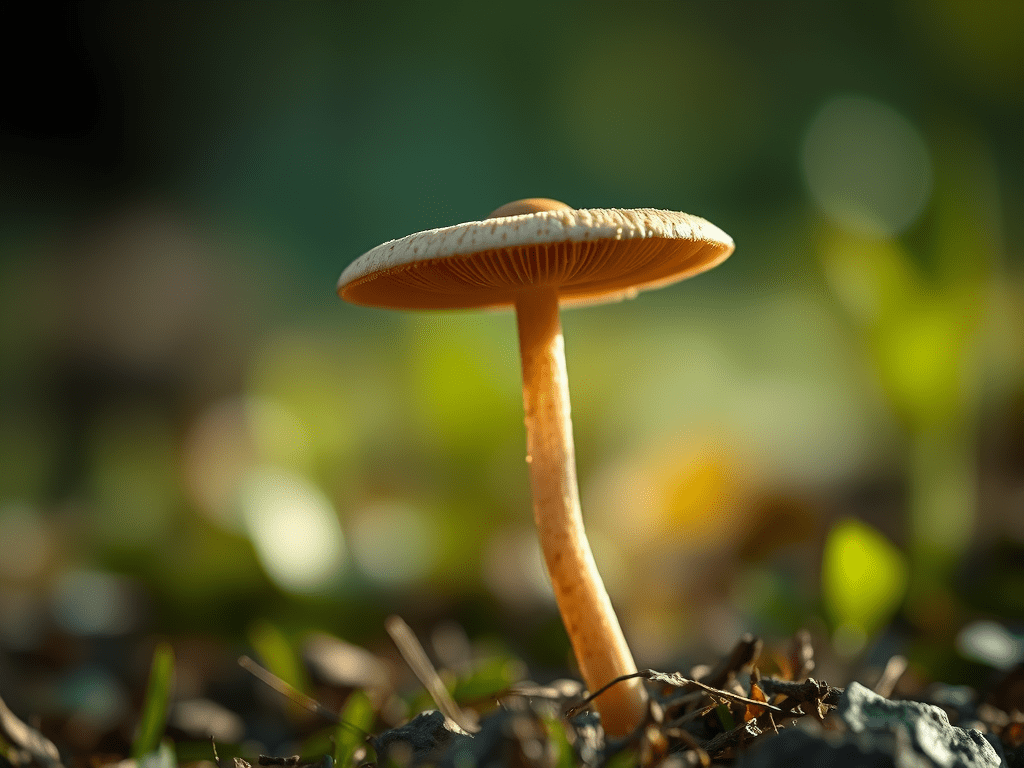
Soma, mentioned in the ancient texts of the Rig Veda, is described as a sacred plant used in Vedic rituals. Its drink was consumed to achieve a state of spiritual enlightenment and communion with the gods. The description of this plant remains enigmatic, but several clues allow us to put suggest certain hypotheses about its true nature.
An Entheogenic Plant: Psilocybe cubensis?
In the Rig Veda, the only clear botanical description of the Soma plant is the Sanskrit term amshu, meaning « fiber » or « filament. » This word refers to the physical structure of the plant, but does not describe leaves, seeds, flowers, or fruits. This reinforces the idea that Soma may be a fungus, and many researchers, as well as spiritual explorers, believe that it may be Psilocybe cubensis, a hallucinogenic mushroom known for its psychedelic effects.
Psilocybe mushrooms contain psilocybin, a substance that, when consumed, induces visions, altered states of consciousness, and intense spiritual experiences. The mushrooms are also filamentous in structure, thus matching the description of amshu in the Vedic texts.
Amanita muscaria: A possible alternative?
Some researchers believe that Soma may have been Amanita muscaria, another hallucinogenic mushroom used in some ancient cultures. There is a shloka in the Rig Veda that may allude to this mushroom. However, this hypothesis remains uncertain, as there is not enough evidence to firmly support it.
Elimination of Ephedra
Another hypothesis, put forward by some, suggests that Soma may have been the juice of the Ephedra plant. However, this idea seems unlikely for several reasons. Ephedra contains substances similar to amphetamines, which strongly stimulate the nervous system. Vedic rituals mention that Soma was to be consumed three times a day during sacrifices. If Ephedra had been used at this frequency, it would have quickly overloaded the hearts and bodies of the priests, which contradicts the described effects of Soma as bringing spiritual clarity and tranquility, rather than stimulating or dangerous effects.
Soma and Spiritual Enlightenment
The Rig Veda contains several passages extolling the effects of *Soma*. Shloka 8.48.3 is particularly revealing: “We drank Soma, we became immortal. We entered the light and found the gods.” This passage clearly shows that the consumption of Soma allowed access to a transcendent experience, where the individual felt freed from the limitations of the body and the ego. This dissolution of the ego is a typical effect of psychedelic substances such as psilocybin.
Psychedelics are known for their ability to profoundly alter one’s perception of self. They allow one to see beyond the boundaries of individuality, facilitating experiences of inner peace and oneness with the universe. This may explain why the Seven Rivers Civilization, which worshipped Soma, was a peaceful society. Before their urban period, this civilization had experienced conflict, as evidenced by the Vedic accounts of great mythical battles. But after uniting the different Vedic peoples, they were able to create a society where harmony reigned, linked to the dissolution of selfish impulses.
 Le Rig Veda
Laisser un commentaire