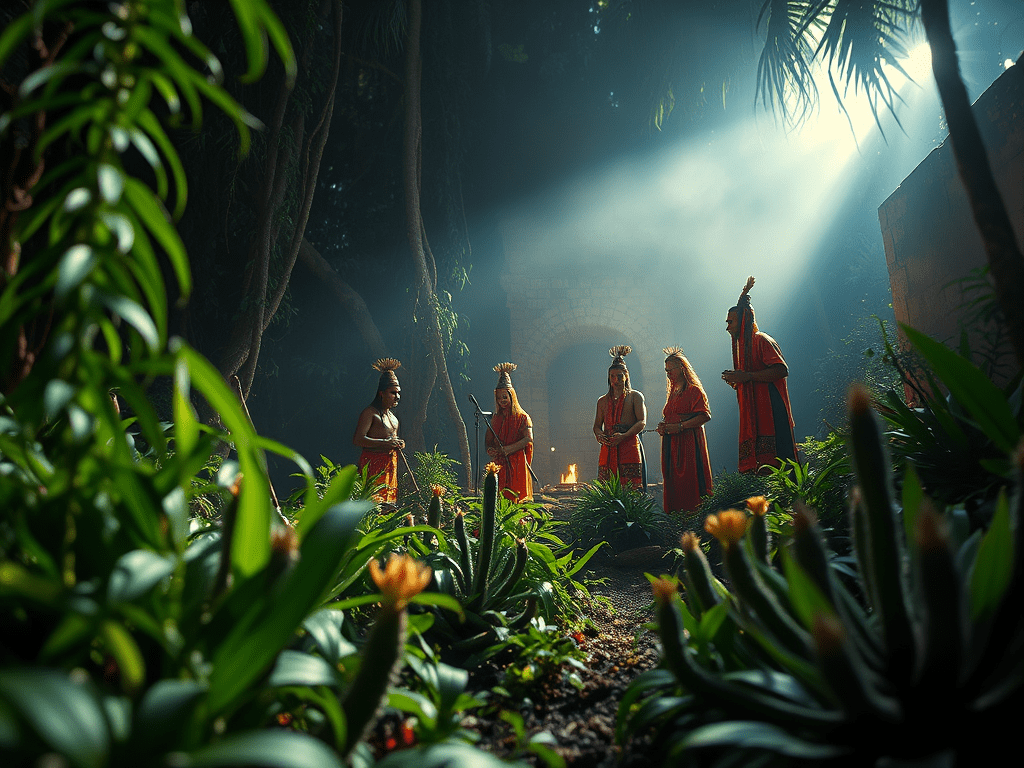
The use of psychotropic plants in pre-Columbian cultures is a fascinating subject that takes us to the heart of ancient traditions where these plants were used to explore consciousness, make contact with spirits or access mystical states. In regions like Central and South America, these practices were widespread long before the arrival of Europeans.
Psychotropic Plants in Pre-Columbian America
Pre-Columbian cultures, like the Mayans, Aztecs, Incas, and Amazonian peoples, used several psychotropic plants for spiritual and medicinal rituals. Some of the best known include:
1. Peyote: A small cactus that holds mescaline. It was used by the Aztecs and Huichols in Mexico to enter trances and communicate with the gods.
2. Ayahuasca: A sacred brew made from several plants from the Amazon jungle, including the Banisteriopsis caapi vine and leaves containing DMT. Ayahuasca allowed shamans to get visions and heal the sick.
3. Hallucinogenic mushrooms: Used by the Aztecs under the name *teonanácatl* (flesh of the gods), these mushrooms caused visions and were consumed during religious ceremonies to connect with spirits and the forces of nature.
4. Coca: Coca leaves, chewed by the Incas, were used to improve physical endurance and elevate the spirit. Although its effects are less entheogenic, coca was seen as a sacred link with the deities.
These plants were often reserved for priests, shamans and other spiritual figures, who used them to guide their community and obtain answers in crucial moments such as wars, harvests or times of crisis.
The Exploration of Consciousness
In these cultures, psychotropic plants were more than just a means of entertainment: they were a gateway to other dimensions of consciousness. They allowed one to expand one’s perception of the world, discover hidden truths, and communicate with spiritual entities. This exploration of consciousness was seen as a path to wisdom and healing.
Comparison with the Civilization of the 7 Rivers (Indus-Sarasvati)
The Seven Rivers (or Sapta Sindhu) civilization also features the use of plants for spiritual experiences. In the Rig Veda, a sacred Vedic text, there are numerous references to a sacred drink called soma. This plant, which was most likely a psilocybe, was consumed in rituals to achieve higher states of consciousness and connect with the divine.
Soma, like ayahuasca or peyote, allowed those who consumed it to access visions and spiritual enlightenment. The goal, in the civilization of the 7 rivers, was not only to understand the gods, but also to reach a state of peace and harmony by getting rid of the ego.
While in pre-Columbian cultures the emphasis was often on communicating with spirits and healing, the Seven Rivers civilization focused more on dissolving the self, to achieve a state of universal consciousness, this was the path to moksha (spiritual liberation) in Indian traditions.
Conclusion
In both cases, whether in pre-Columbian cultures or in the Seven Rivers civilization, psychotropic plants played a crucial role in the exploration of consciousness and the quest for spiritual truth. These natural substances were seen as sacred tools, allowing individuals to transcend their daily existence and come into contact with deeper realities. Although the plants and rituals differed, the ultimate goal remained the same: to rise above the material world and access higher states of consciousness, for the good of the community and the individual.
 Le Rig Veda
Laisser un commentaire