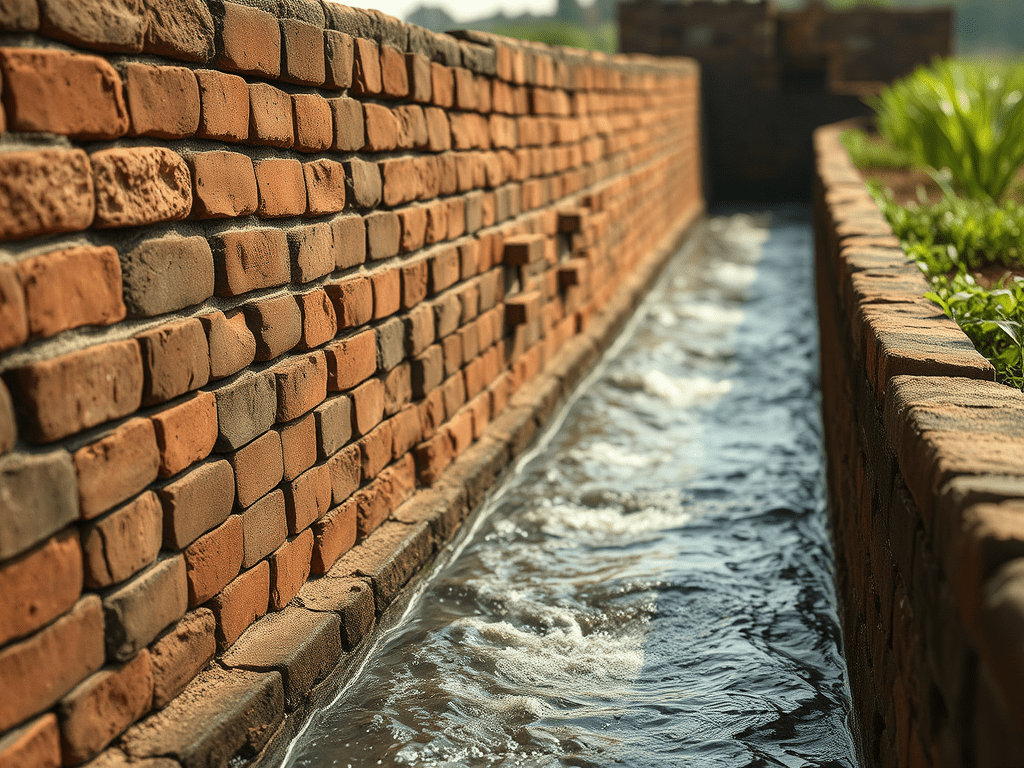
Kalibangan, one of the great cities of the 7 Rivers Civilization (also called the Indus Civilization), located in present-day Rajasthan, India, shows remarkable organization, especially in water management. This city, which flourished about 4,500 years ago, developed an intelligent hydraulic system to collect and conserve water, essential for daily life and agriculture.
Cisterns and reservoirs: a rainwater collection system
In Kalibangan, residents understood that water was a precious resource, especially in a region where the climate could be dry and unpredictable. To ensure a sufficient supply of water throughout the year, they designed cisterns and reservoirs to capture rainwater.
These tanks were dug into the ground and covered with baked bricks, a durable material that prevented water from seeping into the ground. The walls of these cisterns were well constructed to ensure that the water remained clean and did not mix with other substances.
The importance of drainage systems
Another impressive aspect of Kalibangan is the drainage system that accompanied the cisterns and reservoirs. The streets were equipped with channels that led rainwater to the reservoirs, preventing flooding during the monsoon. The underground channels were also covered with bricks, allowing the water to flow efficiently without overflowing. This system shows how attentive the locals were to wastewater management and disease prevention.
Water use for agriculture
The reservoirs and tanks were not only used for domestic consumption. The collected water was also used to irrigate the fields around the city. Kalibangan is known to have been one of the first cities to practice furrow cultivation, a method that allowed water to be directed to the roots of the plants. The reservoirs therefore allowed farmers to store enough water to water their crops even during dry periods.
Conclusion
Kalibangan, with its advanced system of cisterns and water reservoirs, shows that the civilization of the 7 rivers already had a deep understanding of water resource management. This ancient city managed to ensure a stable water supply, even in difficult climatic conditions, thanks to careful organization and technologies adapted to their environment.
 Le Rig Veda
Laisser un commentaire