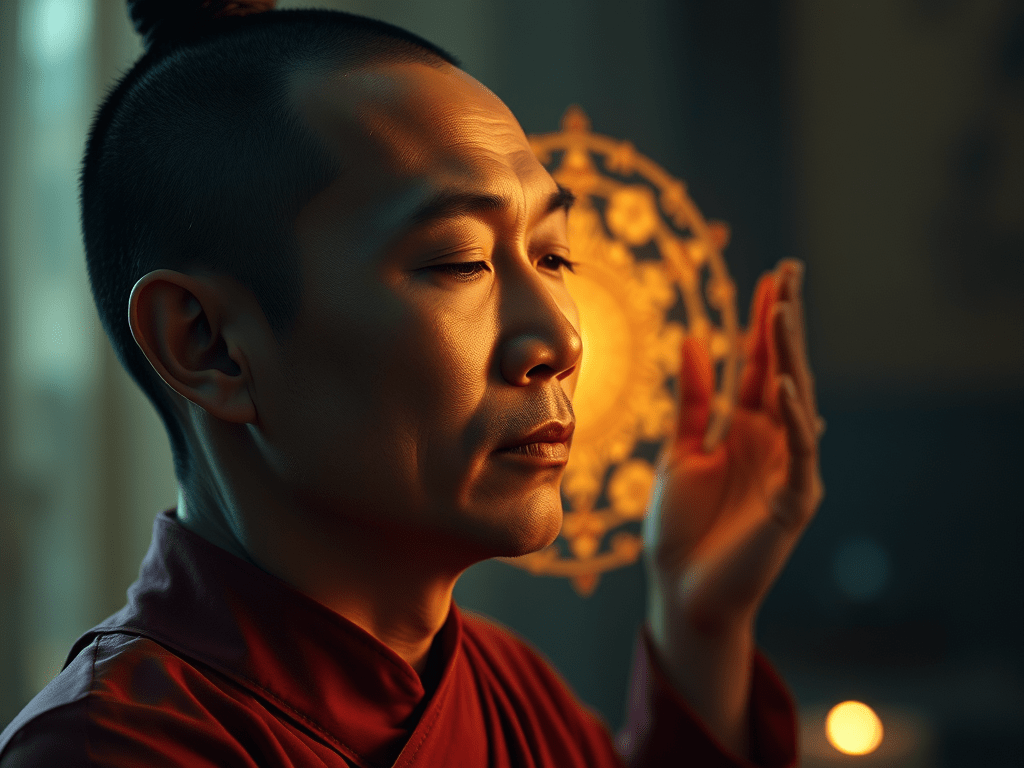
Tibetan Tantra, also known as Vajrayana, is a spiritual path that relies on specific practices to transform consciousness. One of its most central methods is visualization, used to bring the mind to a higher, purer level of consciousness.
1. What is visualization?
Visualization in Tibetan Tantra involves imagining divine forms, mandalas, or symbolic scenes. This practice is guided by spiritual masters and is used to help practitioners detach themselves from their ordinary thoughts. The goal is to transform their perception of the world and themselves.
2. Deities as models of perfection
A common technique is to visualize deities, like Buddhas and bodhisattvas. These figures symbolize qualities such as wisdom, compassion, and equanimity. By meditating on these deities, practitioners seek to integrate these qualities into their own consciousness.
3. The mandala: a symbolic universe
Another key form of visualization is the mandala. It is a geometric representation of the spiritual universe, often circular. By focusing on a mandala, the mind trains itself to go beyond the limits of ordinary perception and understand the interconnectedness of all things.
4. Inner transformation
The ultimate goal of these visualization practices is the transformation of consciousness. By visualizing perfect beings or forms, the practitioner aspires to transcend their own weaknesses and align their consciousness with that of the universe. This leads to a direct experience of unity and spiritual awakening.
In conclusion, in Tibetan Tantrism, visualization techniques are powerful tools to change the way the mind perceives reality, promoting a profound transformation towards enlightenment.
 Le Rig Veda
Laisser un commentaire