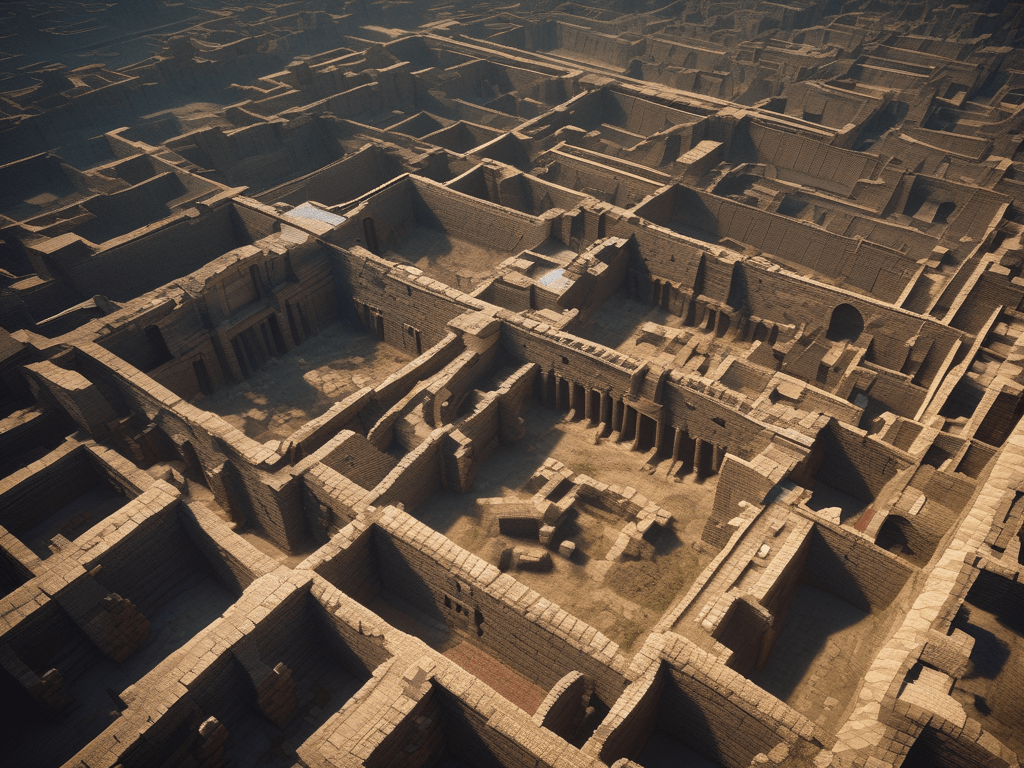
The 7 Rivers Civilization, known as the Indus Civilization, was one of the world’s first great civilizations, existing around 5,500 years ago in the Indus and Saraswati Valley, located between Present-day India and Pakistan. Although we have little precise information about their religious beliefs, archaeological finds give us some clues about their burial practices.
The Graves
The inhabitants of this civilization buried their dead. Archaeologists have discovered several cemeteries in the main sites of this civilization, such as Harappa and Mohenjo-Daro. The bodies were generally placed in oval or rectangular graves. Sometimes bricks were placed around the body, forming a sort of tomb. The bodies were often lying on their backs, with their heads facing north.
Funeral Offerings
In some tombs, a few objects were placed with the deceased, which suggests that people believed in life after death. These objects could include pottery, jewelry, and sometimes metal tools. The offerings varied slightly depending on the wealth and social status of the person. For example, the tombs of rich people contained more objects.
Cremations
In addition to burials, there is also evidence of cremation in some areas of this civilization. The burned remains were then buried. Ashes were often placed in ceramic urns before being buried.
Regional Variations
Funerary practices varied from region to region within the 7 Rivers civilization. For example, some regions practiced more cremation, while others preferred burial. These differences show that the civilization of the 7 Rivers was not uniform, and that each region had its own customs.
Conclusion
Funerary rituals and burial practices in the 7 Rivers civilization reveal a deep respect for the dead. Whether through burial or cremation, the inhabitants of this civilization had specific practices to honor their deceased.
 Le Rig Veda
Laisser un commentaire