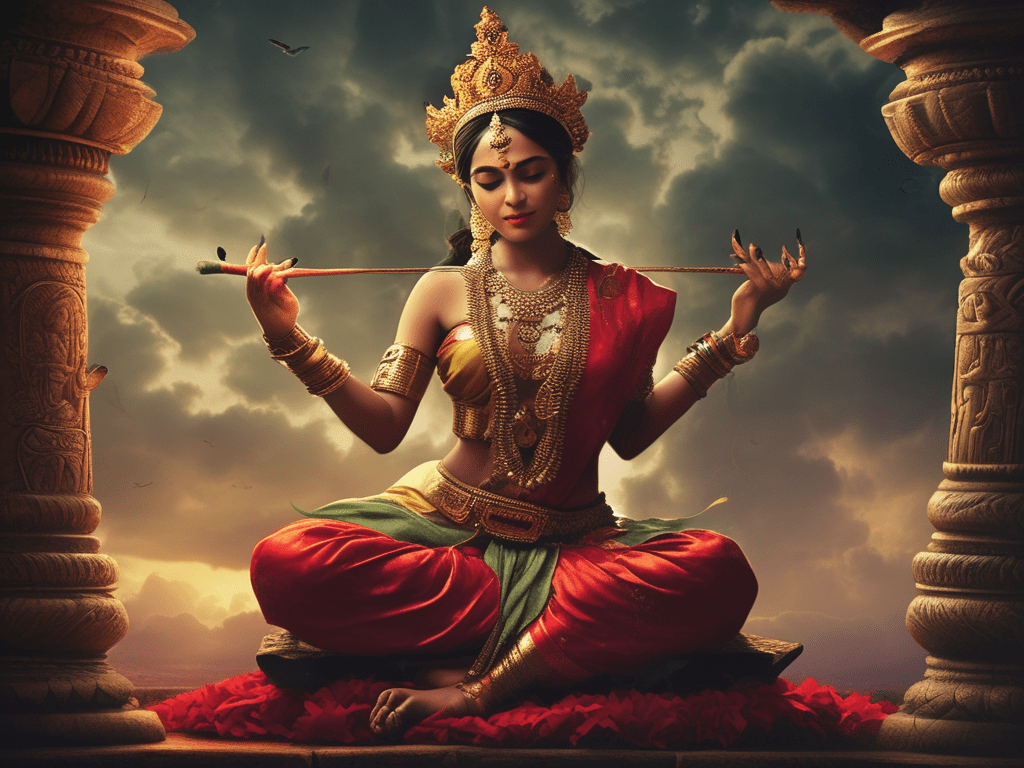
The Apsaras and Gandharvas are fascinating figures from the Rig Veda, humanity’s oldest text. These mythological beings have captivated people’s imaginations for millennia. Today we’re going to delve into their world and find out who they are and what they stand for.
The Apsaras: The Celestial Nymphs
Apsaras are celestial nymphs, known for their beauty and grace. They reside in the skies and are often associated with water, such as rivers and clouds. They are the divine dancers who enchant gods and men with their elegant movements. Apsaras symbolize the beauty, seduction and magic of nature.
In the Rig Veda, Apsaras are often mentioned in contexts of festivals and celebrations. They play a crucial role in rituals and ceremonies, bringing joy and happiness. Their presence is always synonymous with pleasure and relaxation.
The Gandharvas: The Divine Musicians
The Gandharvas, on the other hand, are the celestial musicians. They are the consorts of the Apsaras and also reside in the heavens. The Gandharvas are the guardians of music and secret knowledge. They are often described as messengers between gods and humans, bringing divine messages and wisdom.
The Rig Veda presents them as beings possessing great knowledge and deep understanding of the cosmos. Their music has the power to enchant, heal and transform. They play an important role in myths and legends, often being involved in extraordinary adventures.
A Perfect Symbiosis
The Apsaras and the Gandharvas form a perfect duo in the Rig Veda. Together they represent harmony and balance between beauty and knowledge, between dance and music. Their relationship illustrates the interconnection between different aspects of life and the universe.
In summary, Apsaras and Gandharvas are symbols of beauty, grace and knowledge in the Rig Veda. They bring magic and joy to both gods and humans. Their story continues to inspire and fascinate those interested in ancient Indian traditions and myths.
 Le Rig Veda
Laisser un commentaire