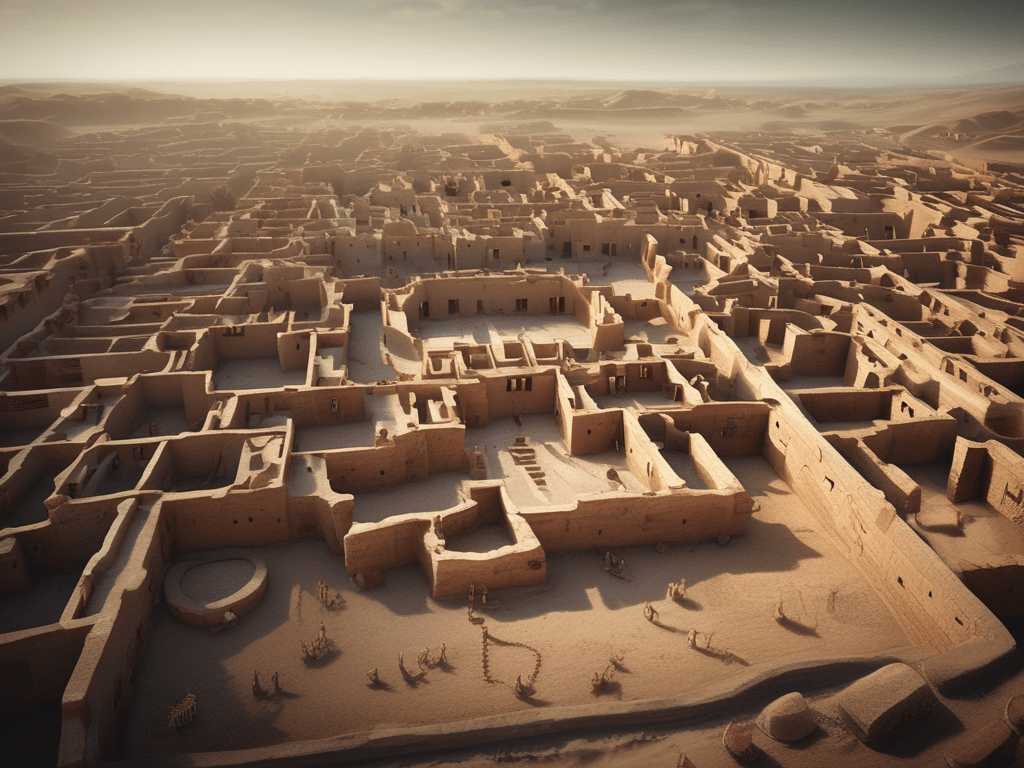
Today, we delve into the fascinating history of funerary practices in the Oxus Valley. This region, also known as Amu Darya, is located in Central Asia and was the cradle of many ancient civilizations. We will see together how these people honored their dead and what this tells us about their cultures.
What is the Oxus Valley?
The Oxus valley, crossed by the Amu Darya river, has long been a crossroads of civilizations. Various cultures, such as the Bactrians and Sogdians, have lived here. This mixture of peoples influenced burial practices, which often show local beliefs and traditions.
Tombs and Burials
In the Oxus valley, burials vary according to time and culture. The oldest tombs are often simple pits, where the bodies were buried with a few personal objects, such as jewelry or tools. This shows the importance of these objects for life after death.
Over time, the tombs become richer. There are brick tombs, burial chambers, and even mausoleums for the rich and powerful. These more elaborate constructions show an evolution of beliefs and available means.
Funeral Rites
Funeral rites in the Oxus Valley also varied according to culture. Among the Bactrians, for example, it was common to practice cremation. The ashes were then placed in urns and buried. This practice was linked to their beliefs about purification by fire.
The Sogdians, for their part, preferred burial. They built tombs with burial chambers where the bodies were placed on platforms. Personal objects and offerings were placed there to help the deceased in the afterlife.
Funeral Objects
The objects found in the tombs of the Oxus valley are very varied. There you can find jewelry, weapons, tools, and even food. These objects had great meaning for the living and the dead. They were supposed to help the deceased on their journey to the afterlife and ensure a comfortable afterlife.
The Influence of Beliefs
Funeral practices often reflect people’s beliefs. In the Oxus Valley, beliefs in an afterlife were very strong. People believed that the dead continued to live in a certain way and that they needed certain objects and rites to be well in the afterlife.
These beliefs influenced not only funerary practices, but also the architecture of tombs and the nature of objects buried with the dead.
Conclusion
Funerary practices in the Oxus Valley mirror the beliefs and cultures of this fascinating region. They show how ancient people honored their dead and prepared for the afterlife. By studying these rites, we better understand their vision of the world and their way of life.
So much for our journey through time and space, discovering funerary practices in the Oxus valley. I hope you liked it and that you know a little more about this region and its ancient inhabitants.
See you soon for new discoveries!
 Le Rig Veda
Laisser un commentaire