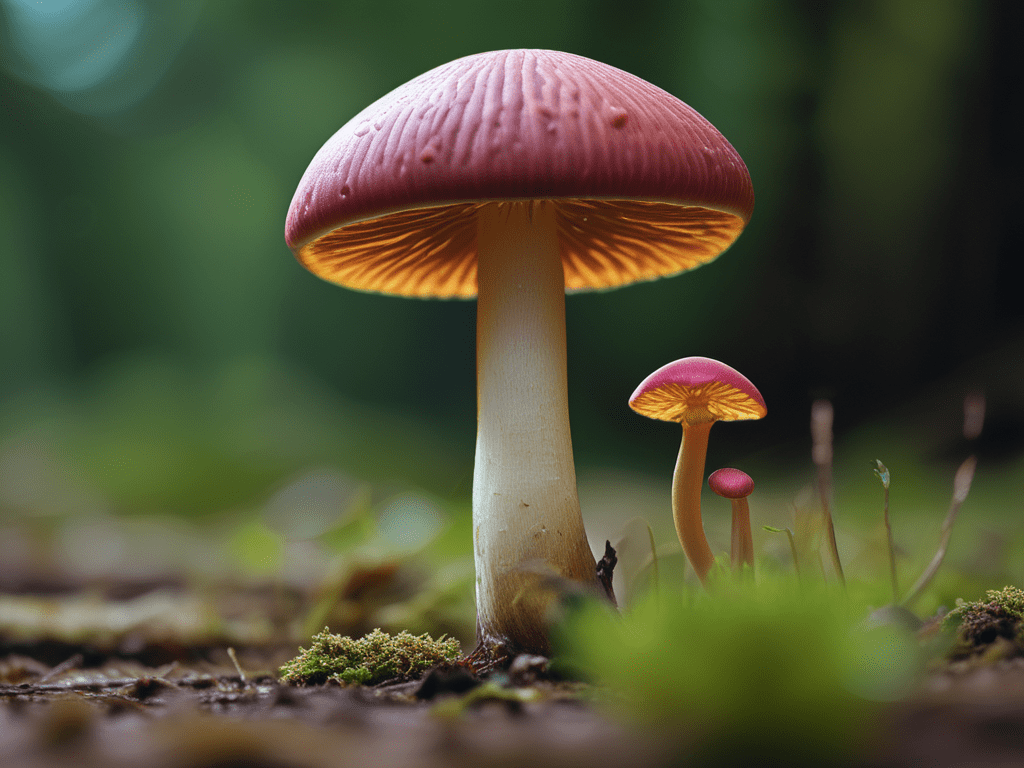
Soma occupies a central place in the hymns of the Rig Veda, the oldest sacred text in Hinduism. Both divinity and sacred substance, Soma is celebrated for its mystical and spiritual properties. The exact nature of Soma has sparked much debate among researchers and historians, and several hypotheses have been put forward regarding its botanical identification. Among these, the idea that Soma could be Psilocybe cubensis offers a fascinating perspective, different from the traditional hypothesis which associates it with Ephedra.
The Soma in the Rig Veda
In Vedic hymns, Soma is described as a divine drink, prepared from the Soma plant, which bestows immortality and elevated states of consciousness on those who consume it. The god Soma is associated with the moon and is considered the king of plants and a divine elixir. The effects of this drink are described as uplifting, bringing wisdom, vision and immortality.
Vedic texts speak of the preparation and ritual consumption of Soma, and often describe its effects in ecstatic and visionary terms, descriptions which suggest experiences of altered consciousness.
Botanical Identification of Soma
Historically, several plants have been proposed as candidates for Soma. Ephedra, a plant containing a type of amphetamine known for its stimulant properties, has long been considered a likely candidate. However, this identification has been disputed due to the inadequacy of the physiological effects of Ephedra with Vedic descriptions of Soma.
Psilocybe Cubensis like Soma
Psilocybe cubensis, a psychoactive mushroom known for its active compounds such as psilocybin, is an intriguing hypothesis. Psilocybin is a hallucinogenic substance that produces visual and sensory effects, altered consciousness, and mystical experiences, similar to those described in Vedic hymns.
Psilocybe mushrooms have been used for millennia in various cultures for their visionary and spiritual effects. The suggestion that Psilocybe cubensis could be Soma is based on several arguments:
1. Visionary Effects: Vedic descriptions of the effects of Soma correspond well to psilocybin-induced experiences, including visions, heightened states of consciousness, and mystical experiences.
2. Ritual Use: Psilocybe mushrooms are often used in ritual contexts to access altered states of consciousness, similar to the use of Soma in Vedic rituals.
3. Natural Production of DMT: Interestingly, practicing yoga, pranayama (yogic breathing) and meditation can stimulate the production of DMT (dimethyltryptamine) in the human brain. DMT is a molecule known to induce mystical experiences and visions, similar to the effects of psilocybin. This draws a parallel between Vedic spiritual practices and states induced by psychoactive substances.
Conclusion
The identification of Soma as Psilocybe cubensis rather than Ephedra offers an understanding more consistent with Vedic descriptions of its spiritual and mystical effects. Psilocybe cubensis, with its hallucinogenic properties and visionary effects, offers a plausible explanation for the nature of Soma, a substance revered for its abilities to transcend ordinary consciousness and enable divine experiences. By rediscovering this sacred plant through a modern perspective, we can perhaps better understand the practices and beliefs of ancient Vedic sages, and the importance of Soma in their quest for spiritual transcendence.
 Le Rig Veda
Laisser un commentaire