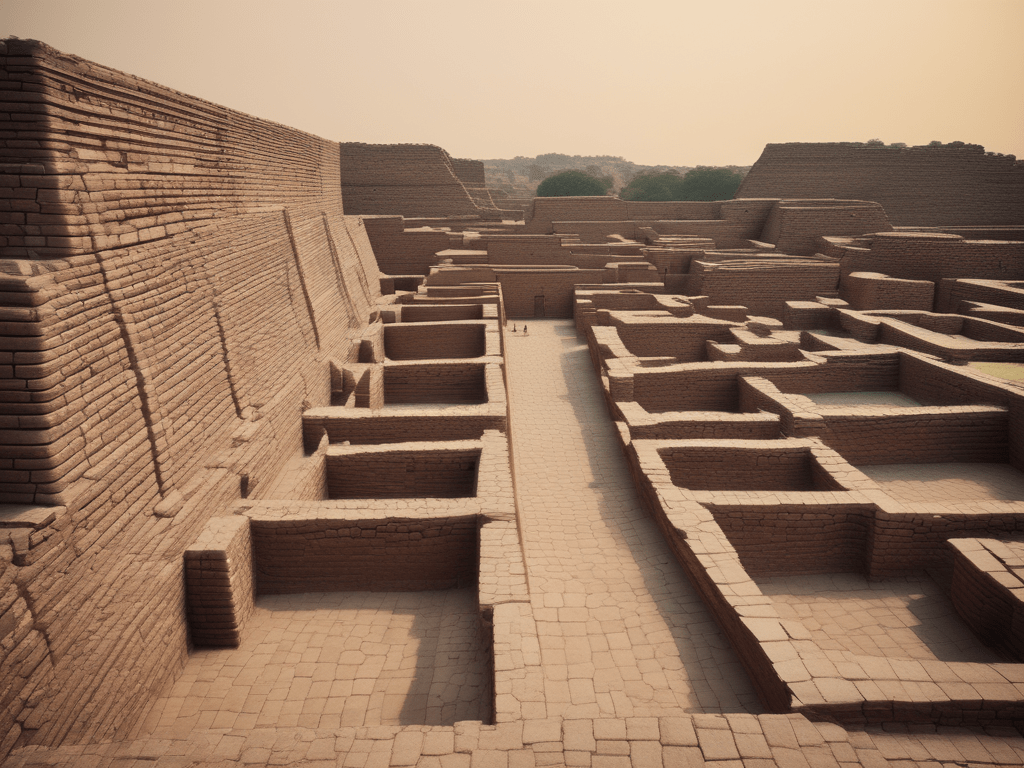
The Oxus Civilizations, also known as Bactria-Margiana Archaeological Complex (BMAC), and the 7 Rivers Civilization, flourished in Central and South Asia between 3500 and 1900 BCE . These two great civilizations, although geographically distinct, maintained complex cultural, economic and technological relationships that demonstrate a sophisticated interregional network.
1. Geographic and Historical Context
Oxus Civilization: Located primarily in present-day Turkmenistan, Uzbekistan, Tajikistan, and northern Afghanistan, the Oxus Civilization emerged around 2300 BCE. Characterized by archaeological sites like Gonur Tepe and Altyn Tepe, this civilization is known for its citadels, sophisticated handicrafts and trade.
7 Rivers Civilization: Flourished mainly in the Indus and Sarasvati valleys, covering present-day Pakistan and northwest India, this civilization flourished between 3500 and 1900 BCE. Harappa, Rakhi Garhi, Banawali, Ganweriwala and Mohenjo-daro are the most iconic sites of this civilization, which is famous for its advanced urban planning, sewerage systems, and still undeciphered script.
2. Economic Interactions
Trade between these two civilizations was essential for their prosperity. Stone, metal and ceramic objects found at the Oxus sites clearly originate from the 7 Rivers civilization. Land and river trade routes allowed the transportation of goods such as lapis lazuli, carnelian, copper, tin, and shells.
Lapis lazuli: Originating from the mines of Badakhshan, Afghanistan, lapis lazuli was a highly prized gemstone in both civilizations. It was often exchanged for manufactured goods and raw materials.
Metals: Copper and tin, needed to produce bronze, circulated between civilizations, indicating an advanced understanding of each society’s needs and production capabilities.
3. Cultural and Technological Exchanges
Exchanges between the Oxus and the civilization of the 7 rivers were not limited to the trade of material goods. Cultural and technological influences have also been observed.
Crafts and Iconography: Seals and decorative motifs show similarities between the two civilizations, suggesting reciprocal artistic influence. The seals of the civilization of the 7 rivers found in the Oxus sites and vice versa testify to this cultural interaction.
Technology and Architecture: Construction and town planning techniques, including the design of citadels and drainage systems, show parallels that could be attributed to exchanges of knowledge.
4. Religious and Spiritual Influence
It is likely that religious beliefs and practices were also shared between the two civilizations. The representations of deities and ritual objects found in both regions suggest points of spiritual convergence.
Funeral Practices: Oxus funeral rites, with personal items buried with the dead, find echoes in the practices of the 7 Rivers civilization, indicating possible mutual influence or a common cultural origin.
5. Decline and Legacy
Around 1700 BCE, both civilizations began to decline, likely due to climate change, earthquakes, and internal upheaval. However, the interactions they had have left a lasting legacy in the region.
Transmission of Knowledge: Knowledge of metallurgy, urban planning, and commerce spread beyond these civilizations, influencing later cultures in the region.
Cultural Influence: Artistic motifs, religious symbols, and trade practices persisted, integrating the cultural fabric of subsequent societies, such as the Indo-Aryan and Achaemenid civilizations.
Conclusion
Relations between the civilizations of the Oxus and the 7 rivers were characterized by a dynamic exchange of goods, technologies and cultures. This interaction demonstrates the sophistication of trade networks and cultural connections in Central and South Asia during the Bronze Age. The exchanges not only enriched these civilizations but also left a lasting legacy in the history of the region.
 Le Rig Veda
Laisser un commentaire