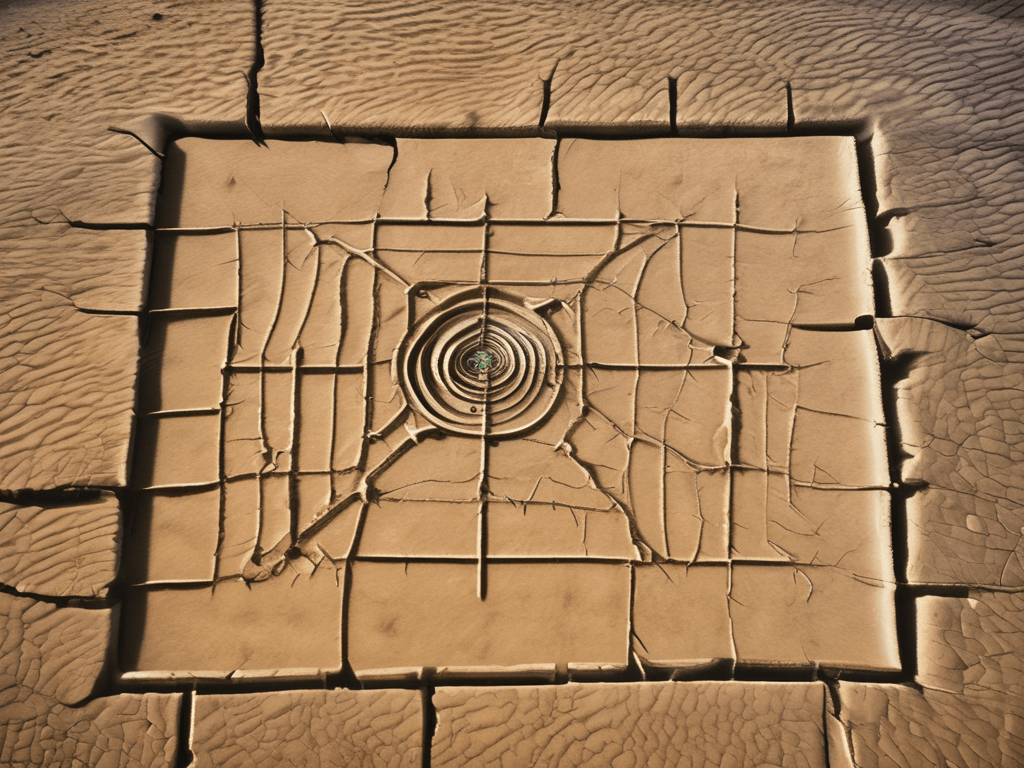
Early Settlements in the Karakum Desert
The Karakum Desert, located in the heart of Central Asia, is an arid and inhospitable region that has long defied attempts at human colonization. Despite its harsh environment, archaeological evidence reveals that ancient communities managed to establish themselves and thrive there. Recent discoveries, including the fascinating find of a mixture of psychoactive plants by a Russian archaeologist, offer a captivating insight into life in this unforgiving desert.
Geography and Climate of Karakoum
The Karakum Desert, which means « black sands » in Turkmen, covers approximately 350,000 square kilometers, mainly in Turkmenistan. It is one of the largest sandy deserts in the world. Its climate is extreme, with scorching summers where temperatures often exceed 50 degrees Celsius, and harsh winters where they can drop below zero. Precipitation is rare, making plant and animal life very limited.
The First Establishments
Archaeological evidence suggests that the first human settlements in the Karakum Desert date back several thousand years. These communities primarily inhabited along rare rivers and oases, exploiting the limited resources available. Ancient civilizations, such as the Bronze Age people of the Margiana region, left behind remnants of elaborate structures, sophisticated irrigation systems and cultural artifacts that testify to their ingenuity and resilience.
Irrigation Systems
Early inhabitants developed advanced irrigation techniques to cultivate otherwise infertile land. They built canals to divert water from rare rivers and oasis springs to their fields, allowing the cultivation of various plants, including grains and vegetables. These irrigation systems were essential for survival in such an arid environment and demonstrate a high level of community organization and cooperation.
Archaeological Discoveries
Among the most remarkable archaeological discoveries in the Karakum Desert, one in particular has captivated the attention of researchers and the general public. A Russian archaeologist, Viktor Sarianidi, during excavations in an ancient necropolis, unearthed a mixture of plants including cannabis, ephedra and poppy. This find, dated to around 2000 BCE, offers an intriguing insight into the cultural and ritual practices of the time.
The Psychoactive Herbal Blend
Cannabis, ephedra and poppy are all known for their psychoactive and medicinal properties. Cannabis (Cannabis sativa) has been used for its relaxing effects and analgesic properties. Ephedra (Ephedra sinica), containing stimulating alkaloids like ephedrine, was used for its energizing and medicinal effects. The poppy (Papaver somniferum), the source of opium, has powerful analgesic properties.
Ritual and Medicinal Use
The combination of these plants in a spiritual context suggests a ritual use, probably coming from shamanic practices. It is possible that this mixture was used for ceremonies aimed at obtaining Enlightenment or to communicate with spirits or deities. Additionally, these plants could have had medicinal uses, helping to relieve pain or treat various illnesses.
Conclusion
Early settlements in the Karakum Desert demonstrate the human capacity to adapt and survive in extreme environments. Archaeological finds, including the mixture of psychoactive plants, provide a fascinating window into the cultural and ritual practices of these ancient communities. They remind us that, despite environmental challenges, human beings have always found ways to grow spiritually.
 Le Rig Veda
Laisser un commentaire