Introduction
The Oxus Culture, also called the Bactrian-Margian Civilization (BMAC), is a Bronze Age civilization that developed in present-day Turkmenistan, Uzbekistan, Tajikistan, and northern Afghanistan, between approximately 2300 and 1700 BCE. Discovered and named by Soviet archaeologist Viktor Sarianidi in the 1970s, this culture is notable for its architectural advances, handicrafts and religious practices. The BMAC has maintained significant relationships with other contemporary civilizations, notably the Indus Civilization.
Archeology of the Oxus Culture
Archaeological sites
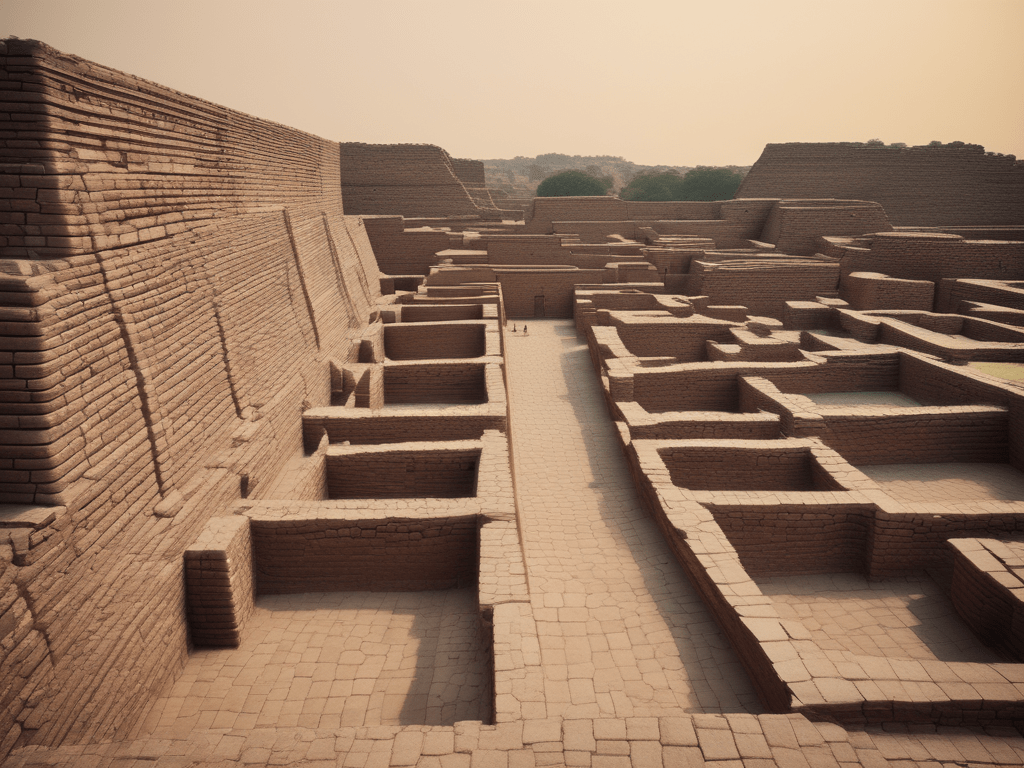
Archaeological excavations have uncovered several important BMAC sites, including Gonur Tepe, Togolok, and Altyn Tepe. Gonur Tepe, one of the most representative sites, features complex structures like fortifications, temples and necropolises. The finds include metal objects, seals, finely decorated pottery and stone objects, testifying to an organized and refined society.
Objects and Crafts
The objects found in the BMAC sites show great technical mastery. Oxus artisans worked metal (bronze, gold, silver), stone and ceramics. Objects such as bronze mirrors, gold jewelry and stone statuettes have been discovered. These artifacts suggest not only a rich and hierarchical society, but also cultural and commercial exchanges with other regions.
History and Society of the BMAC
Social Structure
BMAC society appears to have been structured hierarchically, with an elite who exercised control over production and trade. Palace complexes and temples indicate a centralized organization and possible theocracy where rulers held both political and religious power.
Religious Beliefs and Practices
Excavations have revealed temples and cultic objects that demonstrate the complex religious practices of the BMAC. Symbolic motifs and statuettes found at archaeological sites suggest a polytheistic religion with deities associated with nature and fertility.
Relations with the 7 Rivers Civilization
Commercial and Cultural Exchanges
The relationship between the BMAC and the River Civilization, located in the Indus Valley (present-day Pakistan and northwest India), is evidenced by archaeological finds on either side. BMAC objects have been found in Mohenjo-Daro and Harappa, two of the major cities of the Indus Civilization. These exchanges likely included goods such as metals, precious stones, and ceramics, as well as ideas and technologies.
Mutual Influences
Contacts between these two civilizations likely led to mutual influences in various fields, including crafts, architecture and religious practices. For example, BMAC seals show patterns and symbols similar to those found in the Indus Valley, indicating cultural sharing or exchange of ideas.
Conclusion
The Oxus Culture and the 7 Rivers Civilization both played crucial roles in the development of Bronze Age civilizations in Central and South Asia. Archaeological discoveries continue to reveal the extent of interactions and influences between these two ancient cultures. The BMAC, with its architectural and artisanal achievements, as well as its commercial and cultural relations with the civilization of the 7 rivers, illustrates the complexity and richness of the prehistoric societies of this region of the world.
 Le Rig Veda
Laisser un commentaire