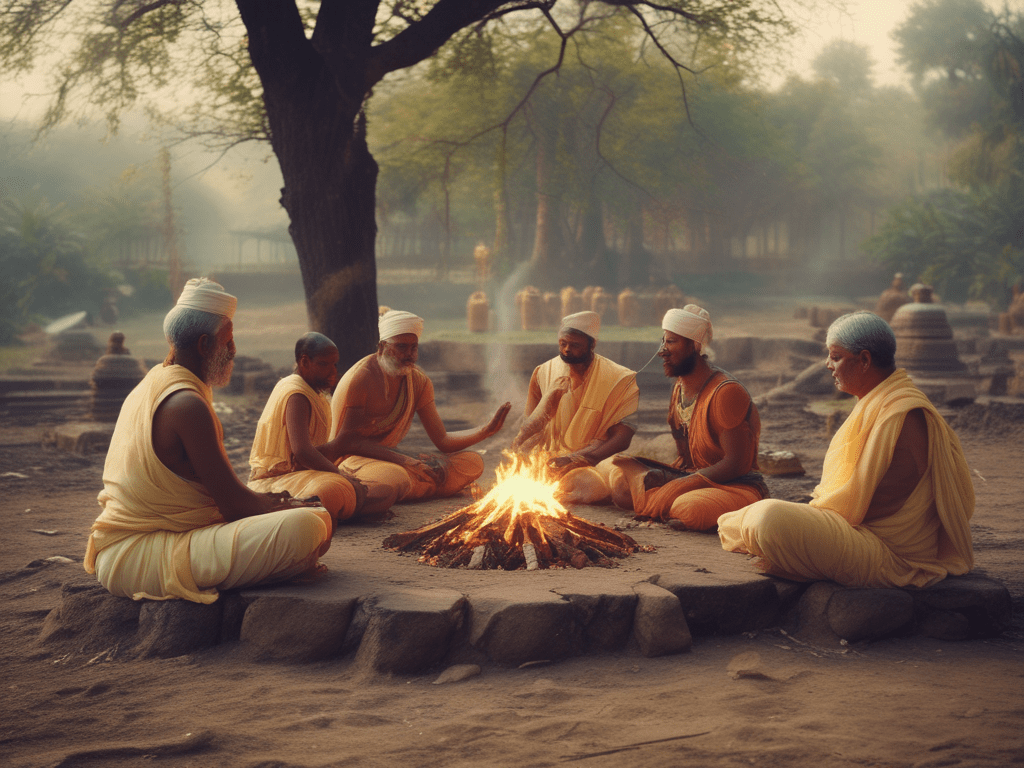
The Rig Veda, one of the oldest and most revered sacred texts of mankind, constitutes the fundamental pillar of Indian Vedic literature. Composed in Sanskrit, this collection of poetic and liturgical texts is a treasure trove of spiritual, philosophical and cultural knowledge. The Rig Veda is organized into ten books called « mandalas ». Each of these mandalas has a particular meaning and structure, reflecting various aspects of Vedic thought and cosmology. This article provides an overview of these ten mandalas.
Mandala 1: The Mandala of Invocation
The first mandala contains 191 hymns and serves as a general introduction to the entire Rig Veda. The hymns in this mandala are primarily invocations to Vedic gods such as Agni, the god of fire, and Indra, the king of gods. Themes covered include creation, nature, rituals, and prayers for prosperity and divine protection.
Mandala 2: The Gritsamada Family Mandala
Composed of 43 hymns, the second mandala is attributed to the Gritsamada family of poets. This mandala is marked by its devotion to Agni, Indra and other Vedic deities, with particular emphasis on ritual and ceremonial aspects. The hymns of this mandala are often recited during fire sacrifices (yajnas).
Mandala 3: The Vishwamitra Family Mandala
The third mandala, containing 62 hymns, is attributed to the family of Vishvamitra, a great Vedic sage. This mandala is famous for its hymn « Gayatri Mantra », one of the most sacred prayers recited daily by Hindu devotees. The hymns in this mandala are dedicated to Agni, Indra, and Soma, the deity of ritual intoxication.
Mandala 4: The Vamadeva Family Mandala
The fourth mandala, with its 58 hymns, is attributed to Vamadeva. The hymns in this mandala are varied and cover themes such as the creation of the universe, the exploits of the gods, and the praises of natural forces. The hymns of this mandala show notable poetic richness and philosophical depth.
Mandala 5: The Atri Family Mandala
This fifth mandala contains 87 hymns, attributed to the Atri family. The hymns in this mandala focus on praising deities like Indra, Agni, the Maruts (the storm gods), and the Asvins (the divine twins). This mandala also reflects the social and moral concerns of ancient Rishis (Vedic sages).
Mandala 6: The Bharadvaja Family Mandala
The sixth mandala, with its 75 hymns, is attributed to the Bharadvaja family. The hymns in this mandala highlight devotion to Indra and Agni, while exploring themes of prosperity, war, and blessings for the community. This mandala is recognized for its sober and direct poetic style.
Mandala 7: The Vasishtha Family Mandala
The seventh mandala contains 104 hymns and is attributed to Vasishtha, another great Vedic sage. This mandala is known for its hymns dedicated to Varuna, the god of cosmic order, and for its prayers for peace and divine protection. The hymns of this mandala are often used in ritual and liturgical contexts. This mandala tells us of an inter-arya war.
Mandala 8: The Mandala of Various Poets
The eighth mandala is composed of 103 hymns and brings together compositions by various Vedic poets. This mandala is notable for its diversity of themes and styles, reflecting a wide variety of Vedic traditions and beliefs. The hymns address prayers to many deities, including Indra, Agni, and Soma.
Mandala 9: The Mandala of Soma
The ninth mandala, unique in its kind, contains 114 hymns exclusively dedicated to Soma, the sacred plant and deity associated with the elixir of immortality. The hymns of this mandala celebrate the preparation and ritual consumption of Soma, and praise its divine effects and benefits for practitioners.
Mandala 10: The Mandala of Philosophical Reflection
The tenth mandala, added at the end of civilization, containing 191 hymns, is the most varied and philosophical of the ten. It includes famous hymns like the « Purusha Sukta », which describes the creation of humanity from the cosmic sacrifice of the Purusha, and the « Nasadiya Sukta », a speculative hymn on the origins of the universe. This mandala addresses themes of metaphysics, cosmogony, and deep spirituality.
Conclusion
The ten mandalas of the Rig Veda represent a rich and complex body of Vedic literature and thought. Each of these mandalas brings a unique perspective on the devotion, cosmology, and philosophy of the ancient Aryas. Together, they constitute a lasting testament to the depth and diversity of ancient Indian spirituality, offering teachings and inspirations that still resonate across the centuries.
 Le Rig Veda
Laisser un commentaire